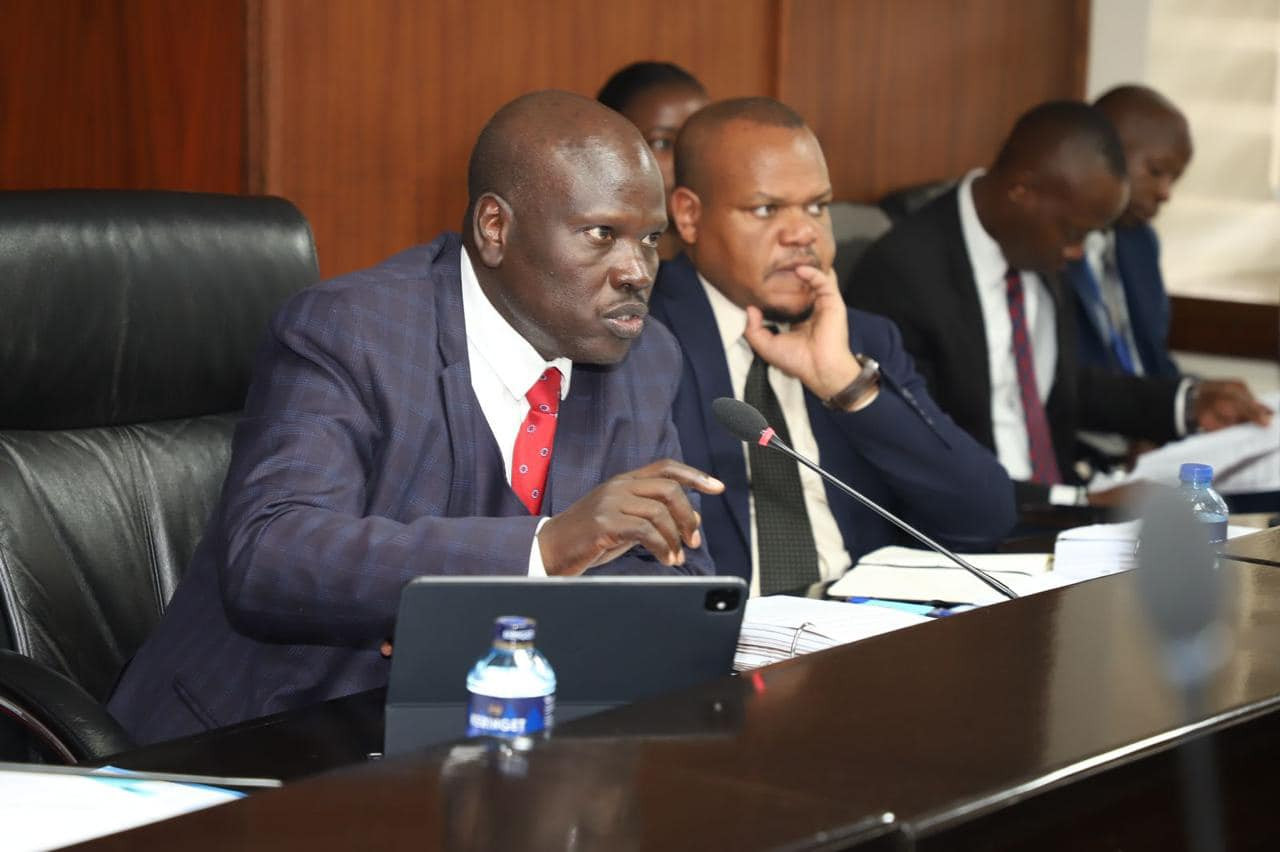
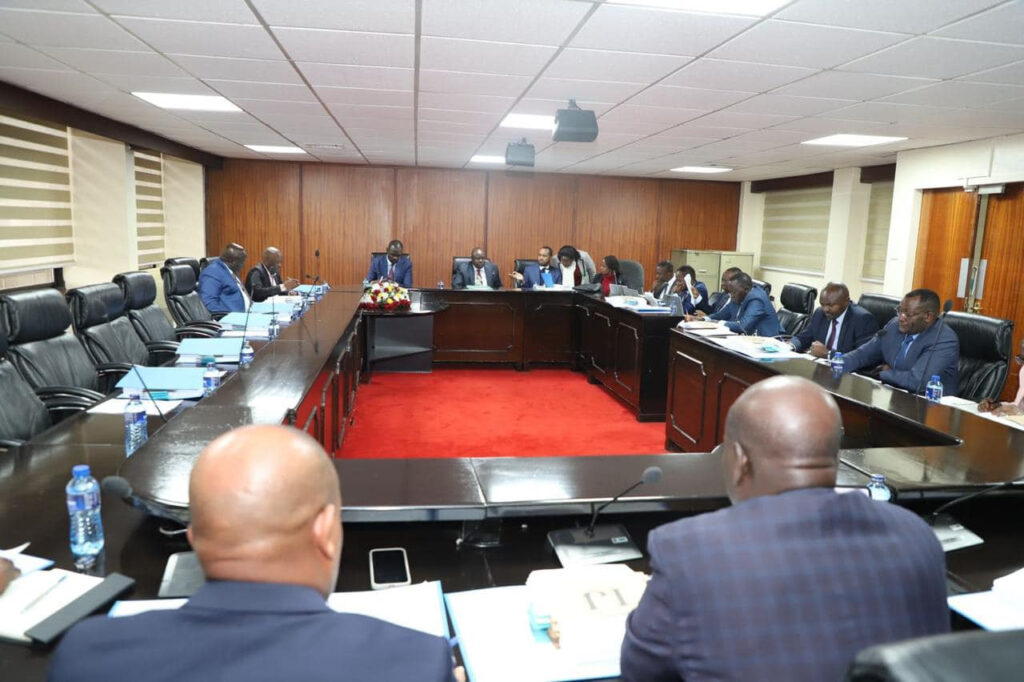
The Kenya Power and Lighting Company (KPLC) came under intense scrutiny on Wednesday as lawmakers from the Public Investments Committee on Commercial Affairs and Energy raised serious concerns over its financial health, inflated electricity tariffs, failed infrastructure projects, and glaring IT vulnerabilities.
The session, chaired by Pokot South MP Hon. David Pkosing, revolved around the utility’s audited financial statements for the financial years 2018/19 to 2022/23.
Legislatures established a worrying picture of a company battling deep-seated structural and operational issues, despite serving as the backbone of the country’s power supply.
According to the Auditor-General’s report for the year ending June 30, 2019, the company’s current liabilities stood at Ksh 115.2 billion against assets of Ksh 44.2 billion,leaving a negative working capital of Ksh 71 billion.
This marked the third consecutive year of deficits, raising doubts about the company’s ability to remain solvent.
KPLC’s CEO Dr (Eng.) Joseph Siror attributed the financial crisis to capital-intensive projects implemented between 2014 and 2018 under the government’s universal electrification agenda and the ambitious 5,000MW power generation plan.
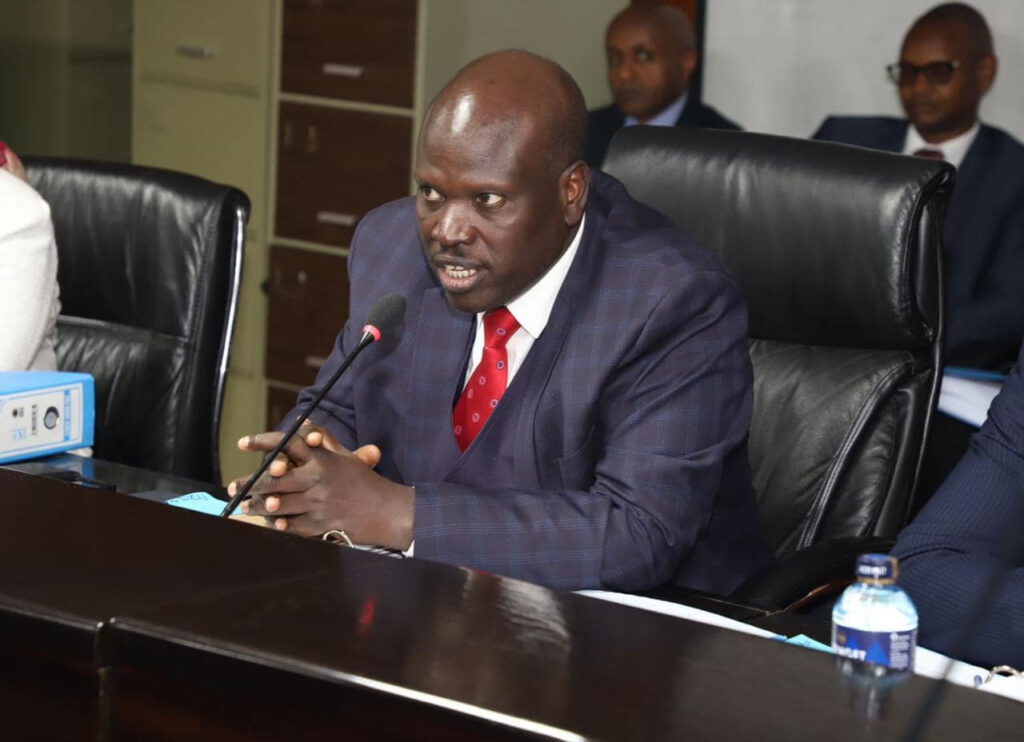
“Most of the funding came from medium-term commercial loans, yet the projects we undertook were long-term in nature. Delays in tariff reviews and high system losses only worsened the cash flow situation.” The CEO explained.He further explained that to stabilize the company, KPLC rolled out a multi-faceted recovery strategy: reducing system losses by 0.5% annually, extending money market facilities to manage liquidity, enhancing debt collection and smart metering, suspending non-essential capital projects, and engaging the Energy and Petroleum Regulatory Authority (EPRA) to realign tariffs and recover Ksh 11.9 billion owed from the Rural Electrification Scheme.
“We’re making progress, our negative working capital has improved from Ksh 75 billion in 2020 to Ksh 27 billion in 2024. We also posted a Ksh 30 billion profit after tax as of June 2024.” Dr. Siror said.Committee members raised red flags over serious weaknesses in the company’s IT systems.
The Auditor-General cited delayed system log reviews, lax password controls, and super-users with unrestricted access; three of the four core systems lacked proper activity monitoring.
KPLC’s ICT team cited the deployment of IBM QRadar, Microsoft Defender, and Oracle audit trails to enhance security, but the Committee chairman wasn’t satisfied.
“Unrestricted super-user access is a ticking time bomb. It creates room for fraud and cyber breaches. These vulnerabilities must be addressed urgently.” Hon. Pkosing warned.Lawmakers also raised concerns about procurement irregularities, including a Ksh 55.9 million direct contract awarded in 2018 to an advertising firm. While management claimed it was a temporary solution, the Auditor-General flagged it as a breach of the Constitution and procurement laws.
“This smells of vested interests. Public procurement must be competitive and transparent.” Hon. Pkosing said.The Committee also questioned the rising cost of electricity and ongoing power outages. The CEO defended the current pricing model as “cost-reflective,” saying it’s designed to attract investment in power generation.
“For any power plant, we apply an open-book model: 25% equity and 75% debt, targeting a 12% return on investment. EPRA reviews and approves all tariffs based on plant costs and operational years,” he explained.He added that tariffs have fallen by Ksh 2 per unit over the past three years due to reforms and technological upgrades.
Read Also: KPLC Cracks Down Internet Providers Using Their Power Lines Illegally
“If technology is becoming cheaper, why are Kenyans still paying so much?” he asked, pointing fingers at Independent Power Producers (IPPs), whom he accused of hiding behind murky contracts.“These companies are owned by powerful people. We need to know who’s profiting while ordinary Kenyans suffer.” he said.Frustration mounted when Wajir East MP. Hon. Yusuf raised a case involving a diesel generator in his constituency that has never functioned properly since its commissioning three years ago.
“Arcoding to KPLC the generator lacks batteries and fuel, yet residents are billed for services they don’t receive and also pay taxes,” he lamented.KPLC admitted the generator was meant to complement solar energy but failed due to logistical and supply issues. MPs called it a “white elephant” and demanded answers.
“This kind of neglect is inexcusable.It reflects a deeper systemic problem. We will not allow public funds to go to waste.” said Hon. PkosingTo get to the bottom of such failures, the Committee announced it would conduct fact-finding missions to Wajir and other counties with stalled or underperforming energy projects.
“This is not about politics. It’s about justice for Kenyans. Electricity is a basic service not a profit-making venture for a few well-connected individuals. Kenyans deserve answers, transparency, and value for money.” said the ChairmanDespite some progress in turning around its finances, KPLC remains on the spot over governance and accountability.
With public confidence dwindling and MPs turning up the heat, the power utility now faces its greatest test yet: to reform or risk losing the trust of the very people it is meant to serve.