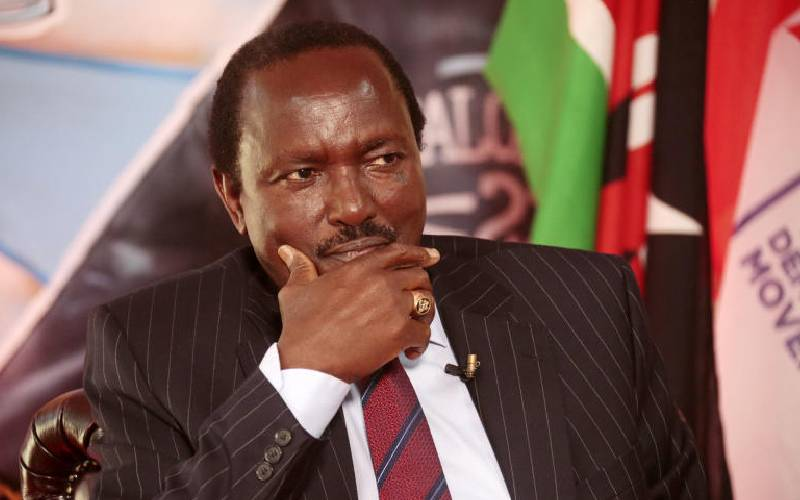
For a long time, Wiper leader Kalonzo Musyoka has been perceived as a politician lacking a firm stance, a trait that has cost him politically since 2007 when he first ran for the presidency.
He was often seen as a flip-flopping politician, saying one thing today and completely changing his tune the next day.
For instance, after the disputed results of the 2007 presidential election were announced, Mr. Kalonzo, who was one of the presidential candidates opposing the late Mwai Kibaki, joined him and was appointed Vice President.
This move was seen as a betrayal by the other presidential candidates at the time, led by Raila Odinga.
However, this time, Mr. Musyoka has emerged as a politician with a strong and consistent stance, a quality that has pleased many Kenyans.
For example, the former Mwingi North MP recently outrightly rejected President William Ruto’s proposal for national dialogue to discuss the issues that led Gen Z youth to initiate a series of protests.
Read also:Why Raila is Torn Between Supporting Gen-Z and Joining Ruto
Additionally, Mr. Musyoka firmly rejected President Ruto’s proposal to form a Government of National Unity (GNU) after dismissing all his cabinet ministers except the Prime Cabinet Secretary and Foreign Affairs Minister Musalia Mudavadi.
Dr. Ruto has repeatedly stated that the government he will form will include representatives from various political parties and other stakeholders; an idea that Mr. Odinga, the leader of Azimio, seems to embrace.

Mr. Musyoka excited many last Saturday, during the funeral of former Kakamega Governor Wycliffe Oparanya’s brother, when he openly told Mr. Odinga that he would never accept President Ruto’s proposal.
The Wiper leader has been bolstered by fellow leaders such as Eugene Wamalwa (DAP-K), Narc Kenya leader Martha Karua, and Jubilee Secretary-General Jeremiah Kioni.
Mr. Musyoka should continue holding his ground because President Ruto’s main agenda is to use the opposition to cleanse himself after perpetuating poor governance, which has now been rejected by Kenyans.
The problems currently plaguing Dr. Ruto’s administration are self-inflicted. He had a good opportunity to prevent what he is now experiencing if he had adhered to the constitutional requirements when forming his government.
Instead, President Ruto, in collaboration with his deputy Rigathi Gachagua, chose to favor people from their own ethnic communities when appointing ministers, ministry secretaries, and heads of various government agencies.