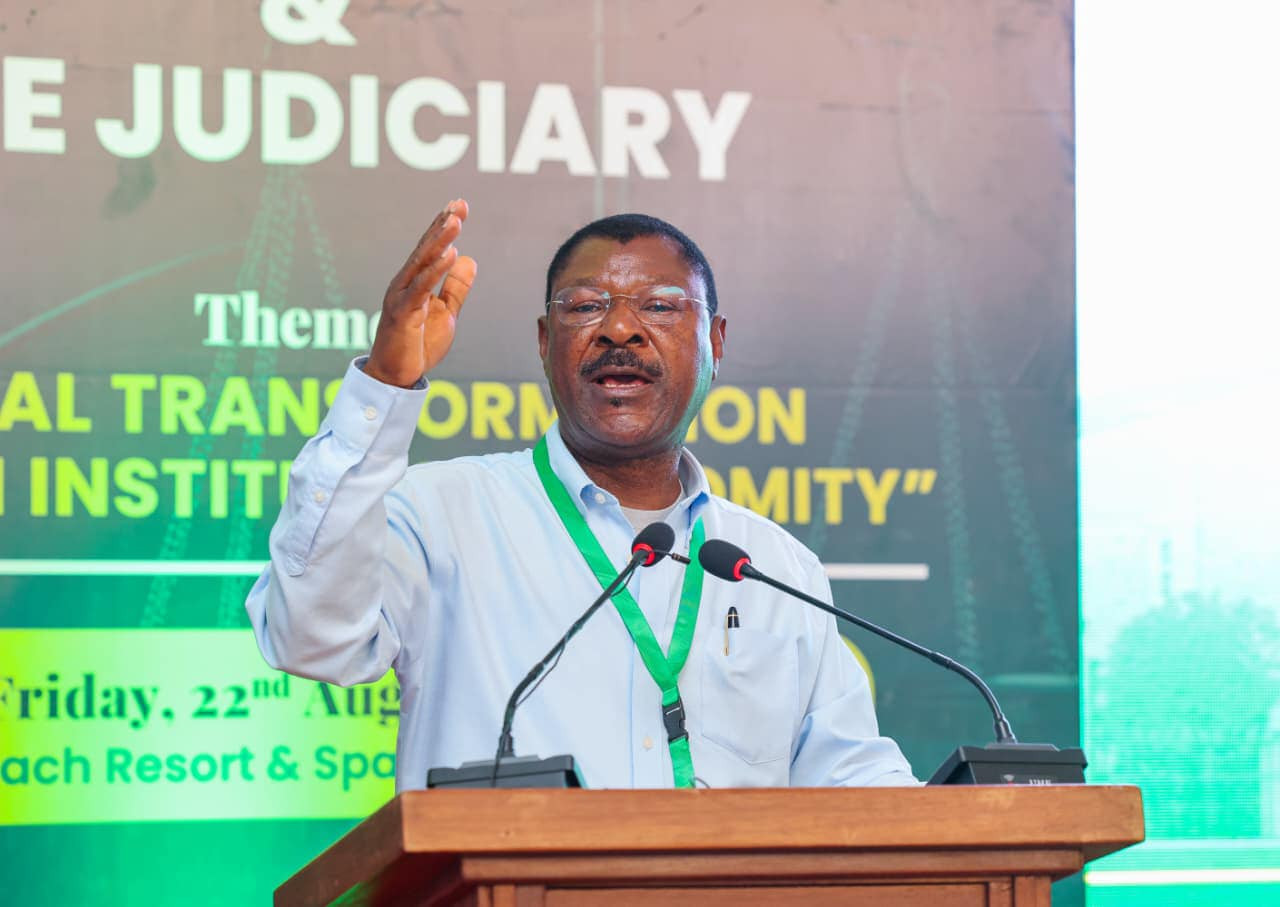
National Assembly Speaker Rt. Hon. (Dr.) Moses Wetang’ula has voiced concern over the increasing issuance of conservatory orders by the Judiciary against Parliament, warning that the practice is disrupting the legislative process.
Speaking during a joint session between the National Assembly leadership and the Judiciary at the ongoing Third Leadership Retreat, Wetang’ula noted that several matters before Committees and the House have stalled as a result of such orders.
“This is a matter that needs urgent attention from the Judiciary,” he said. “Some hearings are pushed up to six months ahead, which negatively affects the progress of legislation.”
The retreat, attended by Chief Justice Martha Koome and senior judicial officers, is focused on building consensus on shared priorities under the theme “Social Transformation through Institutional Comity.”
Wetang’ula further urged the Judiciary to centralize all cases filed against Parliament in Nairobi, where the institution is based. He argued that this would reduce costs and enhance efficiency for Parliament’s legal team.
“Currently, our lawyers are forced to travel to upcountry courts only to find magistrates on leave or transferred, with files missing as well,” he explained.
On the issue of Judiciary funding, Wetang’ula assured Chief Justice Koome of Parliament’s support in enhancing its budget, noting that the Judiciary’s requests were justified in light of its ambitious plan to expand access to justice.
Koome disclosed that the Judiciary intends to establish magistrates’ courts in all 290 constituencies but has so far managed to set up only 143 due to inadequate funding from the National Treasury. She called on Parliament to intervene, emphasizing that equitable access to justice hinges on improved infrastructure.
“The Judiciary requires enhanced allocations for infrastructure development. This will ensure equitable access to justice across the country,” Koome said.
She stressed that collaboration between the Legislature and Judiciary should not be mistaken for loss of independence. According to her, structured dialogue will prevent adversarial relations that often derail governance.
“Institutional comity does not erode independence,” she said. “There is a difference between institutional independence and decisional independence. Institutions can engage, but decisional independence remains sacrosanct.”
National Assembly Clerk Samuel Njoroge also emphasized the need for knowledge-sharing between Parliament and the Judiciary through the Centre for Parliamentary Studies and Training and the Kenya Judiciary Academy, saying such collaboration would strengthen professional growth and institutional capacity.
The retreat aims to foster cooperation between the two arms of government, set priorities for the 2025/26 financial year, and strengthen mechanisms for joint institutional planning.