By;Lezen Barnaba
Kenya’s story over the past two years is one history will not easily forget. It is a tale written on dusty streets with the smoke of tear gas, the cries of rebellious youth, and the sobs of grieving mothers.
Yet, unexpectedly, it is also a story of worship — of thousands of hands lifted to the heavens in Nairobi.
By 2024, Kenya was in crisis. Inflation soared, the cost of living crushed families, and unemployment left many young people with no way forward. For Generation Z, frustration spilled into the streets, starting with protests against the Finance Bill.
On June 25, 2024, demonstrators stormed Parliament in Nairobi in what became known as the Storming of Parliament.
Security forces responded with live bullets and tear gas, leaving at least 19 people dead in Nairobi alone, and many more injured across the country.

Most of the fallen were young Kenyans — students, boda boda riders, and workers demanding a better tomorrow.
The violence continued into 2025. The killing of blogger and teacher Albert Omondi Ojwang in police custody on June 9 sparked another wave of protests.
Hashtags trended within hours; within days, cities from Nairobi to Kisumu were filled with thousands of defiant young people.
By July 2025, more than 65 had been killed, over 550 wounded, and thousands arrested. Human rights groups described it as one of the darkest chapters in Kenya’s democratic life.
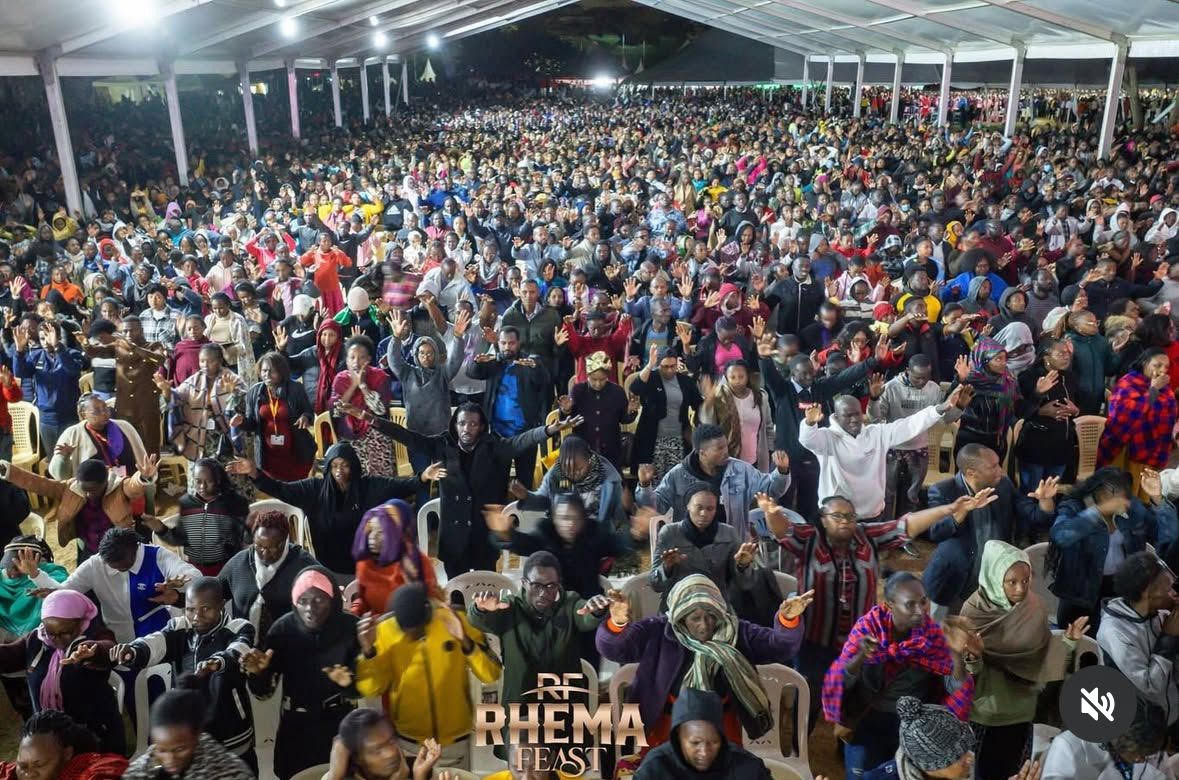
Then came September 2025. At Uhuru Park, the 10th Rhema Feast, themed “I Will Build My Church” (Matthew 16:18), was hosted by RUACH Assemblies under Reverend Julian. Few expected it to become a defining moment for Generation Z.
The same youth who had filled the streets with chants of protest now filled the park with songs of worship. Nigerian gospel minister Nathaniel Bassey, trumpet in hand, led thousands in the anthem “Yahweh Sabaoth.” Alongside him were global and local gospel icons, including Sinach, Ebuka Songs, Moji Shortbaba, and Kambua.
Sermons from Apostle Joshua Selman, Apostle John Kimani William, Bishop JB Masinde, Bishop Kathy Kiuna, and Apostle Tee Mwangi called young people to hope and faith.
Observers were stunned. For five nights, Nairobi’s CBD echoed not with running feet and gunshots but with prayers and hymns. Even hardened vendors and security officers admitted they had never seen anything like it.
To many, Rhema Feast was more than a gospel gathering. It was a generational declaration. Analysts compared it to landmark Christian movements worldwide, noting its political undertones.
President William Ruto’s government, criticized for its crackdown on protests, could not ignore the message: Kenya’s youth were not only in the streets but also on their knees, praying for their country.
For Generation Z, often dismissed as unruly or hopeless, Rhema Feast 2025 revealed a deeper truth — they are political, spiritual, creative, and determined. Where tear gas once filled Uhuru Park, incense of worship rose to the sky.
The pain of 2024 and 2025 remains heavy. The names of the fallen are not easily forgotten. Yet, their blood may have watered the seeds of something greater — a movement of faith and identity beyond politics.
As the Feast concluded on September 5, thousands joined hands, praying blessings over Kenya. For many, it was a glimpse of what the nation could become if its youth were given space to lead with justice, integrity, and faith.
Kenya’s challenges remain — unemployment, corruption, inequality, and division. But the story of Rhema Feast 2025 showed the world a different side of Gen Z: a generation restless yet prayerful, wounded yet hopeful, broken yet unbowed.
And perhaps, just perhaps, their God is listening.