Agriculture Cabinet Secretary Mutahi Kagwe praised Kenya’s veterinary professionals for their vital role in national development, calling them the backbone of livestock production, public health, and food safety.
Speaking at the Veterinarian of the Year Award (VOYA) ceremony, the CS described the veterinary profession as a calling rooted in deep commitment to animal health and human well-being.
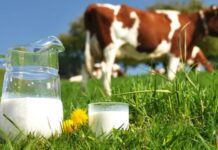
He noted that veterinarians play a pivotal role in supporting dairy farmers in high-potential regions, where expert guidance on breeding, vaccination, herd health, and milk quality leads to higher productivity, increased income, and improved living standards.
Kagwe reaffirmed the Government’s commitment to uplifting farmers by ensuring access to high-quality sexed semen for better calf breeds, maintaining regular vaccination programmes to strengthen herd immunity, and supporting farmers to produce larger quantities of high-quality milk for improved earnings.
He further emphasized that the Ministry is working diligently to implement quality-based milk pricing, a system that will rely heavily on strong animal health and effective veterinary services.

To strengthen the livestock sector, the Ministry is embracing digital innovations such as the Animal Identification and Traceability System, the Kenya Integrated Agricultural Data Management Information System, the DRIVE livestock insurance programme, and the establishment of the Leather Industrial Park in Kinanie, slated for commissioning in early 2026.
Under the DRIVE programme, 238,000 pastoralist farmers have already insured over 2.7 million animals, with the insured livestock valued at Sh29.3 billion.
The CS commended the Kenya Veterinary Vaccines Production Institute (KEVEVAPI) for ensuring national self-sufficiency in livestock vaccines and securing Kenya’s position as a reliable vaccine exporter within Africa and the Middle East.
He also highlighted innovations by the Kenya Animal Genetic Resources Centre and KALRO, where advancements in genetic improvement, cold-chain infrastructure, and last-mile delivery are reshaping livestock production systems.

Kagwe concluded by underscoring the profession’s critical role in economic transformation, citing progress in disease surveillance, successful vaccination campaigns that have covered more than 7.8 million animals, and a significant reduction in disease-related losses.