Employment rates for technical and vocational graduates in East Africa have shot up, with new figures showing that 8 in 10 graduates are securing jobs within six months of leaving college.
The improvement has been linked to closer ties between training institutes and industry, under the World Bank–backed East Africa Skills for Transformation and Regional Integration Project (EASTRIP). Before the project began, graduate employment stood at just 47 percent.
Women have also benefitted. Their employment rate has risen from 51 percent to 74 percent, opening up new opportunities in technical fields once dominated by men.
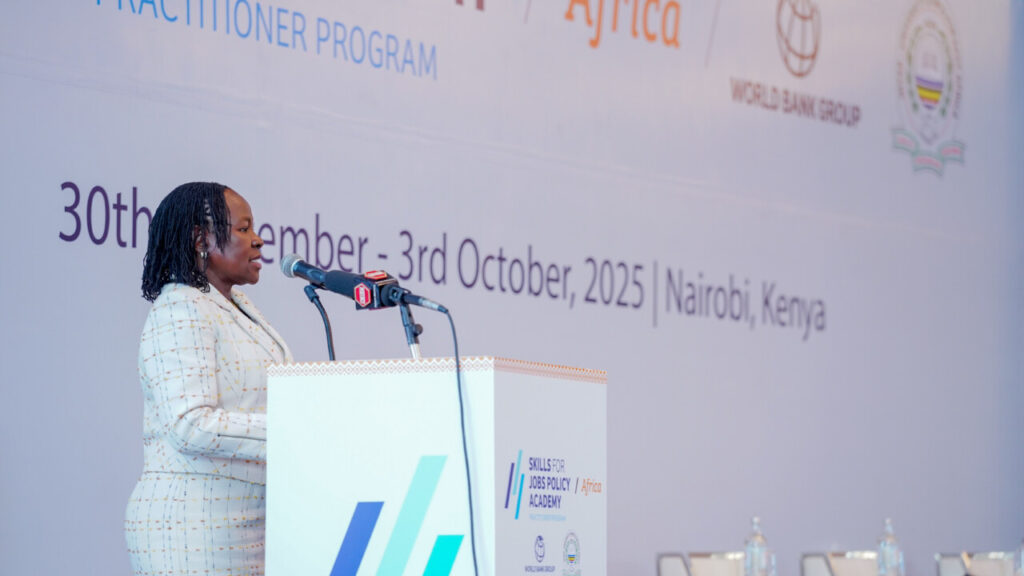
The results were shared at the Africa Skills for Jobs Policy Academy in Nairobi, which brought together education leaders and industry representatives from September 30 to October 3.
“Our experience has shown that when training matches what employers are looking for, young people find work quickly,” said Dr. Cosam Joseph, EASTRIP’s Regional Project Coordinator. “The 16 flagship institutes across Kenya, Ethiopia and Tanzania have now built partnerships with more than 300 companies to shape courses that meet real labour market needs.”
These courses cut across fast-growing sectors such as renewable energy, aviation, transport logistics, manufacturing and hospitality.
In Kenya, the KenGen Geothermal Training Centre has become a regional hub for geothermal technology.
In Tanzania, the National Institute of Transport introduced aviation and logistics programmes, with graduates now absorbed by regional airlines.
In Ethiopia, General Wingate Polytechnic has expanded into manufacturing and leather technology, directly linking students to factories.
“Our model is simple students are trained inside industry,” said Risper Kandie, a geologist and head of the KenGen Geothermal Training Centre. “It gives them real-world experience so they can step straight into critical roles in the energy sector.”
The changes are being felt at student level too. Enrolment at the 16 institutes has grown from fewer than 7,000 students to nearly 58,000, including about 19,000 women.
Employers say the difference is clear. “We now get graduates who are job-ready,” said Belachew Admasu Alemu, Managing Director of Sheraton Addis. “They understand industry standards because they were trained in real production settings.”
The project has also opened borders for learners. A new Regional TVET Qualifications Framework now allows graduates from Kenya, Ethiopia and Tanzania to work anywhere in the region without barriers.
More than 2,000 students are already studying across borders, compared to just 31 when the project started.
“We’ve had students from Ethiopia and Tanzania join our classes here in Kisumu,” said Evans Onyango, Head of Research and Innovations at Kisumu National Polytechnic. “They learn together, share ideas and build networks that will last well beyond graduation.”