The government has managed to raise 106.7 billion Kenyan shillings from the IPOs floated by the Kenya Pipeline Company (KPC), thus closing the books on the sale of shares to the public.
According to Treasury CS John Mbadi, local Kenyans and investment groups purchased 7.9 billion shares, thus showing good appetite for the energy company shares.
Of the 12.4 billion shares that the government had put up for sale, with each share priced at 9 shillings, the East Africa Community countries, led by Uganda and Rwanda, purchased 3.8 billion shares. This means that the regional countries will own 21.22 percent of the KPC shares.
Rwanda, however, purchased its shares through its national pension funds, which is the same way that Kenya intends to invest its savings from the National Social Security Fund (NSSF) in major projects.
Despite the regional countries showing good appetite for the KPC shares, the government will still be the largest owner, with a 35 percent controlling stake in the company.
Mbadi dismissed claims that the shares were overpriced, saying some critics were trying to derail the process.
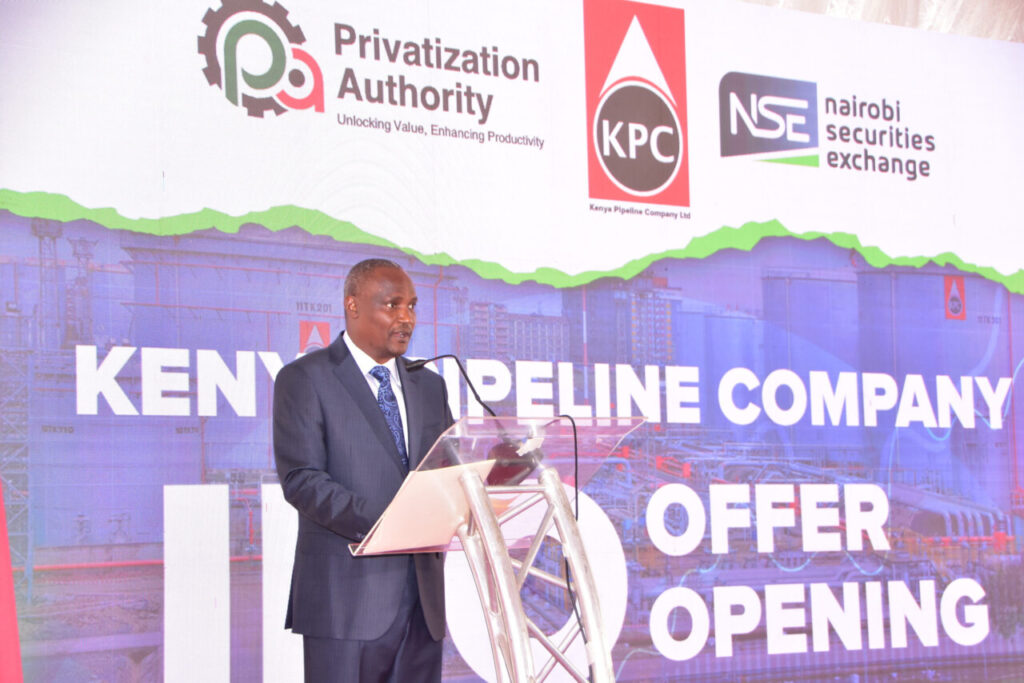
“We offered 11,812,644,350 shares at 9 shillings each. The total number of shares applied for stood at 12,486,78,724, translating to an overall subscription rate of 105.7 per cent,” Mbadi said while releasing the results.
He added that the offer was oversubscribed, forcing the government to scale down some applications, including requests from EAC countries such as Uganda, which had shown interest in buying more shares.
According to the final allocation, local institutional investors will hold 41 per cent of the company, while retail investors ordinary Kenyans who applied individually will control 2.56 per cent. KPC employees received 0.06 per cent, and licensed oil marketing companies in Kenya were allocated 0.041 per cent. Foreign investors will hold a marginal 0.02 per cent stake.
The shares are expected to start trading on the Nairobi Securities Exchange on March 9, making KPC the fifth company to be listed on the current trading board.
Addressing concerns that the proposed National Investment Fund (NIF), where part of the IPO proceeds were expected to go, is not yet operational, Mbadi clarified that the money will first be deposited into the Consolidated Fund before being allocated through Parliament.
The successful share sale marks one of the biggest capital-raising efforts in recent years and signals renewed investor confidence in Kenya’s public corporations.