For decades, residents of Wajir County have watched convoys of government vehicles glide on dusty, corrugated roads as ordinary travellers bore the brunt of dangerous and time-consuming journeys.
Today, however, the mood across much of the county is shifting-quietly but unmistakably-as President William Ruto’s administration accelerates work on one of northern Kenya’s most ambitious infrastructure upgrades in recent history.
At the heart of this excitement is the upgrading of the 740-kilometre Isiolo–Mandera corridor, which many locals have described as “long overdue” and “life-changing.” A number of sections of the corridor cut right through Wajir County, including the Modogashe–Wajir stretch and the crucial Wajir–Kotulo road—routes that have been lifelines for traders, pastoralists, and families trying to make their way across the harsh northeast.
These roads are, for the first time, being upgraded to full bitumen standards.
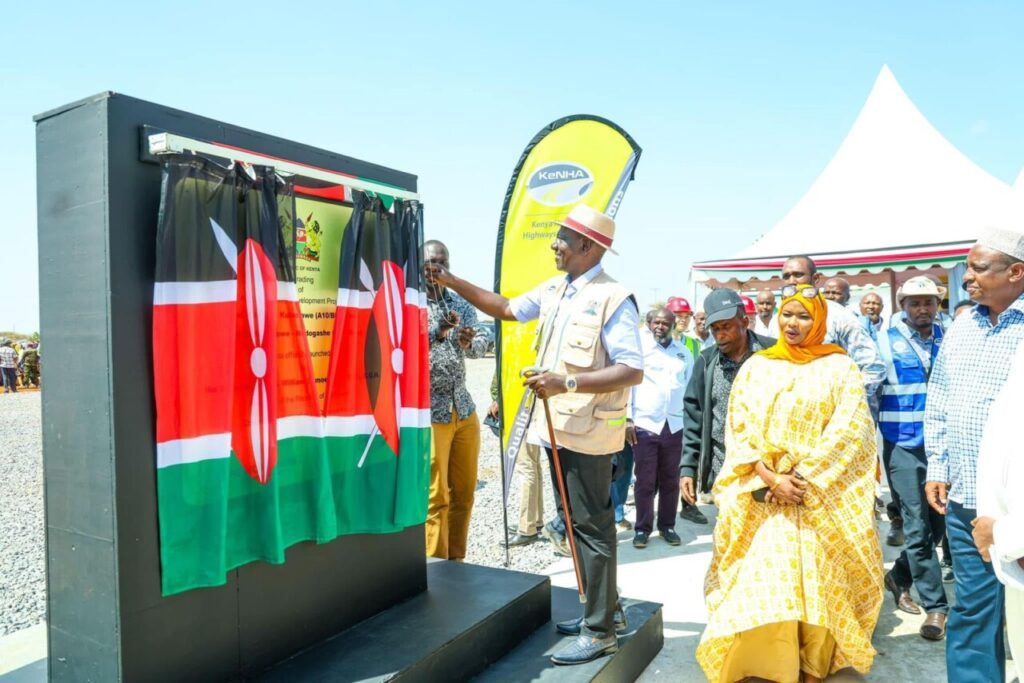
Wajir–Kotulo is 121 kilometres long and had its contract awarded by February 15, 2024. The neighboring stretch of Kotulo–Elwak followed in March, weeks later, indicating government intention to see the whole corridor through in one coordinated, uninterrupted process.
But probably the most transformative piece for Wajir and its neighbours lies further north: the 142-kilometre Elwak–Rhamu road, another rough section long dreaded by travellers, secured about KES 24.2 billion in financing from the African Development Bank. With funding locked in, contractors are preparing to reshape what has been one of the region’s most punishing travel routes.
Local leaders say the cumulative impact from these projects is already being felt.
Transport analysts are unanimous that the upgraded corridor will reduce travel time through northern Kenya, boost cross-border trade with Ethiopia and Somalia, and enhance security mobility in a region traditionally hampered by logistical challenges.
For ordinary residents, however, this impact is very personal: better roads mean safer travel, faster emergency response, lower cost of goods, and a chance for the region’s youth-often isolated from opportunities-to access wider markets.
With the Ruto administration now hot on delivering his promise to open up the northern frontier to the rest of the country, this long-anticipated transformation seems closer than it has ever been, carried on the back of new roads that could redefine the future of the region.