By: Joseph Mutua Ndonga
President William Ruto has called on African leaders to present a united front ahead of the United Nations Conference on Climate Change (COP29), set to take place in Baku, Azerbaijan, later this year.
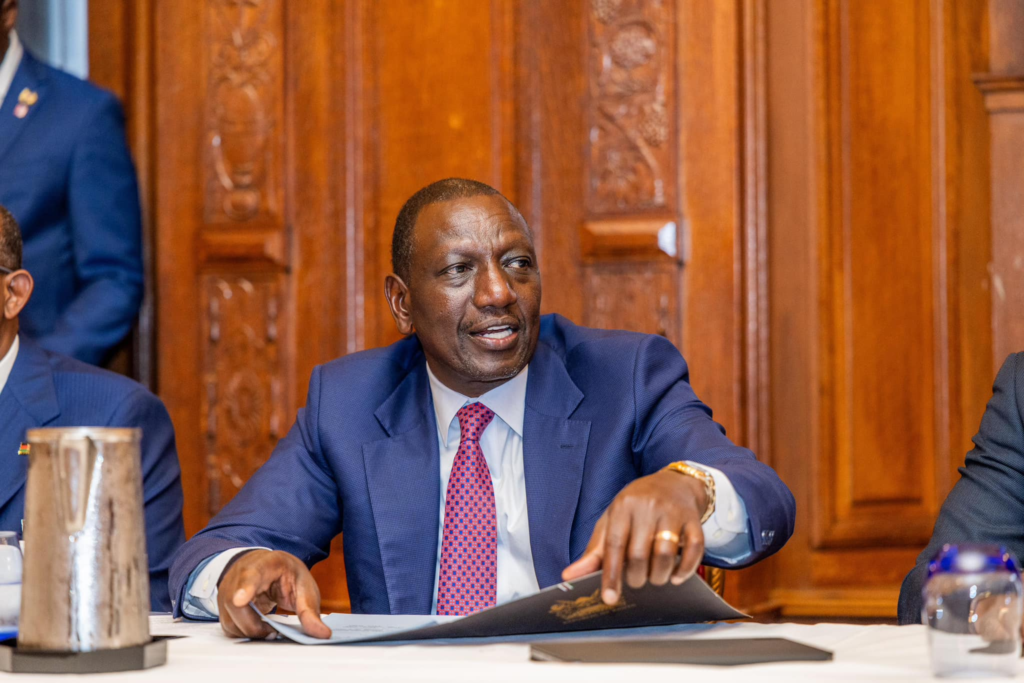
Speaking at a meeting of the Committee of African Heads of State and Government on the sidelines of the 79th session of the United Nations General Assembly (UNGA) in New York, the Kenyan President stressed the importance of African unity in advancing the continent’s climate agenda.
President Ruto’s message is timely. Africa, despite being the least contributor to global carbon emissions, suffers disproportionately from the effects of climate change. From severe droughts in the Horn of Africa to devastating floods in West Africa, the continent bears the brunt of global environmental degradation.
Africa’s call for more financial support from wealthy nations is justified, especially given that much of the pollution comes from the industrialized Global North.
However, as President Ruto rightly pointed out, Africa’s efforts to combat climate change have been undermined by the failure of some major polluters to honor their commitments.
Wealthier nations, many of whom pledged substantial financial assistance to support climate mitigation efforts in developing countries, have often fallen short of fulfilling those promises.
This has left African nations scrambling for resources to combat climate-related disasters while struggling to build resilient economies.
The Kenyan President’s vision of Africa presenting a common position at COP29 is not only about solidarity but also about power dynamics.
Historically, African nations have been treated as passive recipients of aid, with limited influence in global negotiations.
Ruto’s rallying call challenges this notion, signaling that Africa is not just a victim but also a vital player in global climate conversations.
“They cannot survive without relying on Africa, and it is the same case with us,” he said, highlighting the interdependence between Africa and the rest of the world.
While President Ruto’s optimism is commendable, a balanced view acknowledges the internal challenges that African unity faces. For decades, African nations have struggled to coordinate policies, not just in climate action but across a range of economic and political areas.
Competing national interests, political instability, and economic disparities across the continent have sometimes made it difficult for African leaders to speak with one voice. COP29 will be no different, and ensuring a cohesive African position will require significant diplomatic effort.
Moreover, while calling out wealthier nations for not meeting their commitments, it is also essential that African leaders strengthen their own regional institutions to better manage climate funds and implement sustainable policies.
Corruption, poor governance, and a lack of transparency in some African countries have undermined the impact of international funding, making it harder to achieve tangible progress in climate resilience and environmental sustainability.
President Ruto has been at the forefront of rallying the continent and the world toward a collective climate action strategy. His leadership was evident when he convened the Africa Climate Summit in Nairobi earlier this year, which resulted in the Nairobi Declaration.
The declaration outlined Africa’s unified stance on climate action, emphasizing the need for fair financing mechanisms, adaptation strategies, and green economic growth.
President Ruto’s bold presentation of this position at international platforms like COP29 challenges wealthy nations to follow Africa’s lead in taking proactive steps toward sustainability.
However, it is important to temper this optimism with realism. Africa is in a delicate position—while it demands that polluters meet their financial obligations, it must also foster sustainable development from within.
African nations, including Kenya, are at a crossroads, where economic growth and industrialization are essential, yet they must ensure that this progress does not come at the expense of environmental degradation.
Ultimately, as President Ruto stated, the stakes could not be higher. Climate change is perhaps the greatest existential threat to humanity today.
If global leadership fails to address this crisis meaningfully, the consequences will be dire for future generations.
President Ruto’s vision of African unity, coupled with a robust global partnership, is not just aspirational but essential. However, achieving it will require concerted efforts from all stakeholders, both within and outside the continent.
In conclusion, while Africa’s unity at COP29 is crucial, it is equally important to address the internal governance challenges that have historically hampered progress.
A balanced approach, combining strong leadership with accountability, will be necessary to ensure that Africa’s voice is heard and respected on the global stage.
Only through collaboration and shared responsibility can the global community effectively combat the menace of climate change.
Joseph Mutua Ndonga is a writer and social commentator based in Nairobi.