More than 100,000 members of Metropolitan National SACCO who lost billions of shillings in savings could soon see fresh recovery efforts after the government confirmed that investigations into the collapse are still ongoing.
Co-operatives Cabinet Secretary Wycliffe Oparanya told the Senate Trade Committee that the government is pursuing several avenues, including criminal investigations, court cases and administrative action, to recover funds linked to the troubled SACCO.
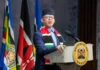
Appearing before the committee chaired by Senator Issa Boy on Tuesday, May 13, Oparanya said detectives from the Directorate of Criminal Investigations (DCI) were actively handling the matter and that surcharge notices had already been issued against those implicated.
“On Metropolitan National SACCO, recovery efforts remain active through administrative, judicial and investigative channels,” Oparanya told the committee.
He added that cases before the Co-operative Tribunal were also ongoing as authorities seek to recover money lost by members.
The scandal at Metropolitan SACCO has become one of the largest cases of financial fraud experienced in the SACCO sector of Kenya.
From 2021 to 2023, numerous members, particularly teachers and civil servants, found themselves barred from accessing their savings amid growing financial problems with the formerly popular SACCO. At first, complaints emerged as members complained of being unable to withdraw deposits and obtain loans on time.
It was during an audit in 2024 that fraudulent activities worth almost Ksh15 billion were identified, and there is speculation that the funds were lost due to a joint venture of former and current SACCO officials as well as the board members.
As a result, many households have remained deprived of their savings; for example, some members revealed that they had lost their retirement funds and emergency funds saved over several years.
In the course of the Senate hearing, Oparanya also talked about the issues related to the problematic Kenya Union of Savings and Credit Cooperatives (KUSCCO).
The CS said the government had made progress in stabilising KUSCCO following forensic audits and the reconstruction of financial records.
According to Oparanya, the recovery programme at KUSCCO has included governance reforms, verification of claims, cost-cutting measures, debt restructuring, asset recovery, legal action and partial refunds to affected SACCOs and members.
“Although the recovery journey is complex, progress has been made,” he told senators.
On the other hand, the government came up with plans to implement some major reforms in the co-operative sector to prevent such failures from happening in the future.
According to Oparanya, the Ministry is trying to implement various legal and institutional reforms through the new Co-operatives Bill, 2024, as well as through the National Co-operative Policy.
Among the reforms to be implemented include establishing a SACCO Deposit Guarantee Fund, Central Liquidity Facility, SACCO Stabilization Fund, and Co-operative Digital Registry.
The reforms are expected to strengthen oversight in the SACCO sector, improve governance and offer better protection for members’ savings.