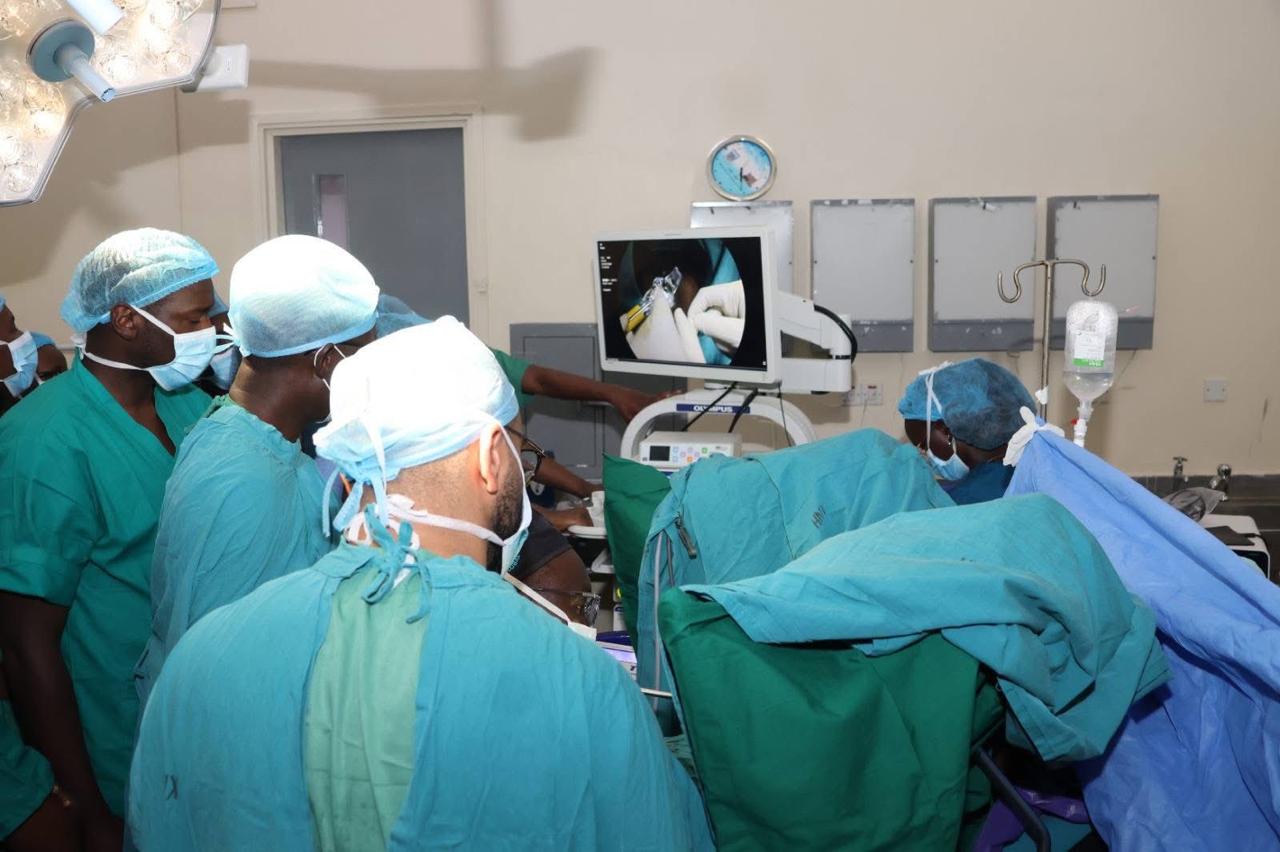
Patients seeking treatment for haemorrhoids at Kenyatta National Hospital could soon experience less pain and shorter recovery periods after the hospital successfully carried out procedures using a new minimally invasive technology.
The hospital announced that it had conducted haemorrhoids treatment using the advanced Transanal Hemorrhoidal Dearterialization (THD) technology, a move doctors say marks a major step forward in specialised surgical care in the country.
The procedures were carried out in partnership with Pentaprism Medical Africa.
Unlike the traditional surgery used in the treatment of haemorrhoids, which makes patients suffer more pain and long-term healing processes, the THD method puts emphasis on minimizing pain and faster healing.
According to KNH, the procedure involves using a specially designed Doppler-guided apparatus in locating and then ligating arteries supplying blood to the haemorrhoids; hence, resulting in shrinking of swellings without the need for any major incisions.
Among other advantages of this type of surgery, doctors have pointed out reduced pain experienced by patients post-surgery, small wounds, shorter hospitalization times, and fewer side effects.
The hospital pointed out that the new technique would not only enhance the patient experience but also help improve Kenya’s capabilities of providing specialized surgical services within the country, making it unnecessary for some individuals to travel overseas for medical purposes.
This represents another step towards the introduction of innovative techniques to Kenya’s public healthcare sector in its continuous efforts to incorporate new technologies into its operations.