Kenya has signed a Sh389.4 billion ($3 billion) Memorandum of Understanding (MoU) with Endelevu Enterprise Corporation for the development of an integrated electric-mobility project expected to expand local vehicle manufacturing and create employment opportunities.
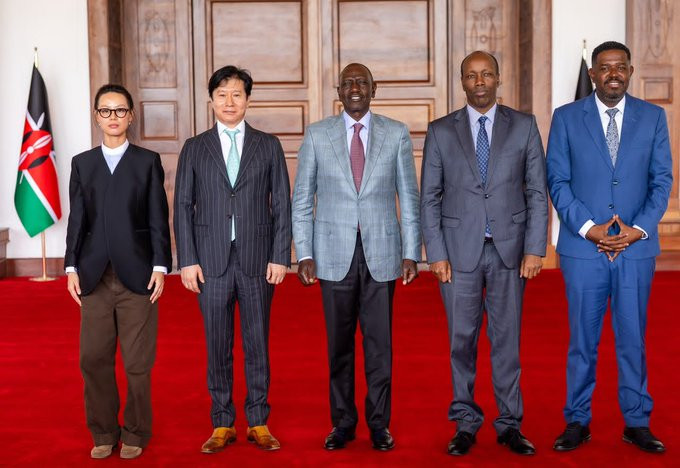
The agreement was signed at State House in the presence of President William Ruto, with Industrialisation and Trade Cabinet Secretary Lee Kinyanjui saying the investment could strengthen Kenya’s position as a regional investment hub.
Under the proposed project, Endelevu Enterprise Corporation plans to produce 50,000 four-wheel vehicles and 100,000 two-wheelers and other light-mobility vehicles.
The project will also be supported by the development of 1,000 solar-powered charging hubs, forming part of the planned electric-mobility infrastructure.
Kinyanjui said the investment presents opportunities for local manufacturing, technology transfer, skills development and employment, while stressing the need for investments to generate wider economic benefits.
“Investment must ultimately translate into jobs, stronger industries and wealth creation for our people,” Kinyanjui said.
The Cabinet Secretary said investor confidence in Kenya was linked to the country’s business environment and its role as a regional investment hub, adding that the government would work to protect and strengthen these advantages.
President Ruto tasked the Ministry of Investments, Trade and Industry with supporting Endelevu Enterprise Corporation as it establishes its operations in Kenya.
Part of the ministry’s role will involve exploring suitable industrial space in Nakuru for the company’s operations.
Kinyanjui said the government would work with the investor and relevant agencies to facilitate the establishment of the project and ensure the investment moves from an agreement to actual production.
The planned electric-mobility project comes as Kenya seeks to expand local manufacturing and attract investments in emerging industries, including clean transport and renewable-energy technologies.

The production of electric vehicles and two-wheelers could also create opportunities across the supply chain, including vehicle assembly, components, charging infrastructure, technical skills and maintenance services.
The proposed solar-powered charging hubs are expected to support the project’s electric-mobility ecosystem while linking vehicle production with renewable-energy infrastructure.
Kinyanjui said the government would continue facilitating investors as part of efforts to convert investment commitments into productive economic activity.
The Sh389.4 billion agreement therefore places manufacturing, electric mobility, skills development and employment at the centre of the proposed investment, with Nakuru being considered as a potential location for the company’s industrial operations.