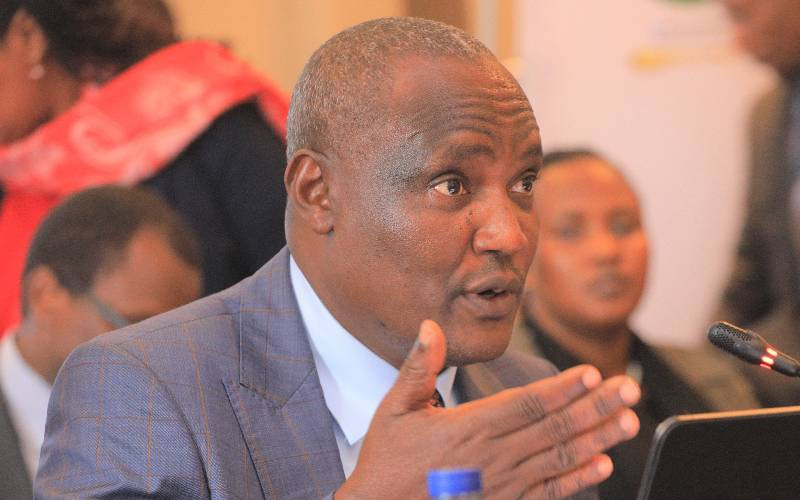
Kenya narrowly avoided a sovereign debt crisis after the government successfully refinanced maturing Eurobond obligations, Treasury Cabinet Secretary John Mbadi has said.
Speaking in Kakamega, Mbadi warned that failure to refinance the debt would have plunged the country into a crisis marked by drastic public sector pay cuts and layoffs, imposed under conditions set by international lenders such as the International Monetary Fund and the World Bank.
He said the government benefited from unexpected conditions in international markets that allowed it to return to the market at a critical moment, refinancing an existing Eurobond and easing immediate debt pressure.
“Something no one expected happened. The market opened, and this government went to the market, got another Eurobond and refinanced the other Eurobond,” Mbadi said.
He described the development as good fortune rather than economic brilliance.
“It was luck. It was not any economic magic for Kenya,” he added.
Mbadi noted that the Treasury moved decisively to ensure the refinancing did not expose the country to future risks. He said upcoming Eurobond repayments were deliberately addressed earlier than required to reduce pressure on public finances.
“That is why last February and March, because we were aware another Eurobond was coming up for payment in May 2027, we decided to deal with it early,” he said, adding that a similar step was taken in September to address the 2028 maturity.
“We didn’t want to behave like the other government, which decided to leave the rest,” he said.
The Treasury CS revealed that Kenya had been flagged by the IMF as being at high risk of sovereign default, alongside several other African countries.
“IMF categorised Kenya among five other countries in Africa which were going into default. All those countries have defaulted. It is only Kenya which has not defaulted,” Mbadi said.
He warned that a default would have had severe consequences for the economy and public servants, including deep salary cuts and job losses. Any bailout, he added, would have come with harsh conditions.
“For us to be bailed out by the IMF and World Bank, they will come and tell us: you have found yourself in a mess, and we have to clean you up.
To clean up, you start with yourself. Everybody, 50 per cent pay cut. Some staff must go home,” Mbadi said, stressing that Kenya narrowly avoided that scenario.