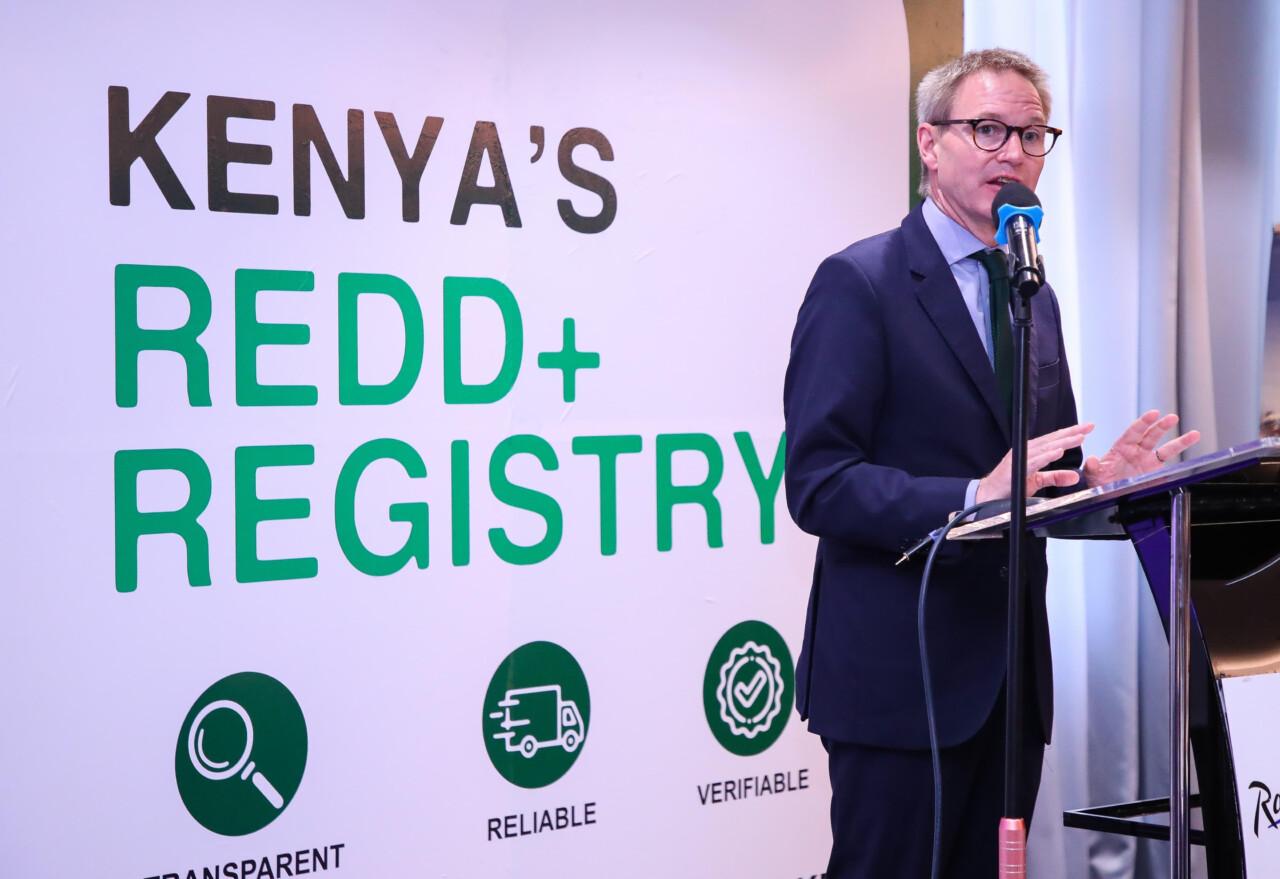
Kenya has launched Africa’s first REDD+ Registry, marking a significant step in tracking and managing emissions reductions from deforestation and forest degradation. The digital platform was unveiled on World Conservation Day in collaboration with the UK government and Conservation International.
The REDD+ (Reducing Emissions from Deforestation and Forest Degradation) Registry will serve as a centralized national system for verifying, issuing, and tracking carbon credits from forest conservation activities. It aims to improve transparency, prevent double counting of carbon credits, and support Kenya’s efforts to meet its climate commitments under the Paris Agreement.
The registry is a key part of Kenya’s forest-based climate strategy and aligns with recent legal frameworks, including the Climate Change (Amendment) Act, 2023 and the Carbon Market Regulations, 2024. It will also integrate into Kenya’s planned National Carbon Registry.
In addition to the registry, the Ministry of Environment launched new REDD+ Nesting Guidelines—technical rules that allow local forest projects to be integrated into national carbon accounting systems. This ensures consistency and credibility in reporting carbon emissions reductions across various levels.
Kenya’s Environment Cabinet Secretary, Soipan Tuya, described the launch as a major step toward improving forest governance and attracting climate finance. UK High Commissioner to Kenya, Neil Wigan, called it a milestone in the Kenya-UK climate partnership, while Conservation International East Africa’s managing director Dr. Seif Hamisi highlighted the registry’s role in promoting accountability and transparency.

The UK, through its UK PACT (Partnering for Accelerated Climate Transitions) programme, will host the registry for two years while Kenya builds the technical capacity to manage it locally.
Kenya becomes the first country in Africa and only the second in the world to launch a dedicated REDD+ emissions tracking system, positioning itself as a regional leader in carbon market infrastructure.
Why It Matters:
- Transparency & Integrity: The registry ensures emissions reductions are verifiable and prevents double counting.
- Market Access: It opens doors for Kenya to participate in international carbon markets, including those under Article 6 of the Paris Agreement.
- Community Inclusion: Indigenous and community forest associations are included in the system to enable benefit-sharing.
- Climate Accountability: Supports Kenya’s climate reporting through integration with its Forest Reference Emission Level (FREL), Forest Monitoring System (NFMS), and Safeguards Information System (SIS).
The registry supports Kenya’s broader strategy to mobilize climate finance and expand forest cover under the national 15 Billion Tree Growing Programme.