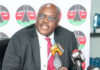
The government is set to merge schools with very low student numbers some with less than ten students after a top-level audit of school enrollments and capitation spending. This was revealed by Education Cabinet Secretary Julius Ogamba.
Warning the Senate on Wednesday, CS Ogamba noted with alarm what he called a worrying trend: government schools being fully funded by the state but having few students. In some cases, he said, this is leading to public resources being wasted to cover up the country’s education.
“In our findings, some schools are barely functioning with less than ten students yet still drawing significant capitation from the Ministry,” he told Senators. “That’s something we’re now taking seriously.”
In order to tackle this problem, the Ministry of Education is considering two main solutions: consolidating sparse schools, and potentially dividing up overcrowded ones. The goal is to distribute resources efficiently and equally particularly since the sector continues to battle with funding issues.
But Ogamba admitted that there are certain problems yet to be solved, most specifically how the mergers would affect students and teachers most specifically in rural areas where schools are limited and far apart.
He did not mention how the government would deal with such problems as long distances of travel in case part of the schools are closed or consolidated.
“After we’ve completed our audit, only schools with verified enrollment numbers will continue receiving funds,” he said.
Audit in the Final Stages
75% of the enrollment audit has been completed, the CS said, with the final quarter to be finalized by month-end. The verification is part of a bigger exercise undertaken by the Auditor General concerning inconsistencies in school enrollment reports.
“The anomalies we’re uncovering are serious,” Ogamba said. “So we’ve decided that this third term, no funds will be released unless the student numbers are verified.”
Junior Secondary Confusion and Infrastructure Push
In the case of Junior Secondary Schools (JSS), which has been a point of confusion ever since the reform of the education system began, Ogamba promised that the government does not plan to create a more complicated structure.
Instead, it will merge primary and junior secondary levels into one, single institution a move in accordance with recommendations by the Presidential Working Party on Education Reform.
In an effort to complement in mitigating the challenge of rising enrollment and alleviating pressure on school infrastructure, the government has also allocated Ksh1.3 billion for infrastructural development.
Ogamba further stated that as the 100% transition program is progressively rolled out, more money will be needed to expand classrooms and upgrade school infrastructure.
“Every time you turn around, you notice the pressure is mounting and that’s why, other than depending on the Constituency Development Fund (CDF), we are also seeking targeted budgetary allocations to help our schools to grow,” he said.
What’s Next?
Though the reforms wanted are to promote effectiveness and accountability, they’re also anticipated to be contentious particularly from parents, teachers, and education players concerned with access and equity.
All eyes will remain on the final audit findings and how the Ministry reconciles fiscal responsibility with the realities of the learners and educators in the country.