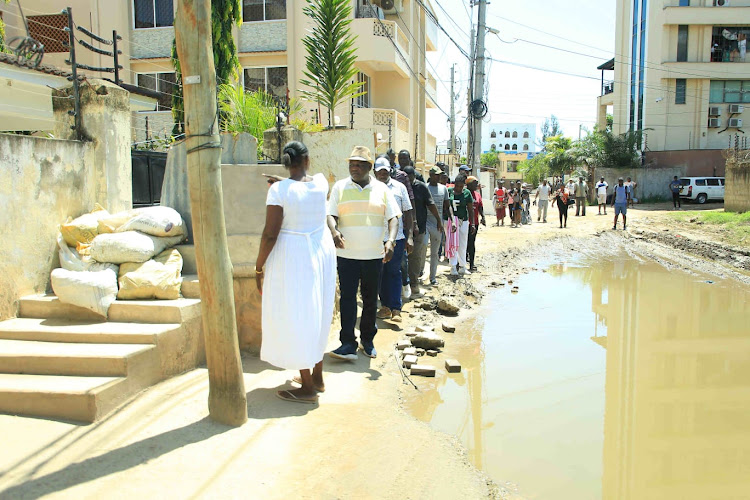
Heavy rains have once again plunged Mombasa County into chaos, leaving hundreds of residents displaced, homes submerged, and businesses disrupted as flash floods sweep through the coastal city.
The disaster has reignited long-standing concerns over poor urban planning and inadequate drainage infrastructure.“We cannot continue living like this every year. We need proper drainage systems to prevent these disasters from recurring,” pleaded one resident of Tudor, a low-lying area severely affected by the floods.
Several neighborhoods—including Kisauni, Likoni, and Changamwe—have reported extensive damage to homes, blocked roads, and overflowing sewer systems. Footage shared on social media shows residents wading through waist-high water as they attempt to salvage belongings from their waterlogged homes.
Local health officials have raised alarms over the increased risk of waterborne diseases such as cholera and typhoid, especially in informal settlements where access to clean water and sanitation is limited.
Temporary shelters have been set up in public schools and community halls to house displaced families, but the numbers continue to grow as rains persist.
County leaders and humanitarian organizations have started distributing food, clean water, and medical supplies to affected residents. However, the scale of the destruction has overwhelmed local response efforts.Pressure is now mounting on both county and national governments to implement long-term flood mitigation measures.
Experts have long warned that Mombasa’s vulnerability to flooding is exacerbated by unchecked construction, encroachment on natural waterways, and failure to upgrade the city’s outdated drainage systems.“We urge the government to treat this as a climate emergency,” said a local civil society group. “Ad hoc responses are not enough—what we need is a comprehensive disaster preparedness plan that addresses root causes.”
With more rainfall expected in the coming days, residents are bracing for further disruptions even as they call for urgent and sustainable interventions to prevent future disasters.