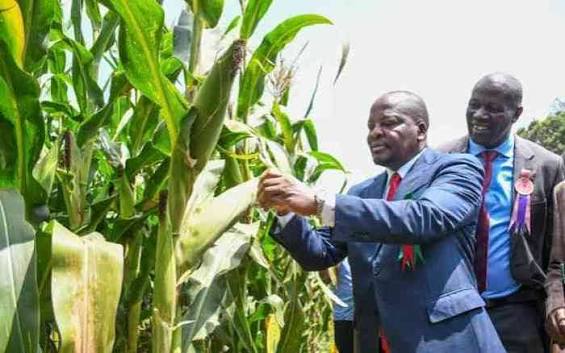
Farmers are set to benefit from lower production costs after the government announced a fresh reduction in the price of subsidised fertiliser and certified maize seed.
A 50kg bag of subsidised fertiliser will now retail at Sh2,000, down from Sh2,500, while the price of certified maize seed will be cut by half.
Agriculture Cabinet Secretary Mutahi Kagwe said the government will meet 50 per cent of the cost of certified maize seed, reducing the farmer’s price from Sh300 to Sh150 per kilogramme.
The new prices mean a 2kg pack of maize seed will cost Sh300, down from Sh600. A 10kg pack will retail at Sh1,500 instead of Sh3,000, while a 25kg pack will cost Sh3,750, down from Sh7,500.
The government expects the intervention to benefit farmers preparing for the coming planting season, particularly after poor rains affected crop production in several parts of the country.
President William Ruto announced the measures during a church service at AIC Makutano in Taita Taveta County on Sunday.
“I am making an announcement to all our farmers that from next month, in the next two weeks, we are going to subsidise maize seeds by 50 per cent and reduce the cost of fertiliser by another Sh500,” Ruto said.
The President urged farmers to take advantage of the expected short rains and increase food production.
The latest intervention comes after the government had already reduced the price of a 50kg bag of subsidised fertiliser to Sh2,500.
The government has now set aside about Sh6 billion for the maize seed subsidy, targeting approximately 40 million kilogrammes of certified seed.
Kagwe said farmers will access the subsidised fertiliser and maize seed through government-designated distribution channels as the programme is rolled out.
The government says the measures are part of its shift towards subsidising agricultural production by lowering the cost of inputs and encouraging farmers to increase output.
The latest cuts are also expected to support food security by making it cheaper for farmers to plant during the coming season.
For farmers, however, the key test will be whether the cheaper inputs are available in sufficient quantities and reach them on time when planting begins.