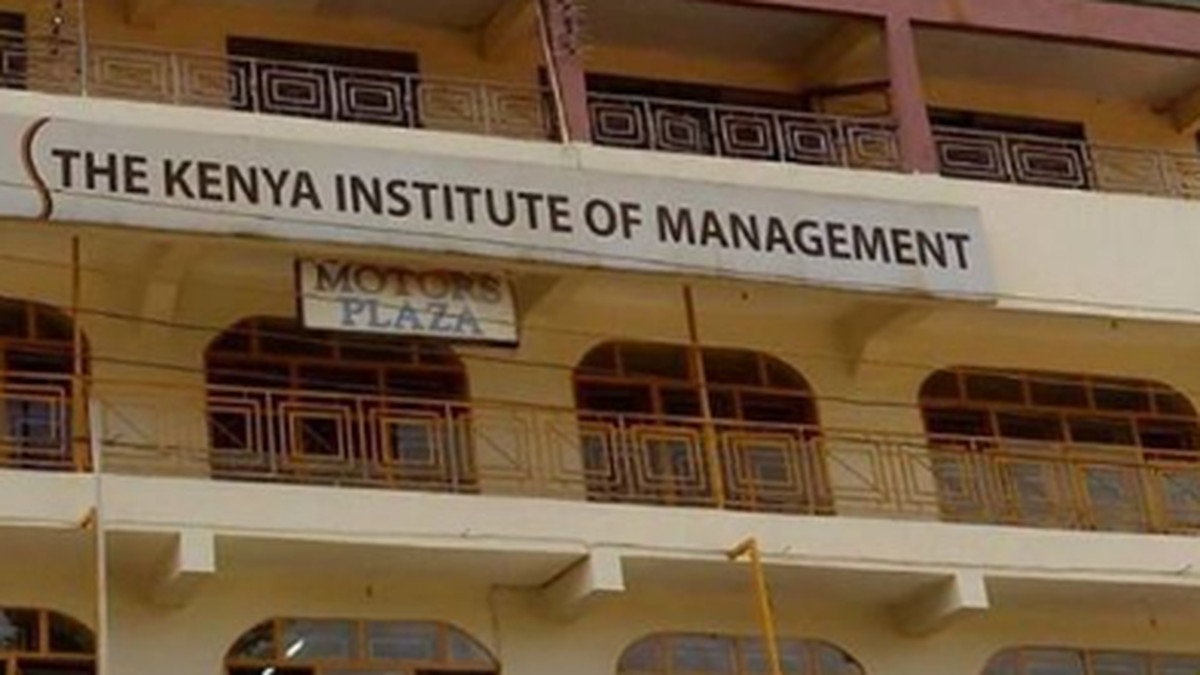
The Technical and Vocational Education and Training Authority (TVETA) has explained why it cancelled diplomas and certificates issued by the Kenya Institute of Management (KIM) from 2018, pointing to unapproved courses and failure to follow required examination standards.
In a statement, the regulator said the decision was based on non-compliance with the TVET Act, which governs how diploma programmes are taught, examined and certified in Kenya.
According to TVETA, KIM continued to use internal exams despite conditions in its 2019 licence requiring external supervision. As a result, the authority said exams conducted during that period cannot be recognised.
The regulator also noted that diploma courses, classified as Level 6, must have their curriculum approved before students can sit exams and be awarded certificates. TVETA said this process was not properly followed.
The issue, the authority explained, started after changes in the law altered how KIM was expected to operate. Previously, the institution had a government notice allowing it to train, examine and issue certificates independently. However, that mandate was later withdrawn under the TVET Act, requiring KIM to align with new standards.
TVETA maintains that KIM did not fully comply with these requirements, especially on curriculum approval.
The authority also raised concerns about KIM’s partnership with the Management University of Africa (MUA). In 2022, the two institutions entered into an arrangement to offer joint programmes and certification.
However, TVETA said the roles of each institution in training and assessment remain unclear, creating confusion, particularly in courses such as business management.
“We don’t want to get into the issue of MUA because we don’t even know the relationship between KIM and MUA. Business management, again, a combination of KIM and MUA. That is the kind of confusion we don’t want,” said TVETA Chief Executive Officer Timothy Nyongesa Katiambo.
The regulator emphasised that for any diploma programme to be valid, the curriculum must first be reviewed and approved before an institution including a partner like MUA can handle assessment.
KIM, however, says it has been engaging TVETA to address the concerns. Executive Director Muriithi Ndegwa said the institution has been holding meetings and writing to the regulator for updates.
“It is a process, and that is the reason why we have been in communication and had meetings with TVETA. We have also written communication to TVETA, specifically talking about status updates on where we are and our requests,” he said.
Meanwhile, the decision has triggered protests from students, who say they are the ones most affected. They estimate that about 10,000 current students and over 100,000 graduates could be impacted, especially following the closure of KIM’s 14 branches across the country.
In a statement, students in Kisumu said while they respect TVETA’s role, shutting down the institution is too harsh.
“We respect the mandate of TVETA to ensure standards. We advocate for compliance over closure. An indefinite closure is a nuclear option that punishes the students for the administrative gaps of the institution,” the statement read.