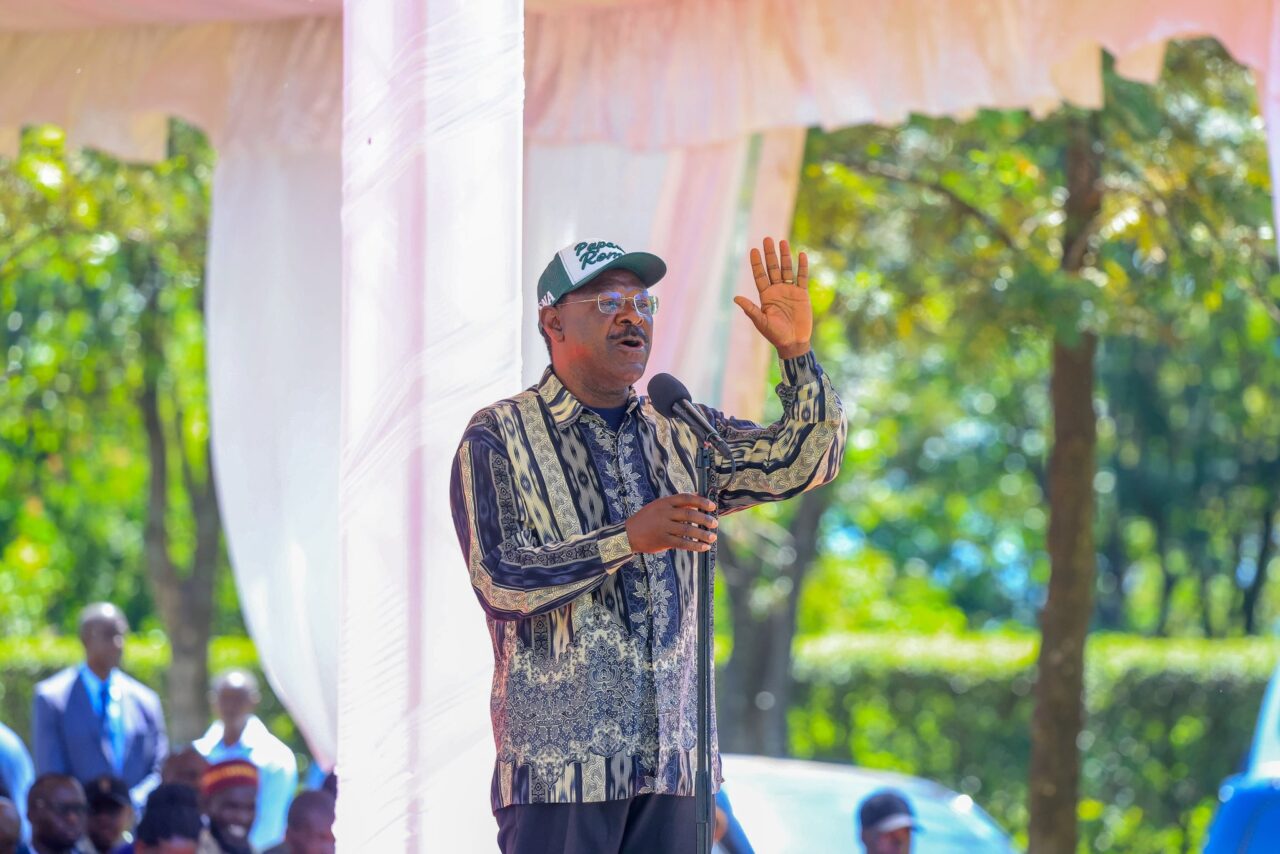
National Assembly Speaker Moses Wetang’ula has defended the leasing of Nzoia Sugar Company to private investors, saying the decision has helped revive the struggling miller and improve the welfare of farmers and workers.
Speaking on Monday, November 23, during President William Ruto’s visit to Bungoma County, Wetang’ula said leaders from the region had faced criticism when they supported the leasing arrangement.
He maintained that they stood firm because they believed private sector management was the best option to restore the factory’s operations.
Wetang’ula spoke during a ceremony where Ruto presided over the payment of KSh195 million in bonuses to farmers supplying sugarcane to Nzoia Sugar Company.
The Speaker said the factory had recorded significant improvements under its new management, with farmers receiving payments within seven days of delivering cane.
He also cited the introduction of digital cane weighing, timely payment of workers’ salaries and the company’s ability to meet its tax obligations.
“I am happy that farmers are now paid within seven days upon delivery of cane, weighing of cane is digital, employees receive their salaries promptly and the company meets its tax obligations,” Wetang’ula said.
He described the changes as evidence of the transformation promised by the Kenya Kwanza administration under President Ruto.
The Speaker also warned against attempts to return the factory to what he termed failed leadership and political experiments.
“As leaders, we will not allow Nzoia Sugar to become a resurrection ground for failed leadership and political experiments,” he added.
Ruto, who presided over the bonus payment at the factory in Kanduyi, said the KSh195 million payout was part of a wider KSh1.2 billion package targeting sugarcane farmers across the country.
The President also promised to double the bonus payment to Nzoia farmers in 2027, urging growers to increase cane production.
The leasing of Nzoia Sugar to West Kenya Sugar Company, part of the Rai Group, took effect in May 2025 under a 30-year agreement.
The arrangement was aimed at restoring the miller’s operations after years of financial difficulties and production challenges.