By Felix Njenga
Master trainers and master crafts persons in Technical and Vocational Education Training (TVET) institutes in Kiambu are undergoing training on Recognition of Prior Learning (RPL) so as to ensure trainees are well equiped in technical skills.
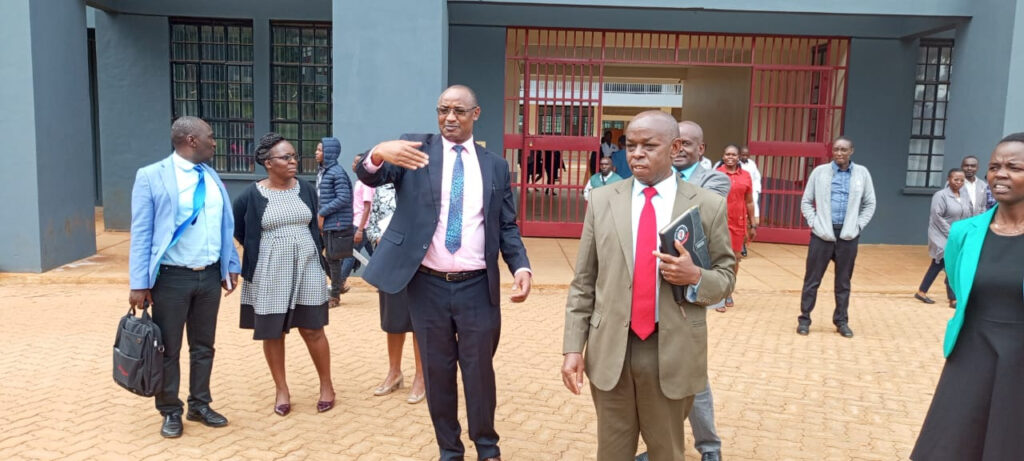
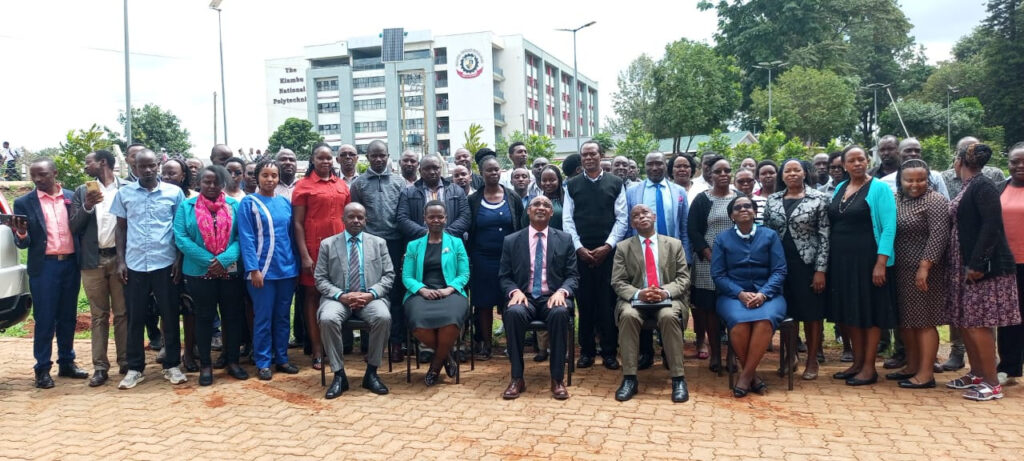
Speaking during the second phase of the training of trainers on RPL assessment and certification, at the Kiambu National Polytechnic (KINAP) Kiambu, the TVETs director Dr. Joseph Kanyi representing Principal secretary TVETs Dr. Esther Muoria read a speech prepared by the PS that the high level training is being done with a goal of maximizing the effectiveness and impact in supporting government initiatives in formalizing the informal sector comprising over 15 million workers with recognized skills.
“the efforts are as a result of strong collaboration of stakeholders like Kenya national federation Jua Kali association, TVET institutions, government agencies and development partners,” The PS stated.
She noted that the partnerships are central to building a more inclusive accessible education system.
” I encourage every trainer to participate and actively share your perspective and contribute to designing a module that truly addresses the diverse needs of our applicants and industries,” Kanyi read.
The PS said that inclusivity must be at the heart of TVETs approach supporting RPL practitioners from all backgrounds and ensuring no one is left behind.
” We have expanded this training to include master crafts persons from industry and workshop laboratory technicians empowering them to participate and contribute to the assessment of RPL,” she said.
She said training is taking place in three other key regions that include lower eastern regions, Nairobi and Bungoma county regions have been strategically restructured to ensure affordability, durability and mass roll out of RPL.
The State Department for Technical and Vocational Education and Training (TVET) has reorganized the national initiative aimed at identifying, assessing, and certifying individuals with knowledge and skills acquired through informal and non-formal learning, but lack formal qualifications.
The reorganization is aimed at lowering the cost of capacity-building TVET Trainers and Master Crafts Persons from industry to enhance uptake.
A total of 10,000 TVET trainers and Master Craft Persons are targeted for up skilling with RPL andragogy to effectively deliver RPL.
During the training, Participants will undergo a 40-hour, comprehensive face-to-face training at institutional premises and another 40 hours Practical assignment.
The initiative is coordinated by the State Department through RPL Delivery Unit.
Successful participants will be awarded RPL Practitioner Level 2 Certificate of Achievement upon completion of the training.
The key components of the workshop Include,training of TVET trainers and Master Crafts Persons from various regions.
The establishment of Regional RPL Implementation Committees to be chaired by National Polytechnics are collaborative regional networks that bring together RPL actors including government agencies, regulatory bodies, industry players, RPL practitioners, Assessment and Placement Hubs (AHPs), and large-scale government projects—to drive the adoption and up scaling of RPL within their regions.