The Government is seeking partnerships with private sector players in the irrigation sector in a bid to scale up Farmer-Led Irrigation Development ( FLID) in the country.
FLID is one of the five pathways spelt out by the 10-year National Irrigation Sector Investment Plan( NISIP) 2025-2035, that was launched last year by the State Department for Irrigation in its efforts to increase area under irrigation from the current 747,000 acres to 1.5 Million acres.
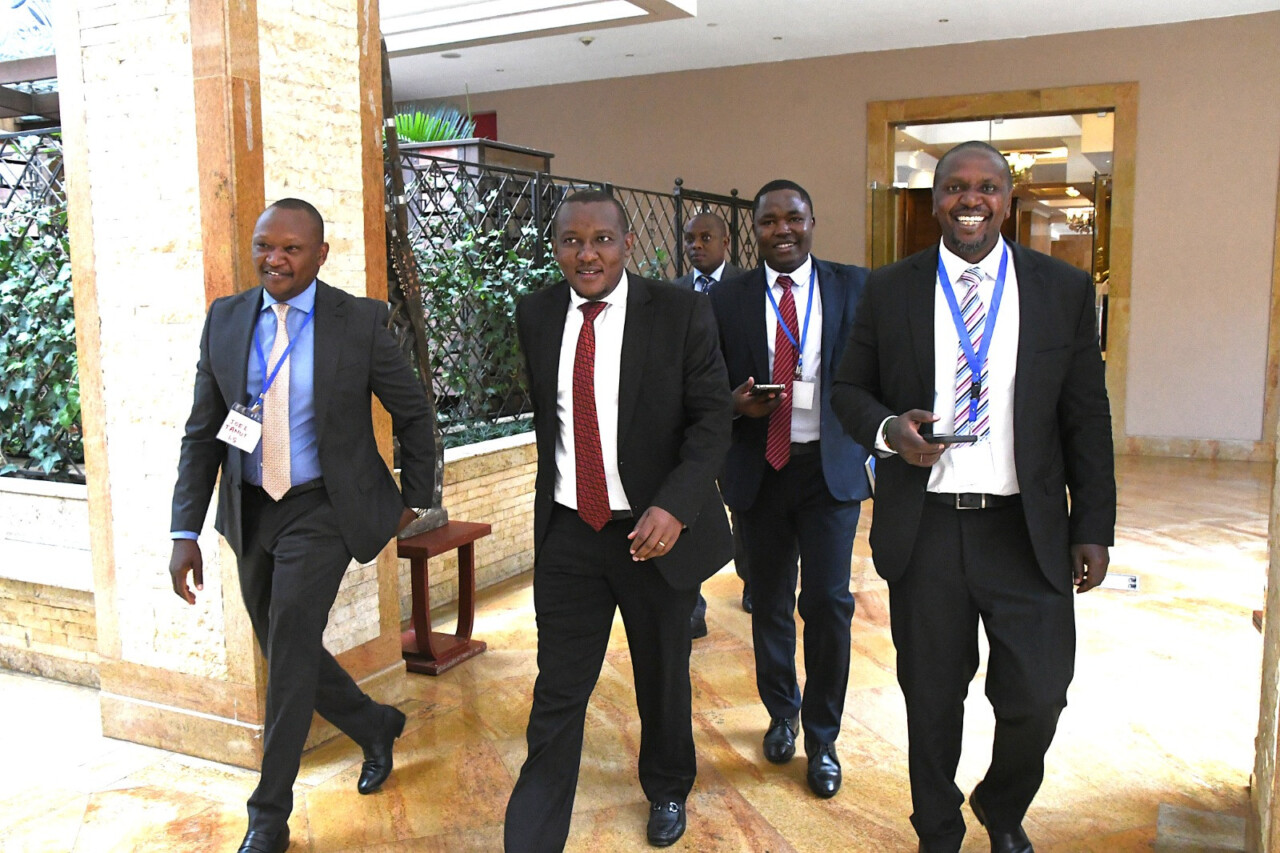
Speaking during a stakeholders meeting of irrigaton equipment suppliers at a Nairobi Hotel, the Principal Secretary, State Department for Irrigation, CPA Ephantus Kimotho, observed that while Kenya has an irrigation potential of 3.5 million acres, NISIP undertakes to put 50 percent of these 3.5 million acres under irrigation in the next 10 years.
The PS further said that “NISIP envisages that the private sector will plug in 61 percent of the investments needed to revolutionalize the sector while the government provides the remaining 39 percent”.

The PS further noted that while Kenya currently imports food related goods worth over 21 billion dollars annually, it only exports agricultural products worth 10 billion dollars only resulting in 11 billion dollars deficit adding that enhanced investments in Irrigation can reduce this deficit to five billion dollars.
The PS thus emphasized the need for more investments in the sector through collaboration with private investors, development partners, irrigation equipment suppliers and farming communities and added “this result based financing model that we are designing in collaboration with the World Bank and is being discussed today, provides solutions for some of the problems our farmers and Irrigation equipment suppliers have faced in the past”.
The PS observed that 75 percent of the agricultural production in the country is by smallholders whom, he said, mostly rely on rain fed agriculture.
He added that despite agriculture accounting for 24 percent of the country’s gross domestic product (GDP) the banking sector has only invested three percent into the sector as it is viewed as a risky investment.
PS Kimotho thus emphasized the need to support smallholder production saying that the government through the State Department is in the process of scaling up Farmer-Led Irrigation Development (FLID) to empower smallholder farmers adopt; invest in, and manage their own irrigation technologies in a bid to boost agricultural production.
He however observed that the private sector will only invest in irrigation if it is profitable noting that there is need for concerted efforts by all players in making irrigation a profitable undertaking through provision of cost effective technologies, prolonging the loan repayment periods for the farmers and having a facility that provides the necessary impetus for the private sector to plug into.
“Today’s conversation is therefore geared towards fostering partnerships between the public, private sector, irrigation equipment suppliers, digital communication providers as well as development partners in a bid to mobilize the needed resources and necessary expertise as prerequisites for a thriving irrigation sector” the PS added.
The PS appreciated the support from development partners especially the World Bank, which has been instrumental in the development of NISIP and is further working with the State Department in developing the result based financing (RBF) facility.
The Lead Water Resources Management Specialist at the World Bank, who has been key in rhe design of RBF, Peter Waalewijn, expressed the World Bank’s support saying, “The World Bank is ready to put in resources to support what is being discussed today” and added “our support is premised on the fact that irrigation is not an end in itself but a means to job creation, climate resilience and rural development and an opportunity to create resilient jobs in the Kenya”