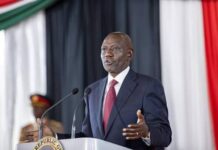
Foreign Affairs Principal Secretary Korir Sing’Oei has responded to the United States’ decision to raise its travel advisory for Kenya, saying the move does not amount to a ban on American citizens visiting the country.
Speaking on Wednesday, October 21, 2026, Sing’Oei said Washington was entitled to advise its citizens on travel risks but maintained that the new warning should not be interpreted as a restriction barring travellers from Kenya.
“The United States is duty-bound to advise its citizens with respect to decisions that it deems important,” Sing’Oei said during a radio interview.
“The issue around Ebola is a sensitive matter, and it is important for them to advise its citizens,” he added.
The remarks came two days after the US Department of State raised its travel advisory for Kenya from Level 2 to Level 3, urging American citizens to reconsider travel because of health and security concerns.
The advisory, issued on October 19, cited the Ebola outbreak alongside risks linked to crime, kidnapping, terrorism, civil unrest and road safety.
However, the warning does not prohibit Americans from travelling to Kenya. The US government has separately identified areas where it advises its citizens not to travel because of heightened security risks.
Sing’Oei described the Level 3 classification as a cautionary measure rather than a travel ban.
“As you can see, Kenya has been put on Category 3, which is more of a caution, and there are no implications with respect to barring travellers coming from Kenya associated with that advisory,” he said.
The PS also revealed that Kenya had been working with the United States and other international partners on Ebola preparedness before the country confirmed its first case of the disease.
He said the government had sought to establish facilities and systems to isolate and contain potentially infected people before the outbreak reached Kenya.
“We have been working very closely with the United States. Over the last almost six months, I think you know a bit of the history when there was an attempt by the Kenyan government to set up infrastructure to isolate and contain potentially Ebola-infected persons,” Sing’Oei said.
He added that the preparedness efforts were intended to strengthen the country’s ability to respond to the outbreak before infections were detected locally.
The travel advisory comes as Kenya continues to manage an outbreak of Bundibugyo virus disease, a rare strain of Ebola.
By October 20, the country’s confirmed cases had risen to nine, according to reports on the outbreak. Health authorities said the infections were linked to one cluster as surveillance, contact tracing and quarantine measures continued.
Sing’Oei said the outbreak had caused anxiety but stressed the importance of cooperation between countries to contain the disease.
The US advisory could also raise concerns for Kenya’s tourism sector and other businesses that depend on international travel, although it does not automatically stop American visitors from entering the country.
The United States urged its citizens to review the full advisory before making travel decisions, particularly because some parts of Kenya face stricter warnings due to security threats.