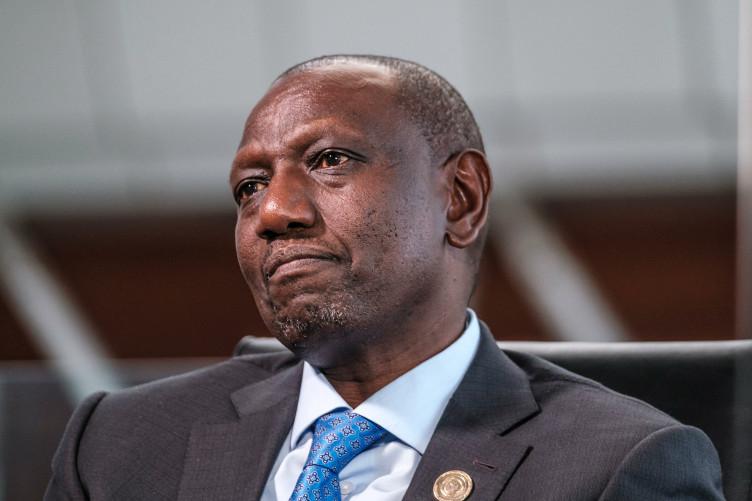
President William Ruto has called for a new national long-term development vision to guide Kenya beyond the expiry of Vision 2030, urging citizens to focus on the needs of future generations rather than election cycles.
Speaking at the Kenyatta International Convention Centre (KICC), Ruto said Vision 2030, developed more than two decades ago, was conceived under circumstances that are significantly different from today.
He cited rapid technological advancement, the emergence of artificial intelligence, climate change and the adoption of the 2010 Constitution as key reasons Kenya needs a fresh long-term development framework.
Ruto said the current Medium-Term Plan Four will end in 2027, while Vision 2030 expires in 2030, creating the need to develop Medium-Term Plan Five, covering 2027 to 2032, within a broader national vision.
The President said the new vision should be driven by Kenyans through public participation rather than being developed solely by government officials and technocrats.
“This is not a government project. This is a people’s project,” Ruto said, calling on farmers, students, professionals, technocrats and other citizens to contribute ideas on the country’s future.
He highlighted Kenya’s progress in democracy, constitutional governance, infrastructure, electricity access and education, but acknowledged challenges in the economic and social pillars.
Ruto also identified Africa’s youthful population, renewable energy potential, expanding markets and vast arable land as opportunities that could shift the centre of global economic growth towards the continent.
He urged Kenyans to think beyond elections and administrations, saying national planning must prioritise the next generation and address inequality.