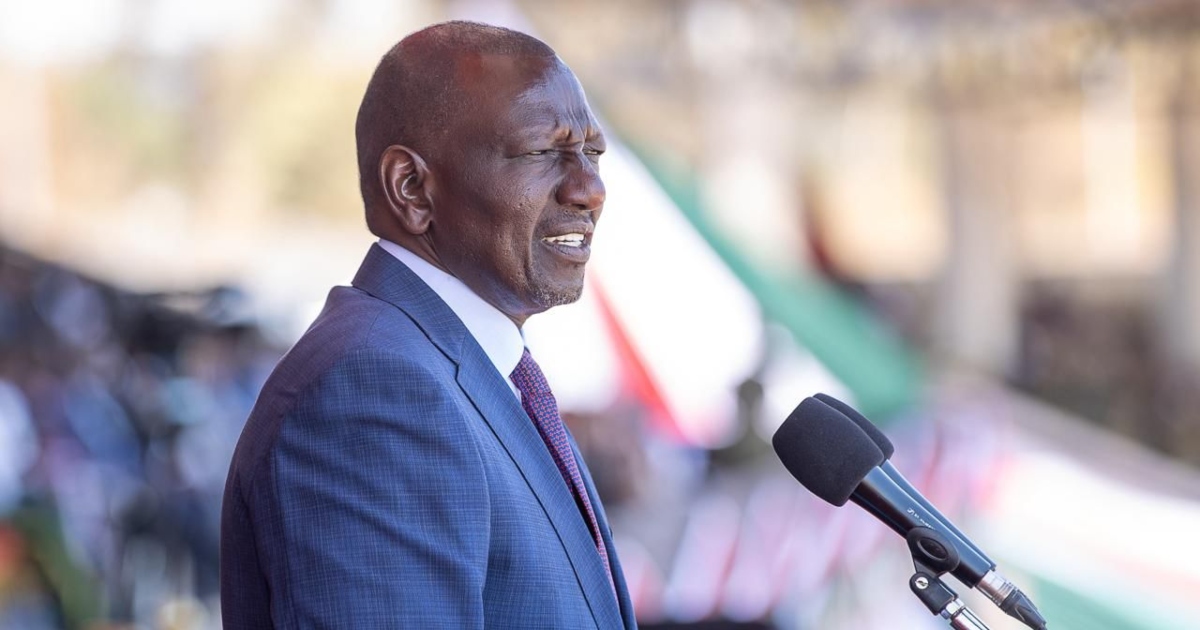
President William Ruto has urged the international community to strengthen cooperation in responding to a growing global displacement crisis, warning that no single nation can shoulder the responsibility of hosting refugees alone.
Speaking in Nairobi during the opening of the 14th International Association of Refugee and Migration Judges (IARMJ) World Conference, President Ruto said more than 120 million people worldwide have been forced from their homes due to conflict, persecution, economic distress and climate-related disasters, making it an urgent global challenge.
Ruto noted that Kenya remains one of the world’s leading refugee-hosting countries, currently sheltering nearly 580,000 refugees and asylum seekers, a role he said reflects the country’s longstanding tradition of hospitality and solidarity with displaced populations.
The President highlighted Kenya’s progressive legal framework — including its commitments under international conventions and the 2021 Refugees Act — which guarantees refugees freedom of movement, the right to work, and protection from forced return. He said these policies underpin the country’s shift from encampment to integration.
Ruto pointed to the government’s recently launched Shirika Plan, which aims to transform refugee camps into integrated settlements where refugees and host communities can live and work together. He said the model aligns with the Global Compact on Refugees and the African Union’s push for homegrown solutions.
The President also appealed for enhanced international burden-sharing through financial support, resettlement spaces, and technical assistance, saying “solidarity is not charity; it is justice.”
Judicial Integrity and Fair Asylum Processes
Addressing hundreds of refugee and migration judges from around the world, Ruto stressed that judicial independence is central to safeguarding refugees’ rights. He said a single ruling often determines whether a vulnerable person secures protection or faces danger.
He urged judges to uphold impartiality, fairness, and consistency in decision-making, calling for strengthened cooperation and shared global jurisprudence to ensure justice “does not depend on geography or chance.”
Ruto also underscored the need for fair and timely asylum procedures, access to legal counsel, appeal rights, and trauma-informed interviewing — particularly as many refugees lack documentation or struggle to narrate their experiences.
Climate Migration and Emerging Threats
The President warned that climate change is rapidly becoming a major driver of displacement, predicting it could uproot over 200 million people by 2050. He said Kenya is already seeing movements triggered by drought and environmental collapse, calling for legal frameworks that address climate-related migration.
He further raised concerns about the misuse of asylum systems, cross-border trafficking networks, and the risks posed by artificial intelligence in refugee adjudication. While AI can improve efficiency, Ruto cautioned that algorithmic bias and opaque systems could undermine fairness.
“Technology must remain a servant of justice, not its master,” he said.
Conference Opens in Nairobi
The IARMJ conference, hosted under the leadership of Kenya’s Supreme Court Justice Isaac Lenaola, brings together migration and refugee adjudication experts to explore ways to strengthen the integrity of asylum systems.
President Ruto officially declared the meeting open, urging delegates to ensure their decisions continue to “shape lives, preserve families, and safeguard the credibility of the international protection regime.”