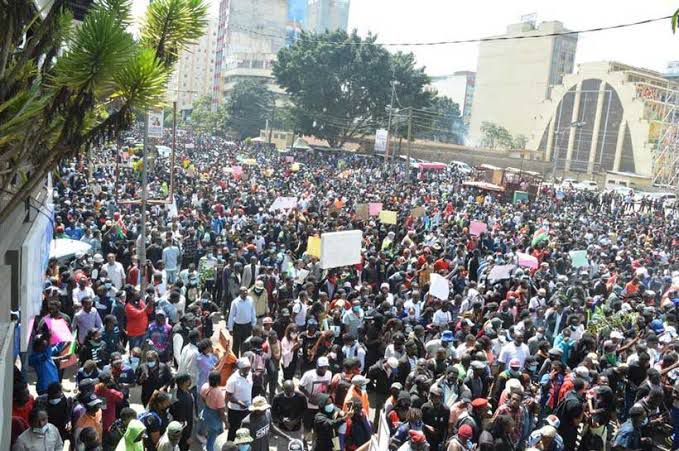
In the passionate heat of political protest, lines can blur. Anger spills over, and what begins as a call for justice can spiral into destruction.
But even in moments of national unrest, there are red lines no society can afford to cross. One of those lines is food security.
During the recent nationwide protests, the National Cereals and Produce Board (NCPB) depot in Maua, Meru County, was looted.
Over 7,000 bags of government-subsidized fertilizer, worth nearly Ksh. 30 million, were stolen. This wasn’t just an attack on a government building—it was a blow to Kenya’s food production and the livelihood of countless farmers.
Fertilizer is not just a product stored in sacks; it’s a vital link in the food chain. For many smallholder farmers, especially those dependent on the government’s subsidy programme, access to fertilizer determines whether they’ll have a successful harvest.
Without it, their ability to grow food is severely compromised. In the long term, this affects not just regional agriculture, but the entire country’s food supply and market stability.
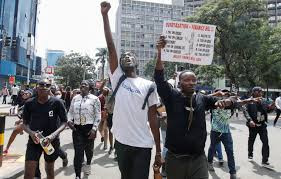
When the fertilizer meant for planting season is looted, the consequences are widespread. It impacts maize, tea, coffee, vegetables—crops that are the foundation of rural economies and key contributors to Kenya’s GDP.
The effects will be felt in food prices, school feeding programs, export income, and ultimately, in rising levels of hunger.
The tragedy is that this act was carried out under the cover of what was meant to be a legitimate protest. While the right to demonstrate is enshrined in our democratic values, there is a difference between civil activism and economic sabotage.
Vandalizing public resources, particularly those intended to uplift vulnerable communities, undermines the very goals many protesters claim to fight for.
Democracy depends not only on freedom of expression but also on shared responsibility. Destroying the tools that support farmers doesn’t punish policymakers—it punishes citizens. It is a misdirected form of anger that ends up hurting the most vulnerable among us.
Moreover, such incidents offer justification for the state to respond with force or restrict the civic space. They delegitimize protests and blur the message being sent.
If we want a government that listens, protests must be orderly and morally grounded. Lawlessness only weakens the cause.