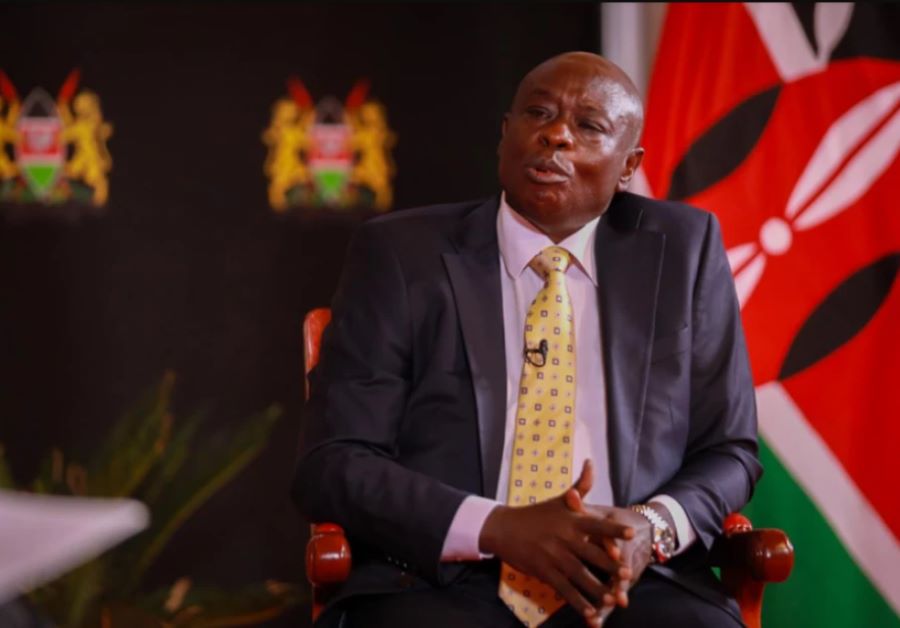
Deputy President Rigathi Gachagua’s recent Citizen TV interview has sparked intense speculation about the future of his political alignment, and whether it signals a looming split within the ruling United Democratic Alliance (UDA).
His pointed remarks sounded less like routine commentary and more like a veiled warning to his boss, President William Ruto.
The question many are now asking is: could Gachagua be plotting a significant shift in Kenya’s political landscape, possibly by joining forces with former President Uhuru Kenyatta to secure Mount Kenya’s political future?
Read also:Oscar Sudi to Unleash Career-Ending Dossier against Gachagua
In his interview, Gachagua defended his actions and dismissed accusations of bullying, but what stood out was the tone of discontent towards unnamed factions within the government.
By expressing concerns about political betrayal and insinuating that certain leaders are scheming to oust him, the Deputy President painted a picture of increasing isolation.
Some analysts believe Gachagua’s remarks were intended to signal his readiness to protect the interests of Mount Kenya, even if that means breaking from Ruto.
Political analyst Peter Kamau notes, “Gachagua’s interview sounded more like a warning to Ruto. His repeated claims that certain figures are plotting to ‘use MPs’ to remove him points to growing unease within the government.
He could be positioning himself for an exit from UDA, should he feel marginalized.”
What appears to be Gachagua’s growing focus on Mount Kenya’s political autonomy has also raised concerns.
The Deputy President has repeatedly emphasized his commitment to defending the region’s interests, which some interpret as an attempt to consolidate power in the event of a fallout with Ruto.
Political strategist Nancy Wambui argues, “The mention of Mount Kenya in his remarks is crucial. Gachagua is signaling that the loyalty of the region is not guaranteed for Ruto. He may be preparing to realign himself with a figure like Uhuru Kenyatta, who still holds considerable influence in the region, particularly among older political networks.”
Gachagua’s rhetoric may suggest he is trying to protect the region’s leadership from being absorbed into broader national politics, a scenario that could threaten Mount Kenya’s dominance in future elections.
One of the more tantalizing possibilities raised by Gachagua’s statements is a potential reconciliation with former President Uhuru Kenyatta.
The two leaders, who had been at odds after Uhuru backed Raila Odinga in the 2022 election, could find common ground in protecting the interests of the Mount Kenya region.
Such an alliance would be a shock to the political establishment and could severely weaken Ruto’s hold on the region.
If Gachagua does forge a new alliance, the big question is: what happens to President Ruto’s allies in Mount Kenya?
If Gachagua successfully re-aligns with Uhuru or even forms a new political faction, Ruto’s supporters could find themselves politically isolated in the region.
Analyst Mary Njeri warns, “Ruto’s allies in Mount Kenya are in a precarious position. Gachagua holds significant sway, and if he decides to move away from UDA, those still aligned with Ruto may face a backlash.
They could lose their seats in future elections, as Mount Kenya voters typically follow strong regional leaders.”
However, it is also possible that Ruto’s allies could survive if they quickly recalibrate and position themselves as neutral brokers between Gachagua and the President.
Maintaining loyalty to the presidency while avoiding the appearance of alienating Gachagua could be their best strategy for political survival.
Ultimately, Deputy President Gachagua’s interview may be the first public sign of a deeper power struggle within UDA and the broader political framework of Kenya.
Whether he remains loyal to Ruto or chooses to align with former President Uhuru Kenyatta will define not only his future but also the future of Mount Kenya politics.
One thing is clear: this is not just about personality clashes or political maneuvers—it’s about who will protect the interests of the Mountain in the coming years.
The stakes are high, and the next moves by Gachagua, Ruto, and other key players will shape the political landscape leading up to the next election.