Ugandan President Yoweri Museveni will once again seek re-election in the country’s January 2026 general polls, aiming to extend his nearly four-decade hold on power.
The ruling National Resistance Movement (NRM) officially confirmed Museveni’s candidacy in a statement broadcast Monday by state-run UBC.
According to NRM Electoral Commission Chairperson Tanga Odoi, the long-serving leader is set to collect expression-of-interest forms for two key positions: party chairperson and presidential flag bearer.
“The president … will pick up expression-of-interest forms for two positions, one for chairperson of the party and the other to contest if he is given the chance for presidential flag bearer,” Odoi announced.
While Museveni’s decision to run again had been widely anticipated, the confirmation solidifies the NRM’s intentions as political parties begin screening and approving candidates for the 2026 elections.
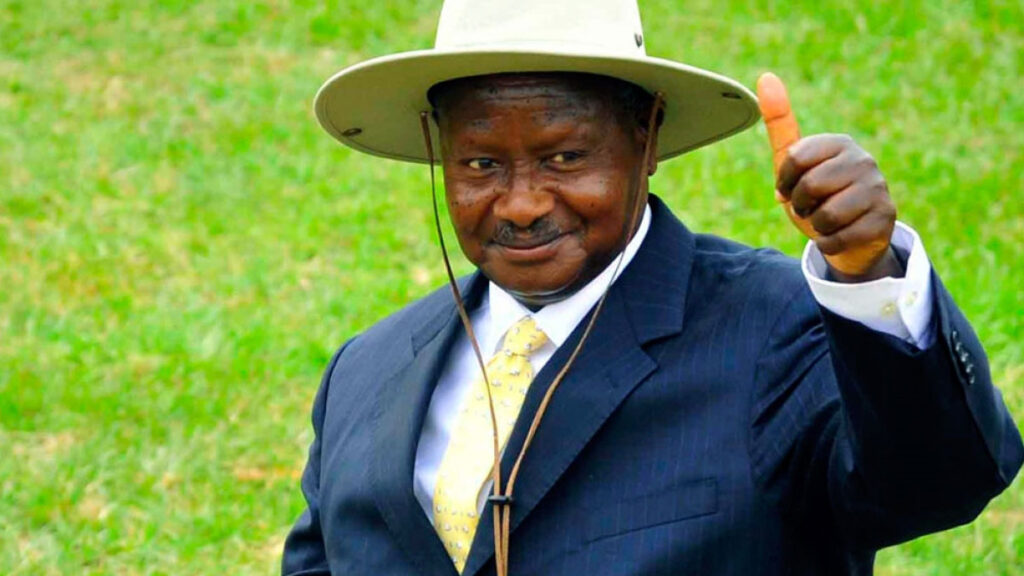
Museveni, who came to power in 1986, has faced sustained criticism both locally and internationally for eroding democratic norms. Over the years, constitutional amendments have removed presidential term and age limits, allowing him to extend his rule amid accusations of suppressing dissent, intimidating opposition voices, and centralizing power.
The announcement comes against a backdrop of rising political tensions. Earlier this month, opposition leader Robert Kyagulanyi, also known as Bobi Wine, accused the government of orchestrating efforts to block young candidates from his National Unity Platform (NUP) from participating in the special interest group elections.
“Our youth were blocked by Electoral Commission officials, Resident District Commissioners (RDCs), District Internal Security Officers (DISOs), and GISOs,” Kyagulanyi claimed, stating that in over 80 per cent of Uganda’s 140-plus districts, NUP youth candidates were frustrated or barred from nomination.
He further alleged that in several areas, local authorities employed intimidation tactics, including the use of hired goons, to prevent youth candidates from submitting their papers.
These developments follow recent police crackdowns on NUP youth meetings in regions such as Jinja and Mityana—actions the opposition views as part of a broader campaign to stifle political competition in the run-up to the general elections.