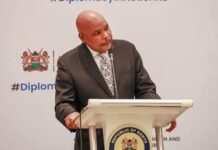
Ugandan President Yoweri Museveni has revealed that a Kenyan senator alerted him to the high costs Uganda was incurring by buying petroleum products through middlemen in Kenya.
Speaking on Thursday, September 17, during the groundbreaking of a 320-million-litre fuel storage terminal in Mpigi, Museveni said he did not know that Uganda was relying on intermediaries until the senator raised the issue with him.
“Uganda was buying petroleum products through middlemen in Kenya. The person who woke me up first was a senator from Kenya. He told me, ‘Do you know that your country is buying petroleum through middlemen?’ I didn’t know,” Museveni said.
The Ugandan President said he later contacted then-Energy Minister Irene Muloni to find out why the country was not buying petroleum products directly from refiners or bulk suppliers.
Museveni stated that while this problem was not solved immediately, the country managed to develop direct connections with its suppliers, thus distancing itself from this old system.
According to Museveni, by purchasing oil from refineries instead of middlemen, Uganda has been able to reduce its premiums for its petroleum products.
Based on the figures presented at the event, the premium for diesel decreased from about Ksh15,280 ($118) to Ksh10,740 ($83) per metric tonne.
Moreover, the premium for petrol has fallen from Ksh12,620 ($97.50) to Ksh7,964 ($61.50) per metric tonne.
Finally, the premium for aviation fuel was reduced to Ksh10,263 ($79.25) per metric tonne, which is almost $114 lower than before.
Museveni said the figures showed the need for Uganda to change how it sourced petroleum products.
He said the Uganda National Oil Company (UNOC) should play a bigger role in importing fuel directly, with the company working with global energy trader Vitol to source petroleum products.
The decision by Uganda to end its dependence on Kenyan oil marketing firms and intermediaries was made known in November 2023 and was set to come into effect starting January 2024.
The move, however, sparked a row following Kenya’s EPRA refusing to grant UNOC an import permit.
This conflict reached its peak in December 2023 when Uganda took legal action against Kenya.
The problem was sorted out in March 2024, and Uganda started the process of importing petroleum products via the Port of Mombasa utilizing the Kenya Pipeline Company.