Prime Cabinet Secretary Musalia Mudavadi has called for a complete rethinking of the West’s engagement with Africa, urging for a new partnership built on mutual respect, strategic solidarity, and fairness rather than paternalism or exploitation.
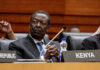
Speaking during the 13th edition of the Kultaranta Talks in Finland, where he represented President William Ruto, Mudavadi emphasized that Africa is not a passive recipient of aid or a battleground for global influence, but a rising continent ready to shape its destiny through intra-African trade, innovation, and homegrown solutions.“Africa seeks partnership, not patronage. We must dissuade ourselves from the illusion that development will be delivered by external actors. We must own our journey,” Mudavadi stated.
Under the theme “The Changing World Order Old Meets New,” the high-level forum brought together global leaders, foreign ministers, economists, and media personalities, including CNN’s Fareed Zakaria and Bloomberg’s Francine Lacqua, to deliberate on shifting global security and foreign policy landscapes.
Citing the African Union Support and Stabilisation Mission in Somalia (AUSSOM), which has since January 2025 supported Somali forces in combating Al-Shabaab, Mudavadi said African-led initiatives prove the continent’s ability to manage its own security and development.“The AU’s peace missions, from AMISOM to AUSSOM, demonstrate Africa’s commitment to fostering stability. Yet the sacrifices of African troops are often overshadowed by external actors claiming credit,” he said.
Mudavadi warned that excessive foreign interference, especially in conflict-prone areas such as the Horn of Africa and the Great Lakes region, is prolonging mediation processes and undermining regional peace efforts.“Unilateralism is weakening regional mechanisms. Too often, foreign actors take sides, making peacebuilding more difficult and costly.”
The Prime CS said the narrative on Africa must shift from fragility to potential, and from victimhood to partnership. He called on the West to align its economic and security cooperation with Africa’s development aspirations.“Africa is already playing a major role in global climate action and clean energy transitions, given its wealth in critical minerals and its growing investment in youth, education, and technology,” he noted.
He urged Western governments and institutions to evaluate whether their engagements strengthen or weaken African institutions and whether they allow Africa to exercise its agency.“We must ask: Do external interventions enable Africa to chart its own path or do they reinforce dependency?” he questioned During a panel discussion on the accumulation of global shocks, Mudavadi joined leaders from Costa Rica, Benin, Thailand, and host country Finland in calling for the restoration of multilateralism and a rules-based international order.“Multilateralism is under threat. Might is increasingly being mistaken for right. We must reassert global rule of law and collective problem-solving,” he warned.
He also decried the resurgence of a “new scramble for Africa,” where resource-rich regions become arenas for proxy battles by powerful nations seeking control of critical minerals and energy supplies.“Over 500 million Africans are affected by conflict in countries like Sudan, Somalia, South Sudan, Eastern DRC, and the Sahel. These crises rob children of education, deny people healthcare, and exacerbate food insecurity.”
Mudavadi added that Africa’s development partners must avoid short-term, crisis-driven interventions and instead invest in long-term stability and sustainable development aligned with African priorities.
The Kultaranta Talks also addressed the growing tensions in the Middle East, particularly the unfolding conflict between Israel and Iran, which Mudavadi said could disrupt global oil supply chains and directly impact Kenya’s tea exports to Iran.“It is our hope that the international community will move swiftly to resolve the crisis, given its far-reaching implications for global peace and economic stability.”
The Kultaranta Talks brought together approximately 140 global experts, including European legislators, public administrators, trade leaders, civil society actors, and shared responsibilities.