Kenya’s Ministry of Energy and Petroleum is urging lawmakers to lift the current moratorium on new Power Purchase Agreements (PPAs), according to Cabinet Secretary Opiyo Wandayi.
This appeal comes as part of a comprehensive strategy to stabilize the nation’s electricity supply, following a series of power outages that have recently impacted much of the country.
In a statement issued on Monday, the Ministry detailed the cause of the latest blackout, which occurred when a trip on the 220kV high-voltage transmission line at the Suswa substation cut off 288 megawatts (MW) from the Lake Turkana Wind Power (LTWP) plant.
The situation was further exacerbated when the Ethiopia-Kenya 500kV interconnector, carrying 200MW, also tripped, resulting in a total loss of 488MW. This outage represented about 27% of the country’s total electricity demand at that time.
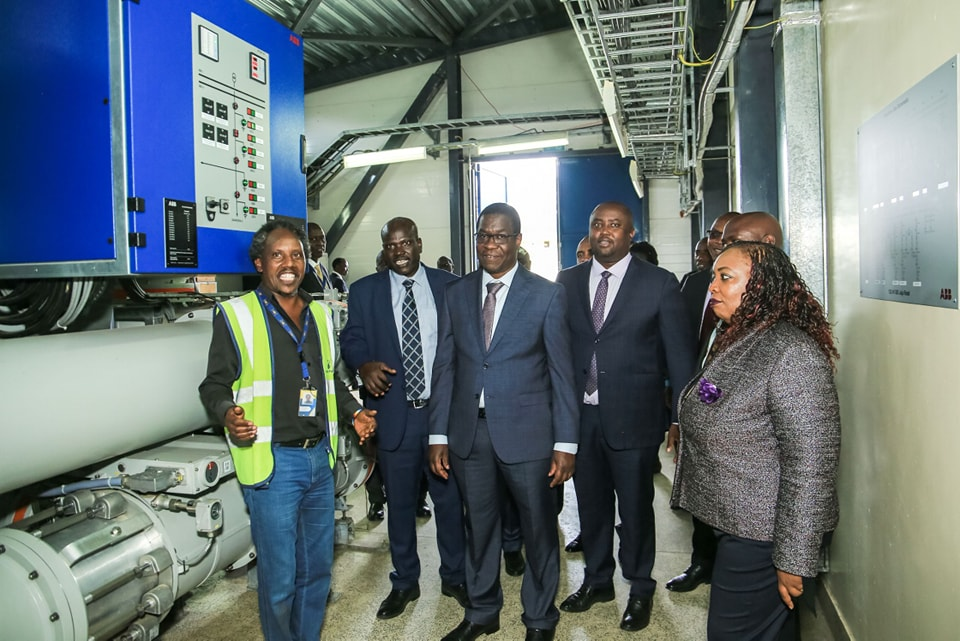
Kenya Power, the nation’s primary utility firm, has not entered into any new PPAs since 2020 due to a moratorium imposed by Members of Parliament earlier this year.
The pause was implemented after concerns emerged that Independent Power Producers (IPPs) were contributing to increased consumer costs with expensive electricity supplies.
However, with electricity demand reaching unprecedented levels of 2,177MW, the Ministry of Energy believes that lifting the moratorium is essential to address Kenya’s expanding energy needs.
CS Wandayi emphasized that new PPAs with IPPs, who currently provide around 10% of the country’s installed capacity, are crucial for meeting the rising demand.
“To ensure we can keep up with the surging electricity demand, it is vital that we lift the moratorium on new PPAs,” CS Wandayi stated. He highlighted that Kenya Power’s existing contracts are set to expire over the next decade, making it imperative to secure new agreements with IPPs to maintain a stable power supply.
Kenya Power’s Managing Director, Joseph Siror, echoed these concerns, noting that the utility firm will need to onboard additional IPPs to match the growing consumption of electricity.
In addition to advocating for new PPAs, the Energy Ministry is investing heavily in upgrading Kenya’s electricity infrastructure.
Ongoing projects include the repair of the Loiyangalani–Suswa transmission line and enhancements to key substations to bolster grid reliability. One of the flagship initiatives is the Gilgil-Thika-Malaa-Konza 400kV line, which aims to complete the Nairobi Ring and reduce congestion at the Suswa Complex, a critical node in the power grid.
Further developments include the Turkwell-Ortum-Kitale and Nanyuki-Isiolo lines, which are designed to enhance grid stability and ensure efficient energy distribution to underserved regions.
The Ministry is also focusing on increasing base load generation from geothermal and hydro sources to strengthen Kenya’s energy security and provide adequate reserves to handle demand fluctuations.