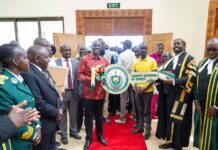
The IGAD Parliamentary Forum on Agrifood Systems has been launched in Nairobi, bringing together lawmakers from across the region to champion food security, policy reforms, and sustainable agriculture.
The move comes as Africa struggles to stay on track with its 2025 hunger and poverty targets, prompting a fresh push for political leadership in transforming food systems.
Members of the IGAD Parliamentary Forum shall comprise Members of Parliament elected from the IGAD Member States serving on parliamentary committees for agriculture or related sectors.
Every member state has the right to send two representatives to the Forum, with the aim of achieving balanced and inclusive representation in the region.
The representatives need to be actively involved in legislative work that is within the thematic focus of the Forum, specifically in agriculture and development.
The Forum draws its members from the eight IGAD states on the basis of a shared sense of commitment towards regional coordination and policy exchange on agricultural issues and related matters
The IGAD Parliamentary Forum on Agrifood Systems will advocate for inclusive and sustainable transformation by influencing policy development, mobilizing investment, and aligning efforts with CAADP targets. It will offer expert input into national and regional legislation and budgets, ensuring they reflect priorities for resilience and change.
Through participation in CAADP Biennial Reviews, it will promote accountability and transparency.
The Forum will collaborate with regional bodies, national focal points, and multisectoral stakeholders to drive agrifood system goals, while also engaging in high-level continental dialogues on food security and sustainable development, resources permitting.

The members are expected to meet at least twice every year or more times as deemed necessary. Speaking during the closing ceremony, Dr. Fatuma Adan, Head of Mission for IGAD in Kenya, underscored the pivotal role of the Parliamentary Forum as a cornerstone for regional dialogue and legislative synergy.
She emphasized that enhanced collaboration between national governments and parliamentary bodies is essential for advancing IGAD’s shared vision of peace, prosperity, and inclusive development across member states.
Mohamed Omar Djama, Director of IGAD’s Foreign Service Institute, emphasized the critical importance of renewed commitment to agricultural governance following the Kampala Declaration and the concerning results of the 4th CAADP Biennial Review.
He underscored the vital role of parliamentarians and ambassadors in driving coordination, investment, and policy alignment, especially through the establishment of the new IGAD Parliamentary Working Group on Agrifood Systems.
At the 2024 AU Assembly, it was formally declared that Africa is off-track in meeting the 2025 targets outlined in the Malabo Declaration. The continent’s leadership responded with a new CAADP Strategy for 2026–2035, designed to foster a holistic agri-food systems approach, interweaving agriculture, nutrition, climate adaptation, and inclusive economic growth.
“The success of these commitments depends on your leadership,” Dr. Mohi Tahomi, IGAD’s Director for Cooperation and Regional Integration urged Parliamentarians.
He emphasized that legislators have the mandate to mobilize funding, support research and infrastructure, and enact laws for inclusive agrifood systems.
Diplomats, meanwhile, are called to promote regional coordination, advocate for climate and food financing, and build cross-sectoral partnerships for resilience.
Through this new Working Group, there is a attempt to institutionalize collaborative leadership among Parliamentarians and Ambassadors in IGAD food systems management. It also brings regional commitments closer to home and aligns cross-border agricultural investments and policies.
In changing to parliamentary action, IGAD is reconceptualizing regional food reform: not data and chatter alone, but democratic decision-making. This new initiative champions political commitment as the missing link in achieving Africa’s food sovereignty and prosperity vision..