The government has committed over Ksh 21 billion in the upcoming financial year to strengthen Kenya’s health workforce, in what Health Cabinet Secretary Aden Duale says is a “people-first approach” to rolling out Taifa Care.
Speaking during a joint meeting with faith-based health providers in Nairobi, Duale revealed that the allocation includes Ksh 6.1 billion for new UHC employees, Ksh 9.9 billion to pay medical interns, and Ksh 3.2 billion to support Community Health Promoters.
A further Ksh 1.75 billion has already been released to clear arrears owed to doctors following the recent Return-to-Work Formula agreement.
“These investments are about restoring confidence in the system,” said Duale. “Doctors, interns and community health promoters form the backbone of service delivery. Without them, UHC cannot be achieved.”
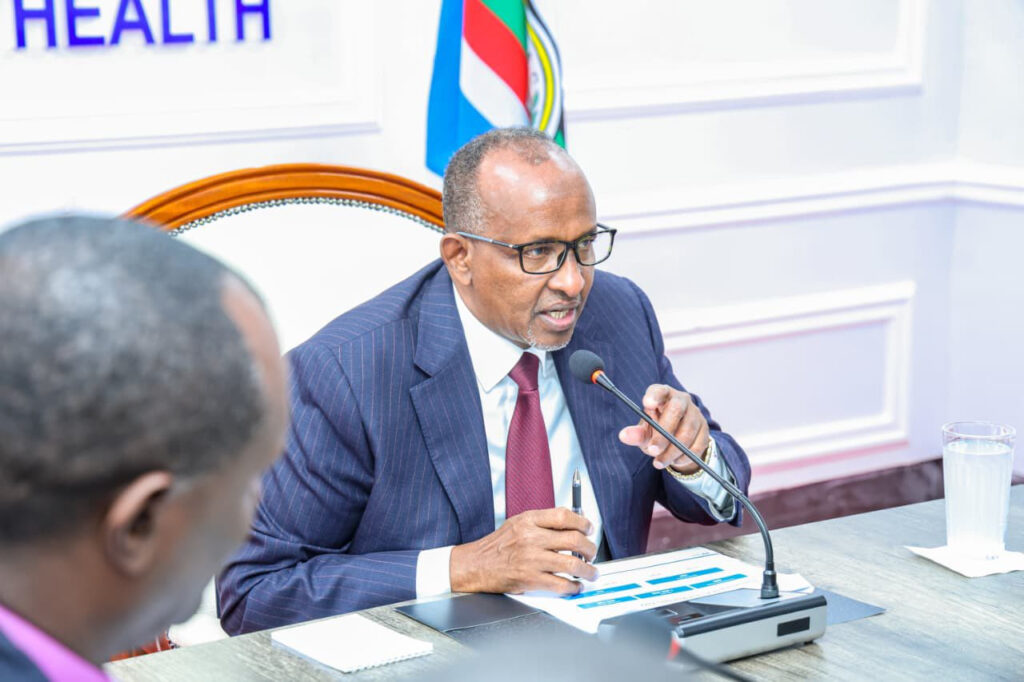
Some of the medical interns supported under the new allocations serve in mission hospitals, which provide a lifeline for patients in remote and underserved areas.
Faith leaders present at the meeting — including Rt. Rev. Cleophas Oseso of the Kenya Conference of Catholic Bishops and Al Hajj Hassan Ole Naado of the Supreme Council of Kenya Muslims — welcomed the government’s financial commitment.
“This is the kind of support that directly affects the ordinary mwananchi,” said Rev. Dr. Robert Langat of the Mission for Essential Drugs and Supplies (MEDS). “When health workers are motivated and paid on time, patients receive better services.”
Beyond worker support, Duale disclosed that he has written to the National Treasury requesting Ksh 5.4 billion in the supplementary budget to clear legacy NHIF debts below Ksh 10 million, following a directive from President William Ruto.
The Social Health Authority has also made significant payouts — Ksh 10 billion for primary healthcare and Ksh 59.3 billion for social health insurance funds as part of its efforts to stabilize the financing of Taifa Care.
To enhance trust, SHA has pledged to process claims on a first-in, first-out basis within 90 days, a move expected to ease the financial burden on hospitals.
Relationship managers will also be deployed to facilities including faith-based hospitals — to improve communication and service delivery.
While challenges remain, especially in commodity security and full digitization of health facilities, faith leaders expressed optimism that the government’s commitment marks a turning point.
“If these pledges are followed through, we will see fewer strikes, more motivated staff, and better care for Kenyans,” said Rt. Rev. Charles Asilutwa of the Christian Health Association of Kenya.