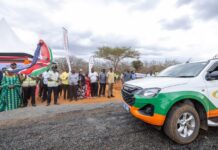
Agriculture and Livestock Development Cabinet Secretary Mutahi Kagwe has unveiled a KSh2.1 billion National Livestock Sector El Niño Preparedness and Anticipatory Action Plan aimed at protecting farmers and pastoral communities from the anticipated effects of enhanced rainfall.
The plan targets 24 flood-prone and livestock-rich counties and prioritises early intervention to minimise losses rather than relying on post-disaster recovery.
Speaking during the launch in Isiolo County, Kagwe said the Government had learnt from the devastating effects of the 2023 El Niño rains and the 2024 long-rains floods, which resulted in livestock losses, damaged infrastructure and increased disease outbreaks.
The Government will allocate KSh1.5 billion, the largest share of the plan, to procure and pre-position vaccines, veterinary medicines, laboratory reagents, personal protective equipment, mobile veterinary clinics and emergency response kits.
Another KSh250 million will be used to protect critical livestock infrastructure, including cattle dips, livestock markets, slaughterhouses, milk cooling facilities, veterinary laboratories and feed stores.
The plan also allocates KSh100 million for livestock evacuation, welfare and logistics, while KSh50 million will support strategic feed and fodder reserves, rehabilitation of water points and emergency water supplies.
A further KSh100 million will fund early warning systems, climate risk mapping, emergency communication, farmer awareness campaigns, biosecurity measures, livestock insurance sensitisation and contingency planning.
The targeted counties include Garissa, Tana River, Lamu, Kilifi, Isiolo, Wajir, Mandera, Marsabit, Turkana, Samburu, Narok, Kajiado, Baringo, West Pokot, Busia, Kisumu, Siaya, Migori, Homa Bay, Kitui, Makueni, Machakos, Meru and Embu.
The plan will operate under the One Health framework, integrating human, animal and environmental health surveillance to address zoonotic disease risks.
PS J. Mueke said more than 20 million cattle, sheep and goats had already been vaccinated nationwide, strengthening Kenya’s livestock sector and supporting access to export markets.