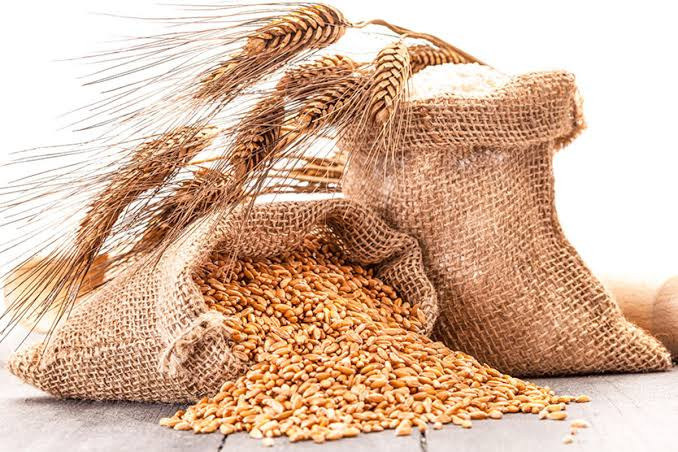
The government has increased the buying price of locally produced wheat to Ksh5,100 per 90-kilogramme bag in a move aimed at cushioning farmers and encouraging higher production.
The new price, up from Ksh4,750 per bag, will apply during the 2026 wheat buying season as the government begins mopping up locally harvested wheat before allowing imports into the country.
According to the Ministry of Agriculture, the revised price was agreed upon after consultations involving the Agriculture and Food Authority (AFA), the Cereal Growers Association, the Cereal Millers Association and wheat farmers.
The price will apply at designated aggregation centres where farmers will deliver their produce.
Over 2,000 wheat farmers in Narok, Nakuru, Meru, Laikipia, Nyandarua and Uasin Gishu counties will be the beneficiaries of the move.
This has come against the backdrop of a huge fall in this year’s wheat production as a result of unfavorable weather patterns.
Official government statistics indicate that the country will produce one million bags this season compared to 1.7 million bags produced last year.
Despite the decline, the government says it is rolling out several measures to help revive the sector and increase local production in the coming seasons.
Among the interventions are continued fertiliser subsidies, increased farm mechanisation, adoption of improved seed varieties, expansion of land under wheat farming, promotion of climate-smart agriculture and stronger pest and disease control programmes.
The government says the measures are intended to make wheat farming more profitable while reducing Kenya’s heavy dependence on imported wheat.
Officials also hope that higher returns for farmers will encourage more investment in wheat production and strengthen the country’s food security.
The latest price review forms part of broader efforts to build a more competitive and sustainable wheat industry, improve farmers’ earnings and ensure a steady supply of locally produced grain to millers.
In the long run, the government says increasing local wheat production will help reduce import costs and contribute to more stable flour prices for Kenyan households.