A storm is brewing around Nairobi Governor Johnson Sakaja’s recent appointee to the Mama Lucy Kibaki Hospital board, Calvince Okoth, popularly known as Gaucho, after he filmed a TikTok livestream inside the facility, capturing patients, beds and staff in active hospital corridors.
The video, which quickly circulated online, has triggered sharp backlash from Kenyans who say it crossed a red line on patient privacy, particularly in sensitive areas such as maternity wards.
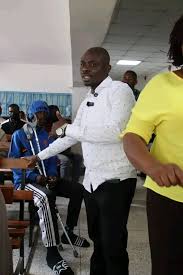
Critics argue the recording may violate provisions of the Data Protection Act (Kenya), which classifies health information as sensitive personal data, as well as the Kenya National Patients’ Rights Charter that guarantees dignity, confidentiality and informed consent for patients.
At the centre of the outrage is the question of consent, whether patients captured in the livestream had agreed to be filmed in a medical setting.
Public reaction has been swift, spilling onto X where many users expressed anger and concern over what they described as a breach of privacy in a protected space.
Mary Njoroge wrote, “A patient in Mama Lucy was seen shocked as she saw cameras in the maternity ward. Do you know how private a maternity ward should be? Any woman who understands what it takes to bring life should be very annoyed. A maternity ward is not a photo shoot studio. Those women are not even in a position to dress up or prepare. Huyu nyangao awekwe pause, he is now too much.”
Ohta Royta questioned the appointment itself, saying, “You appoint an illiterate political sycophant, fail to take them through proper board induction, and what you get is an overexcited individual who now thinks he is part of management, moving around streaming patients on TikTok.”
Not all reactions were critical. Asamoah Said defended the move and pointed to what he called double standards, writing, “You celebrate senators when they visit hospitals with cameras to expose conditions, but bash this. Why the difference?”
Others called for stricter enforcement of privacy protections in healthcare settings.
Gathogo Mwangi wrote, “An equivalent of HIPAA laws should apply heavily in Kenya. Patient privacy is not something to play with. What do you mean you are moving around with cameras in a ward?”
The incident has reignited debate about how public officials and politically connected appointees interact with sensitive public institutions such as hospitals, and whether existing safeguards are sufficient to protect patient dignity in the age of social media.
While Kenya does not have a direct equivalent of the Health Insurance Portability and Accountability Act, legal experts note that current laws still require explicit consent before capturing or sharing identifiable health related content.
As of Tuesday, neither Okoth nor the hospital management had issued a public response, even as pressure mounts for accountability and possible disciplinary action.