Health Cabinet Secretary Aden Duale has assured Kenyans and the international community that the country remains open for travel, tourism, trade and investment following confirmation of an imported Ebola case involving a traveller from the Democratic Republic of Congo (DRC).
The patient died on October 6, 2026, prompting the government to intensify contact tracing and other measures to prevent further spread of the disease.
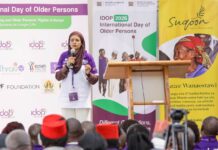
Duale gave the assurance during a meeting with members of the diplomatic corps, international organisations and development partners, where he outlined the measures Kenya has put in place to manage the situation.
He said the confirmation of one imported case did not mean there was widespread transmission of Ebola in the country, adding that the response was being guided by scientific evidence and verified public health information.
The CS urged international partners to rely on confirmed information rather than speculation when making decisions about Kenya.
Kenya steps up Ebola surveillance
According to Duale, the government had activated national and county emergency response structures to prepare for potential disease outbreaks.
The National Incident Management System has been operational since May 2026, with surveillance intensified in health facilities and communities.
Rapid response teams have also been deployed to investigate alerts and monitor possible threats.
The government has trained 4,971 health workers in Ebola preparedness and response, while screening continues at 15 points of entry into the country.
More than 652,000 travellers have been screened as part of the measures to detect and prevent the spread of infectious diseases.
Following confirmation of the case, the government intensified contact tracing in line with a directive from President William Ruto.
Duale said 57 contacts had been accounted for, including 23 passengers, four crew members and other people linked to flights operated by the aircraft, among them cleaners.
Those identified are under appropriate monitoring and management as health officials continue with follow-up operations.
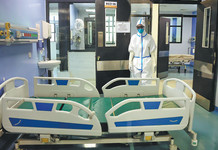
Government sets aside 241 isolation beds
The government has designated isolation, treatment and quarantine facilities with a combined capacity of 241 beds.
Additional capacity is also being prepared in areas identified as priorities in the ongoing response.
Kenya’s laboratory network has tested 268 samples, with results taking approximately six to 12 hours to support timely public health decisions.
The government has also mobilised infection prevention and control supplies, including personal protective equipment (PPE) for health workers involved in the response.
Duale said the World Health Organization (WHO) had donated 1,000 sets of protective equipment, while the Government of India had provided another 6,000 sets.
The Kenyan government has also committed resources to support the response.
Other partners supporting the efforts include WHO, the United States Government, the Intergovernmental Authority on Development (IGAD) and the Africa Centres for Disease Control and Prevention (Africa CDC).
Kenya seeks support from international partners
Duale called for continued cooperation with international partners to strengthen operations on the ground.
He recognized the need for coordination in logistics, medical supplies, more personnel to respond, community mobilization, patient referral, and transportation among others.
Kenya is also collaborating with the DRC and Uganda to improve regional preparedness and response mechanisms.
The workshop was meant to bring together government officials, diplomats, development partners and stakeholders in the aviation sector to deliberate on the country’s preparedness and response efforts.
In attendance were the Principal Secretaries; Dr. Ouma Oluga from Medical Services, Mary Muthoni from Public Health and Professional Standards and Korir Sing’Oei from Foreign Affairs.
Others in attendance were; the Director-General for Health Dr Patrick Amoth, WHO Country Director Dr Neema Kimambo, Acting Group Managing Director and CEO of Kenya Airways, Habil Waswani, Chairperson of Jambojet Board Ayisi Makatiani and UN Resident Coordinator in Kenya, Dr Garry Conille.
Duale reaffirmed the fact that it is important for the government to identify any suspected cases, ensure that they are safely isolated, tested quickly and contact tracing done.
Duale assured that the country will continue with its public health response while keeping its borders open.