Close to 200 young people from Baringo County have successfully completed a four-week digital skills training program under the Huawei DigiTruck initiative, a project designed to promote digital inclusion in Kenya’s rural and underserved areas.
The graduation ceremony was held at Kabimoi Vocational Training Centre in Eldama Ravine, where the youth joined more than 6,240 others across 39 counties who have benefited from the mobile training platform since its launch.
Information, Communication and Digital Economy Cabinet Secretary William Kabogo, who presided over the ceremony, praised the initiative as a “beacon of opportunity” for rural youth.
“This program is a key driver in bridging the digital divide and ensuring that no Kenyan is left behind as the country moves toward a fully digitally enabled society,” said Kabogo, commending the graduates for their commitment and resilience.
He was accompanied by ICT and Digital Economy Principal Secretary John Tanui, Huawei Kenya Deputy CEO Stephen Zhang, Dagoretti South MP and Chair of the National Assembly ICT Committee John Kiarie, Baringo Woman Representative Florence Jematia, and Eldama Ravine MP Musa Sirma.
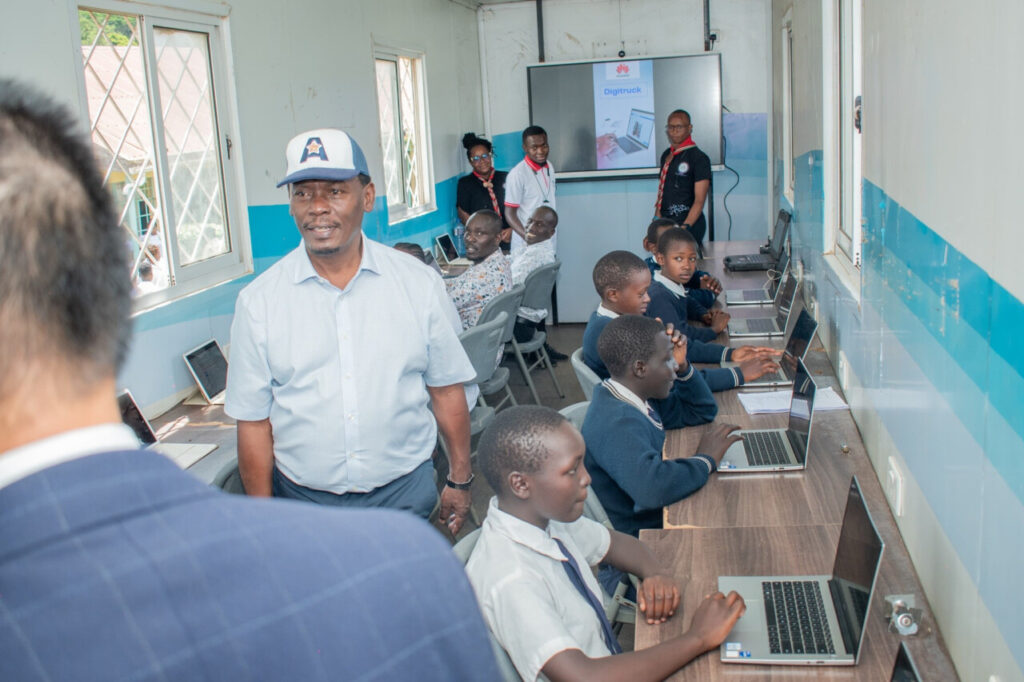
Huawei’s Stephen Zhang explained that the DigiTruck is a mobile, solar-powered classroom made from a converted shipping container. It is fitted with laptops, smartphones, smart screens, VR headsets, and internet connectivity to deliver free digital literacy training across Kenya’s rural landscape.
“This truck travels to remote communities offering hands-on digital training in computer literacy, online marketing, entrepreneurship, financial literacy, and online safety,” said Zhang.
In addition to Baringo, the DigiTruck program has reached Migori and Homa Bay counties this year. In Migori, 210 youths (95 women and 115 men) graduated from Uriri Vocational Training Centre, while 290 youths (143 women and 147 men) graduated from Oriwo Boys High School in Homa Bay.

Zhang emphasized that the initiative, launched in 2019, is a shining example of successful collaboration between the national government, county governments, private sector, and community institutions like Kabimoi VTC.
As part of the program, trainees participated in an innovation challenge, where they pitched ideas on how to apply digital skills to improve their communities. The top three ideas received tablets and mentorship support.
Graduate Brian Kipchumba said he plans to work with local veterinary officers to use social media and messaging apps to share livestock health tips with farmers. Another graduate, Kirui Jerono, expressed her intent to promote online job platforms and help locals access telemedicine services from a nearby digital hub currently under construction.
Some of the youth also pledged to run anti-drug and alcohol abuse campaigns via social media and community forums targeting their peers.
“This program has empowered us not only with skills but also with purpose. We are ready to create change in our communities,” said Jerono.