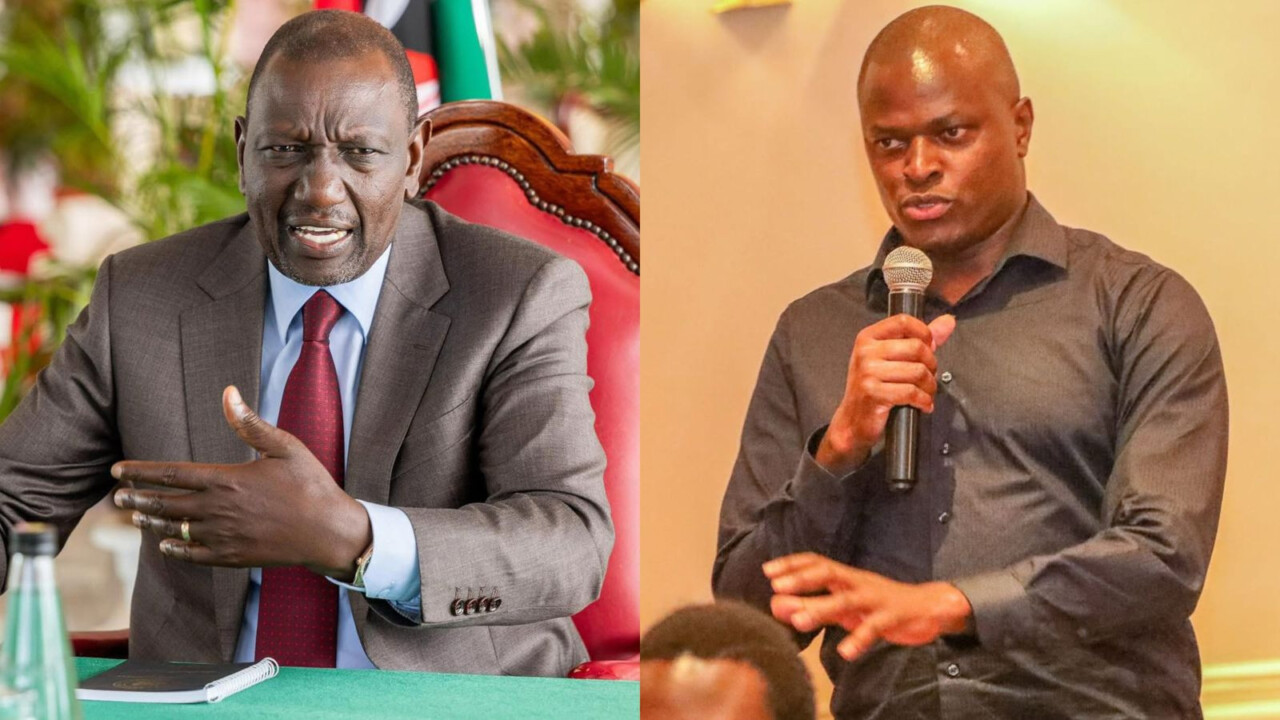
The recent ouster of Kiharu MP Ndindi Nyoro from the powerful House Budget and Appropriations Committee is more than just a routine reshuffle.
It is a telling sign of the brewing discontent and tightening grip within the United Democratic Alliance (UDA).
For over two years, Nyoro held the chairmanship of a committee that arguably controls the pulse of the government’s financial muscle — national expenditure and resource allocation.
His removal, first as chair and now as a member, and his reassignment to the relatively low-profile Committee on Migration, is a fall from grace that cannot be ignored.
Sources in Parliament have suggested that Nyoro’s neutrality during the heated 2024 impeachment vote of then-Deputy President Rigathi Gachagua may have sealed his fate.

In a political climate where loyalty is currency, silence is betrayal. While many of his colleagues toed the party line, Nyoro’s decision to abstain sent a clear message — one that seems to have backfired.
More curiously, Nyoro has been increasingly vocal in criticizing government policies — a move that, in the eyes of UDA hardliners, likely amounts to biting the hand that fed him.
This isn’t just about one man’s political miscalculation. It is about a ruling party beginning to eat its own.
The demotion reflects a dangerous precedent in Kenyan politics — where dissent, or even neutrality, is punished rather than debated.
Drawing parallels with the late Jubilee administration, which saw internal fractures escalate into open rebellion, UDA now appears to be tiptoeing on the same path.
Today, it’s Nyoro. Tomorrow, it could be any MP bold enough to question policy or leadership.
It is also worth noting that the Budget Committee is not just any team — it shapes the country’s priorities, directs development, and reflects a party’s ideological backbone.
Replacing a member who had helped drive that agenda with an outsider to the committee’s original vision could signal a shift in internal policymaking — or worse, the consolidation of power around unquestioning loyalists.
If President Ruto’s party cannot tolerate internal debate, it risks becoming an echo chamber — strong in numbers but weak in ideological depth.
As we inch closer to the 2027 elections, Kenyans must pay attention to these signs. Today’s demotions may be tomorrow’s power struggles.
The cost of silencing independent minds within a party may prove higher than UDA expects — not just for internal democracy, but for Kenya’s overall political stability.