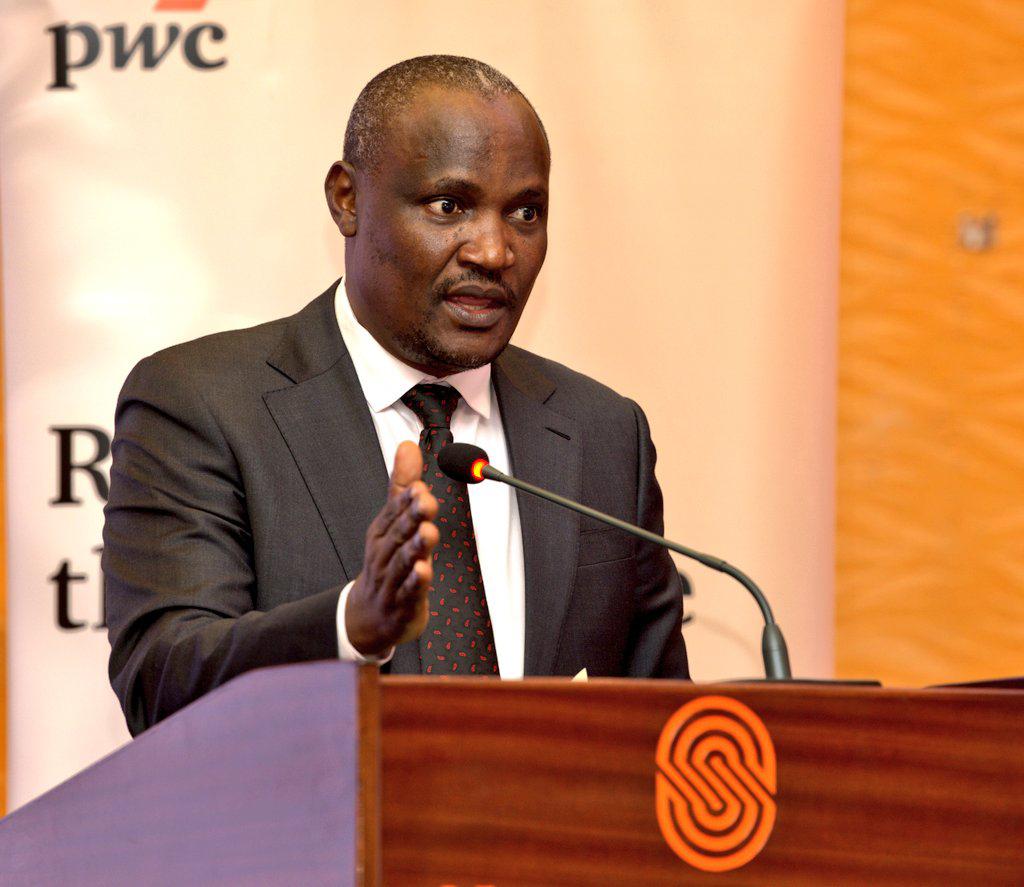
Today cabinet secretary for National Treasury and Economic planning Hon. John Mbadi explained Kenya’s economic and fiscal strategy for the 2025/26 financial year, a bold reform agenda aimed at improving economic recovery, creating jobs and establish stability of macroeconomic.
Speaking at the forum in Nairobi, CS said that this year’s Budget is anchored on the theme: “Stimulating Sustainable Economic Recovery for Improved Livelihoods, Job Creation and Business Prosperity”, codinating with the Government’s Bottom-Up Economic Transformation Agenda (BETA).
The CS talked about global economic chaos including wars and geopolitical tension and how Kenya’s economy has demonstrated it’s resilience despite some challenges it has been facing recently like flooding and anti-Finance Bill protests which slowed growth to 4.7 percent in 2024.
Kenya posted an average growth of 5.2 percent in 2023 and 2024 overtaking both global average of 3.3 percent and sub-Saharan Africa’s 3.8 percent.
It is expected to get back to 5.3 percent in 2025 and 2026, driven by improved agricultural performance, a resilient services sector and continued good policy implementation.
He also spoke about Kenya’s currency inflation and several key macroeconomic achievements, stating that inflation declined to 3.8 percent in May 2025, down from 9.6 percent in 2022; the Kenya Shilling appreciated from Ksh 159.7 to Ksh 129.3 per USD between January and May 2025 and Central Bank Rate was reduced to 9.75 percent, easing the cost of credit.
Treasury bill rates and commercial lending rates have also declined while foreign exchange reserves rose to USD 10.5 billion enough to cover 4.7 months of imports.
The current account deficit is at 1.3 percent of GDP low
While appreciating the gains CS Mbadi warned of fiscal challenges from rising spending demands, shrinking debt space and the need to raise domestic revenues without burdening businesses.
To addres this the Government will pursue a growth-oriented fiscal consolidation strategy, aiming to reduce the deficit from 5.3 percent in FY 2023/24 to 4.8 percent in FY 2025/26 and 2.7 percent by FY 2028/29.
He unveiled a two- pronged agenda on revenue and on expenditure he stated that KRA has rolled out digital innovations to enhance compliance like VAT, PAYE platforms and electronic rental income system, and fuel-sector e-invoicing. and on expenditure the Government to rollout on July 1, full-scale e-procurement for all MDAs and improve transparency and efficiency.
The CS also expressed concerns over donor fundings following recent orders from United States of America. But he affirmed the Government’s commitment to safegurding these programmes and commitment to fostering a conducive business environment through regulatory reforms, digital service delivery, and predictable policy frameworks.
“Our national development journey cannot be driven by Government alone. The private sector is also a key player in creating jobs, driving innovation and building an economy that works for all,” he stated.
He expressed his confidence in 2025/26 Budget that it will restore fiscal sustainability, protect livelihoods, and support the country’s economic transformation, showcasing the Government’s commitment to inclusive growth and shared prosperity.
During the same event the CS also launched the International Development Sector Landscape Survey Kenya Report.