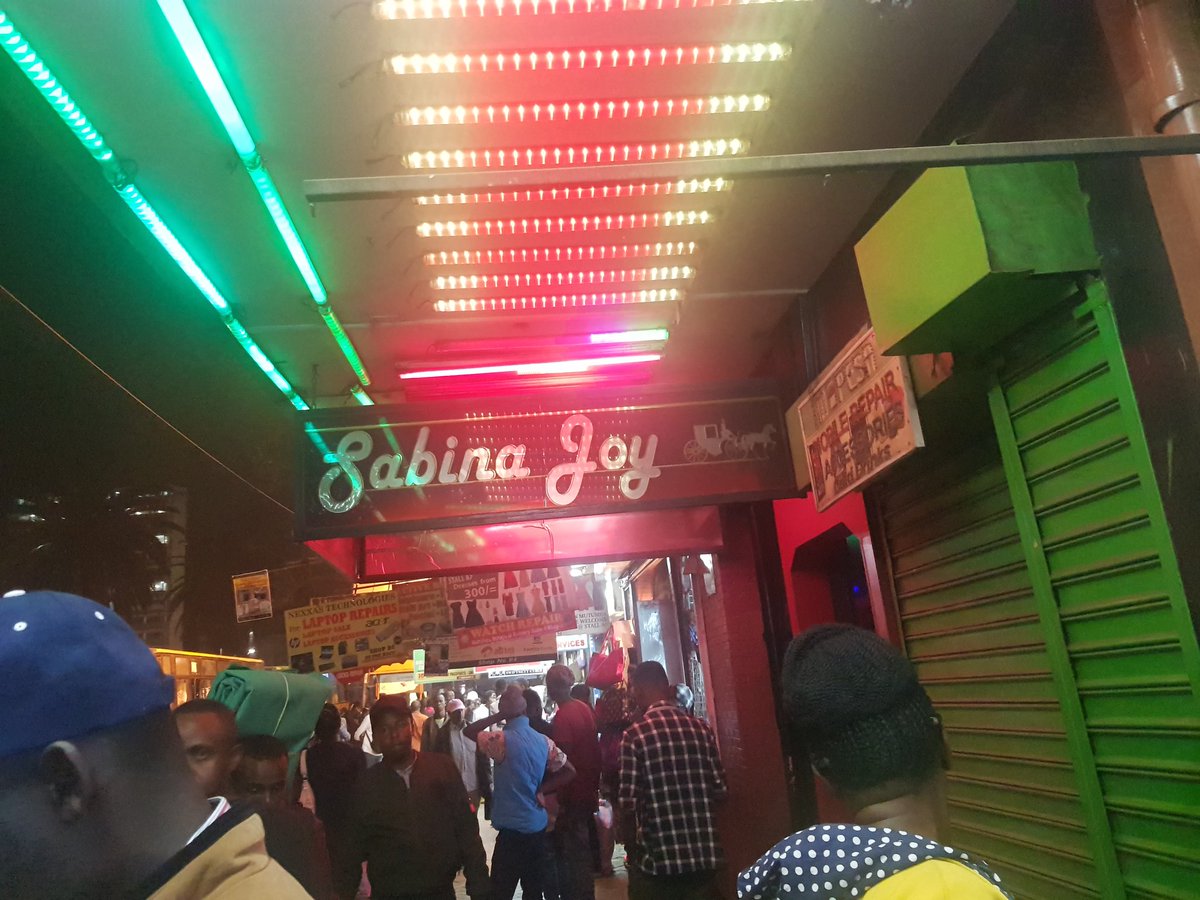
Along Moi Avenue, where the heartbeat of Nairobi quickens with impatient traffic and neon lights, stands a building older than memory, yet still alive with sin and survival.
Its name—Sabina Joy—is whispered with both curiosity and condemnation.
To some, it is a place of forbidden thrill; to others, it is the city’s most enduring scar.
For decades, Sabina Joy has been the crossroads of desire, poverty, and despair, often likened to a modern-day Sodom and Gomorrah.
Crossing its threshold is to step into another world. The moment you push through its doors, the air thickens with smoke, cheap perfume, and the restless beat of music.
The walls, stained by years of whispered promises and broken dreams, tell silent stories. It is not just a nightclub—it is a marketplace where flesh is traded, where desperation and temptation dance hand in hand.
The women here—many young, others weathered by time—parade in dim light, their faces painted with courage that barely conceals the anguish beneath.

They smile, but the smiles are rehearsed. They laugh, but the laughter is hollow. Each carries a burden heavier than the stilettos they stumble in—children waiting at home, debts unpaid, hunger that will not wait till tomorrow.
The men are many: strangers, regulars, seekers of escape. Some come with wallets fat enough to command power, others with just enough to buy an hour of illusion.
Behind their laughter and swagger is the darker truth—Sabina Joy is not merely entertainment; it is an escape hatch for men and women alike, a place where loneliness, greed, and survival collide.
Yet, for all its music and movement, the club hums with sadness. It is a place where souls grow weary and bodies are used up long before their time.
For generations, Sabina Joy has stood—its doors never truly closing, its lights never really dimming—feeding on the vulnerabilities of the desperate, the curious, and the broken.
To walk out of Sabina Joy is to feel the chill of Nairobi’s night more sharply, the city’s roar sounding harsher than before. One cannot help but wonder how many lives have been swallowed by those walls, how many dreams have been dimmed beneath its neon glow.
It remains, in the heart of the city, a painful reminder that behind the glitter of Nairobi’s progress lies a darker story—of bodies for sale, of souls in torment, of a society both complicit and condemning. Sabina Joy is more than a club; it is a wound that has refused to heal, a mirror reflecting the truths we are too afraid to confront.