Central Bank of Kenya (CBK) Governor Dr. Kamau Thugge has defended the government’s proposal to sell part of its stake in Safaricom PLC, telling lawmakers the move will help fund critical infrastructure while easing pressure on national debt and strengthening foreign exchange reserves.
Appearing before MPs, Dr. Thugge said the proposed divestiture represents an innovative financing option at a time when Kenya faces severe fiscal constraints and shrinking access to affordable external funding.
“Overall, the proposed divestiture of Safaricom PLC will have a positive macroeconomic impact.
It will lead to increased foreign exchange reserves and exchange rate stability, while the additional fiscal space will reduce domestic borrowing and help sustain the reduction in domestic interest rates,” the CBK Governor said.
The proposal is contained in Sessional Paper No. 3 of 2025 and seeks to reduce the Government of Kenya’s shareholding in Safaricom from 35 per cent to 20 per cent.
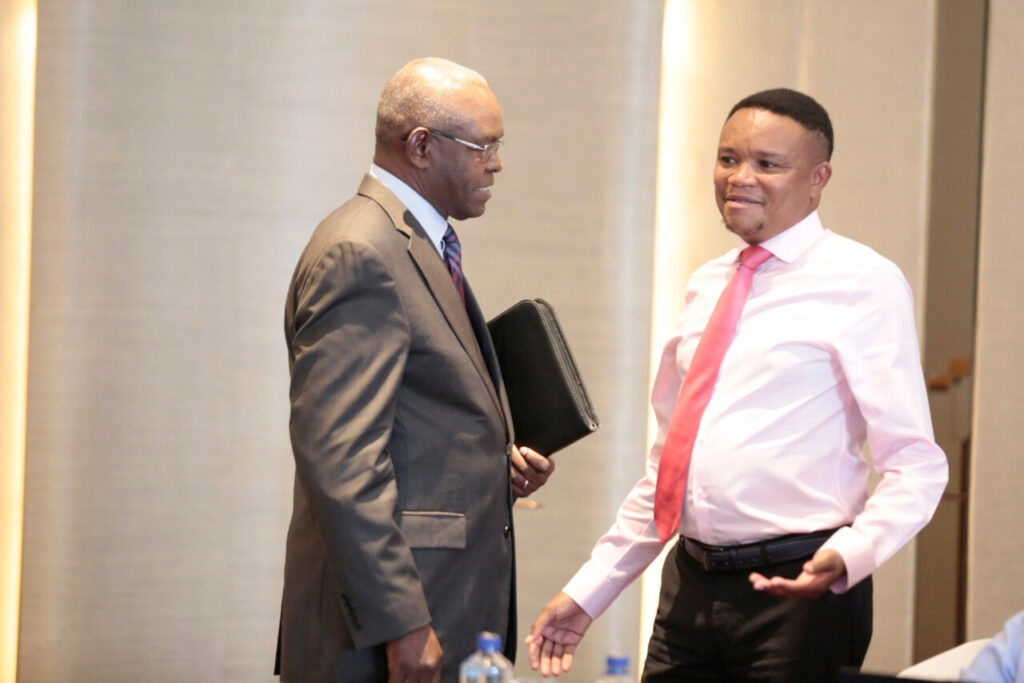
Under the plan, Vodafone Kenya Limited would increase its stake from 40 per cent to 55 per cent, gaining a majority controlling interest.
The transaction is expected to raise approximately KSh 244.2 billion (about US$1.88 billion), including upfront payments of future dividends.
According to the CBK, the proceeds would be channelled towards infrastructure development in key sectors such as roads, energy, water and transport, without adding to the country’s public debt.
Dr. Thugge told MPs that Kenya’s revenue performance has consistently fallen short of targets, leaving limited room for new tax measures. At the same time, he noted that multilateral financing is declining globally, while commercial borrowing remains expensive.
“We welcome this innovative way of financing our infrastructure needs without adding to our already high debt,” he said.
The CBK Governor added that the divestiture aligns with the government’s fiscal consolidation strategy, including efforts to reduce the debt burden to a 55 per cent net present value (NPV) of debt-to-GDP ratio, from 68.9 per cent recorded in September 2025.
Beyond fiscal relief, the CBK projects a significant improvement in Kenya’s external position. Proceeds from the transaction are expected to raise foreign exchange reserves from US$12.39 billion—equivalent to 5.3 months of import cover—to about US$14.28 billion, or 6.2 months of import cover.
The inflow of foreign direct investment is also expected to stabilise the shilling, cushion the economy against external shocks and help contain imported inflation.
However, Dr. Thugge assured legislators that the change in Safaricom’s ownership structure would not weaken regulatory oversight, particularly given the systemic importance of M-Pesa to the Kenyan economy.
“CBK’s oversight authority is not diluted by the change in ownership. We will continue to apply enhanced oversight on Safaricom, with stricter reporting requirements due to M-Pesa’s systemic importance and the increased concentration of ownership,” he said.