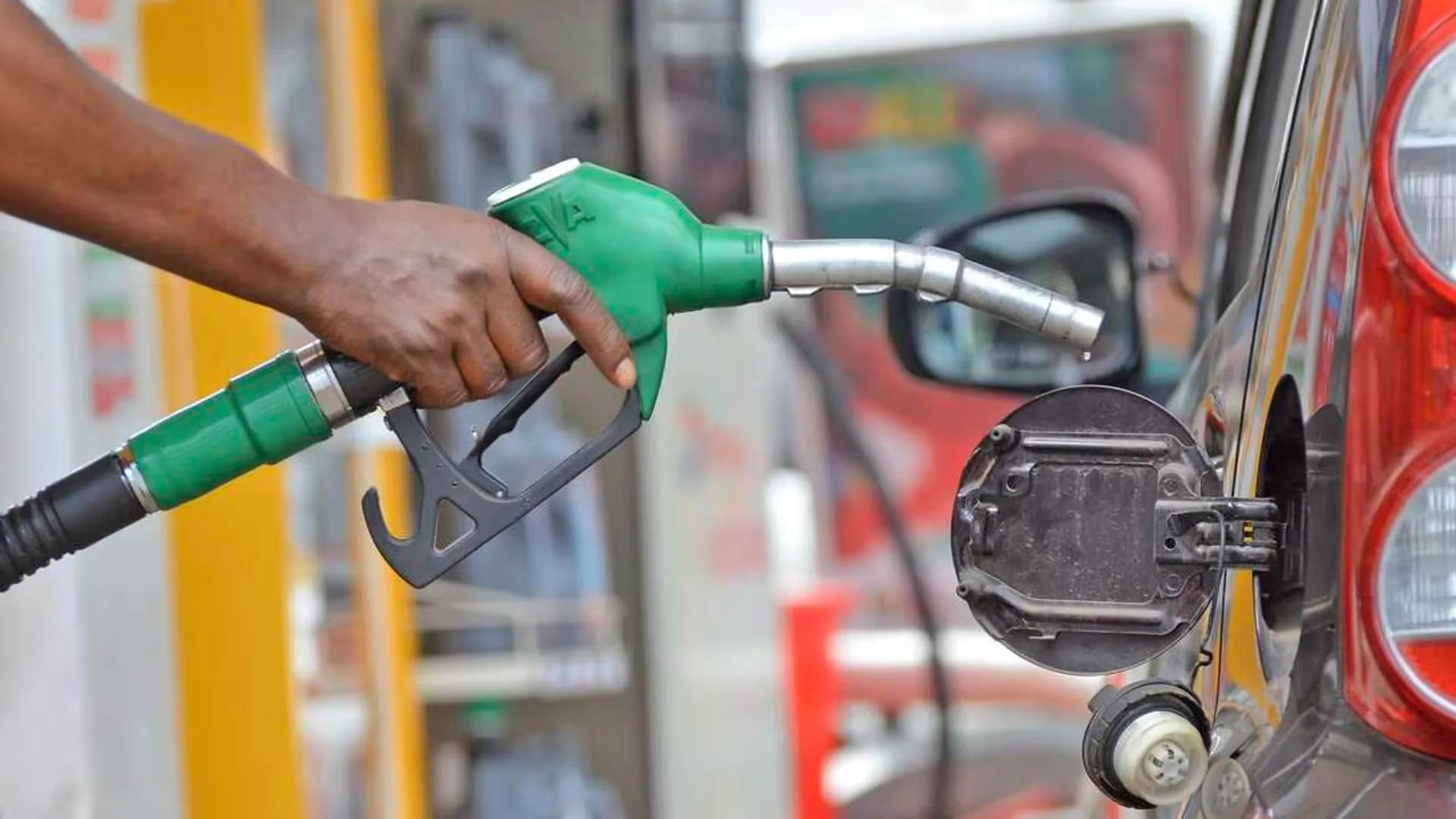
Motorists could soon get a small relief at the pump if a new proposal by the National Treasury is approved.
The Treasury wants to reduce part of the fuel levy, a move that could save drivers about KSh75 to KSh80 when filling a 50-litre tank.
The proposal is contained in a new law, the Road Maintenance Levy Fund (Amendment) Bill, 2026, which has already been tabled in Parliament.
If passed, the changes will cut the amount of money taken from every litre of fuel and sent to the Road Annuity Fund. Currently, KSh3 from every litre goes to this fund, but the government now wants to reduce it to KSh1.50.
This means that Kenyans will get to spend slightly lower amounts of money in their quest to purchase fuel although this might not be substantial.
For instance, an individual with a personal car can manage to save roughly KSh75 when refilling a full tank of his/her car. As for the cost of fuel consumed per day, the matatu owner will have to factor in the number of trips made.
In the case of a 14 seater matatu making multiple trips during the day, he/she can manage to save KSh75 while a 33 seater bus will be able to save about KSh120.
On its part, the Road Annuity fund was adopted by the government in financing road construction without the need of paying contractors in advance but through installments of money collected from fuel levy.
The issue becomes more complicated because the government has already committed part of the same fuel levy to raise money through bonds. Under President William Ruto’s administration, a portion of the levy has been set aside to help raise billions of shillings for road projects and to clear pending bills.
At the centre of this plan is Treasury Cabinet Secretary John Mbadi, who has yet to explain how the government will cover the gap that may be created if the levy is reduced.
The situation has also caught the attention of the International Monetary Fund, which is pushing for the funds raised through the levy to be treated as public debt. If that happens, Kenya’s total debt could rise even higher.
For now, the proposal is still under consideration, and its final impact will depend on whether Parliament approves the changes.
If passed, motorists may feel some relief, even if it is just a few shillings saved at the fuel station.