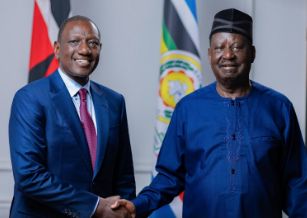
The late Raila Amollo Odinga will be remembered not only as one of Kenya’s most formidable opposition figures but also as a Pan-African leader whose political journey was defined by unity pacts and reconciliatory handshakes that reshaped the nation’s political landscape.
His knack for political truces dates back to 1998, when, in a surprising move, Raila joined forces with then-President Daniel arap Moi. Though widely perceived as a betrayal by his opposition peers, the alliance marked the beginning of Raila’s political truce journey and offered him invaluable experience within the executive.
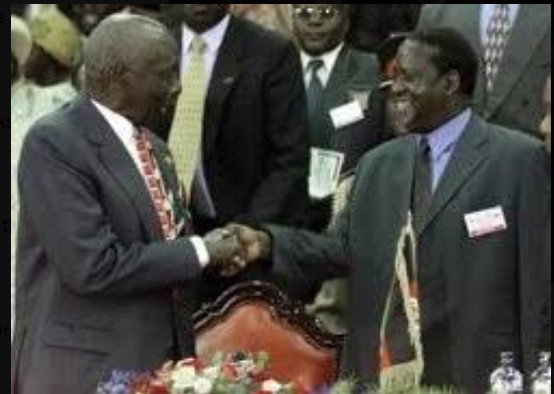
After a highly contested 1997 general election where Raila finished third behind Moi and Mwai Kibaki, his National Democratic Party (NDP) merged with KANU in 2001 to form “New KANU.” Raila secured a Cabinet position in Moi’s government, hoping to be endorsed as Moi’s successor.
However, Moi’s decision to back Uhuru Kenyatta led Raila to break away, forming the Rainbow Movement, which later merged with Kibaki’s team to form the National Rainbow Coalition (NARC). Their alliance triumphed in the 2002 elections, with Raila serving as a Minister.
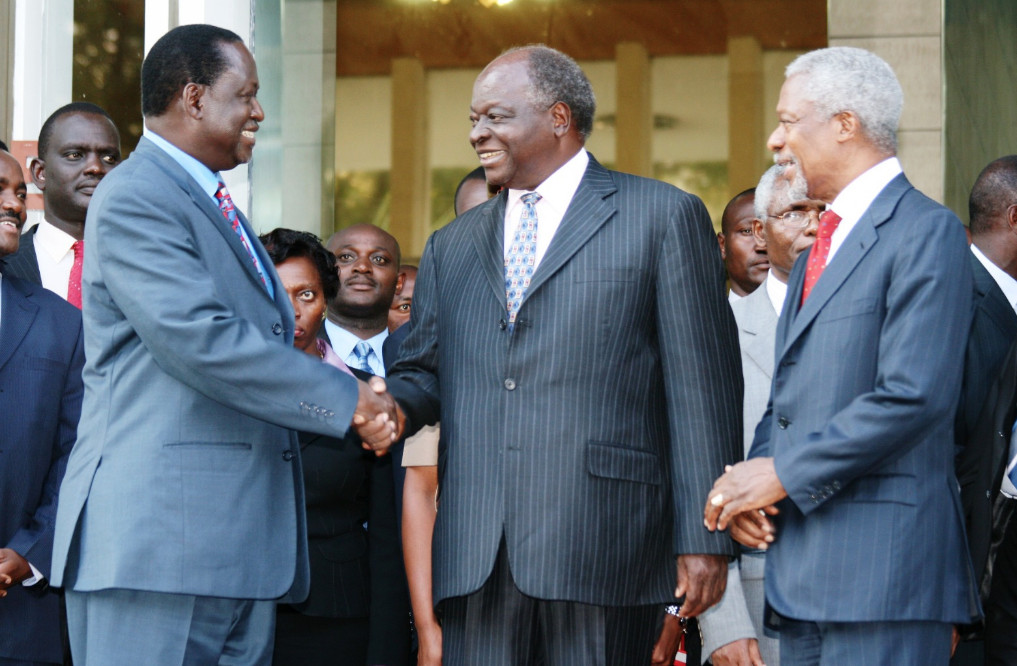
In 2007, following a disputed election that plunged Kenya into post-election violence, Raila, then the ODM leader, and Late President Kibaki forged another historic handshake, birthing a coalition government that restored peace and stability, Raila steering the country as the Prime minister
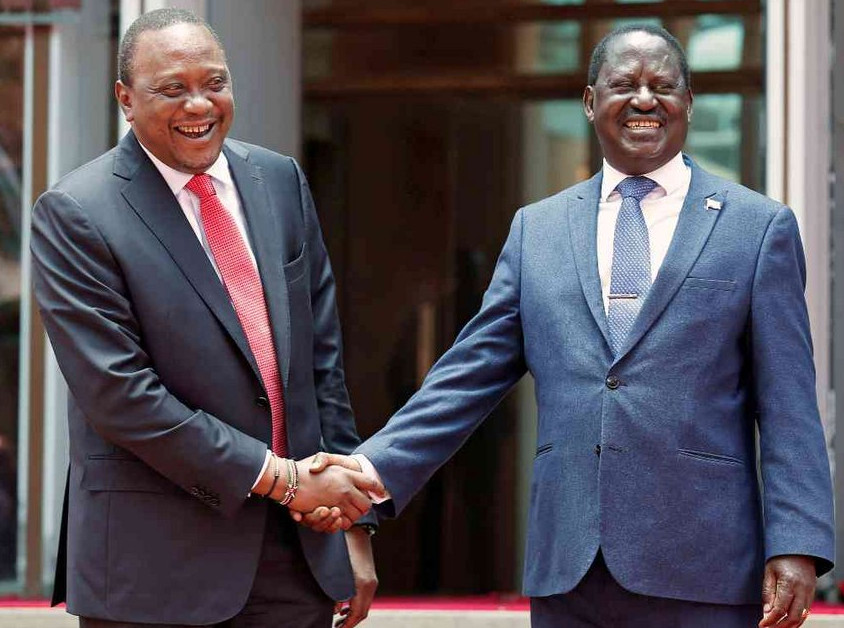
A decade later, in 2018, after yet another divisive election, Raila’s famed “handshake” with President Uhuru Kenyatta calmed nationwide tensions and redefined the country’s political alignment, eventually straining Uhuru’s relationship with his deputy, William Ruto.
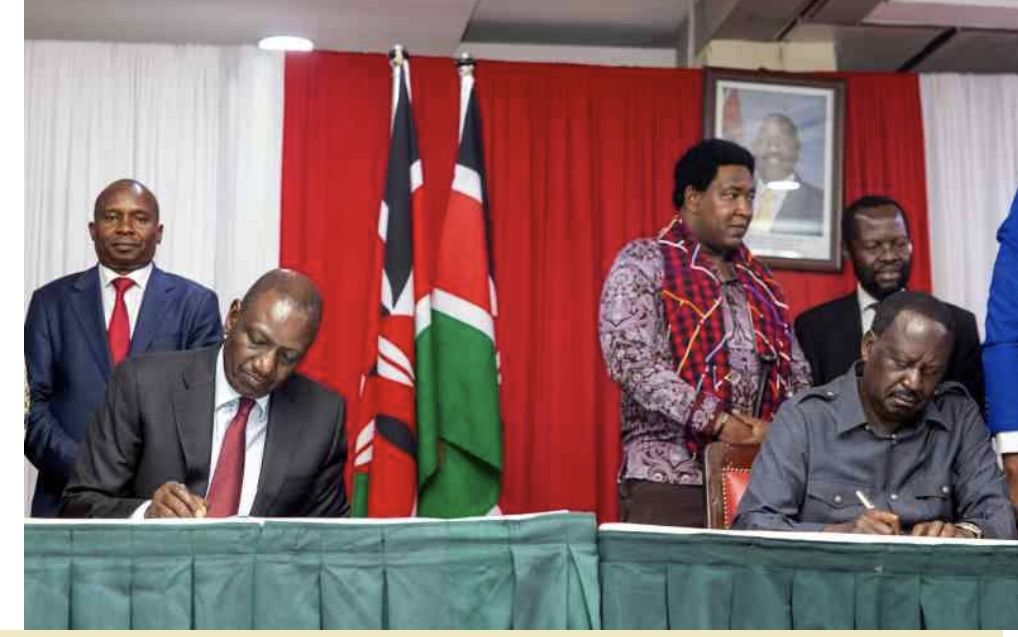
Despite losing the 2022 election to Ruto, Raila remained an active opposition leader. His final truce came in 2024 amid Gen Z–led nationwide protests against poor governance, culminating in a handshake termed as “Broad-Based Government” with President Ruto that saw four of his allies appointed to the Cabinet.
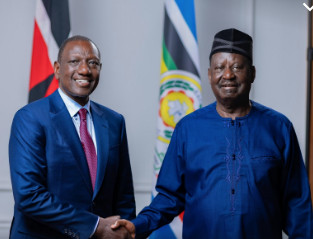
Until his death, the veteran statesman’s final memorandum with Ruto remained pending, an unfinished chapter in a lifetime devoted to reconciliation, reform, and the pursuit of Pan-African unity.