Principal Secretary for Medical Services Dr. Ouma Oluga has called for stronger collaboration between the government and the private sector to deliver sustainable investments that strengthen Kenya’s healthcare system and advance the country’s Universal Health Coverage (UHC) agenda.
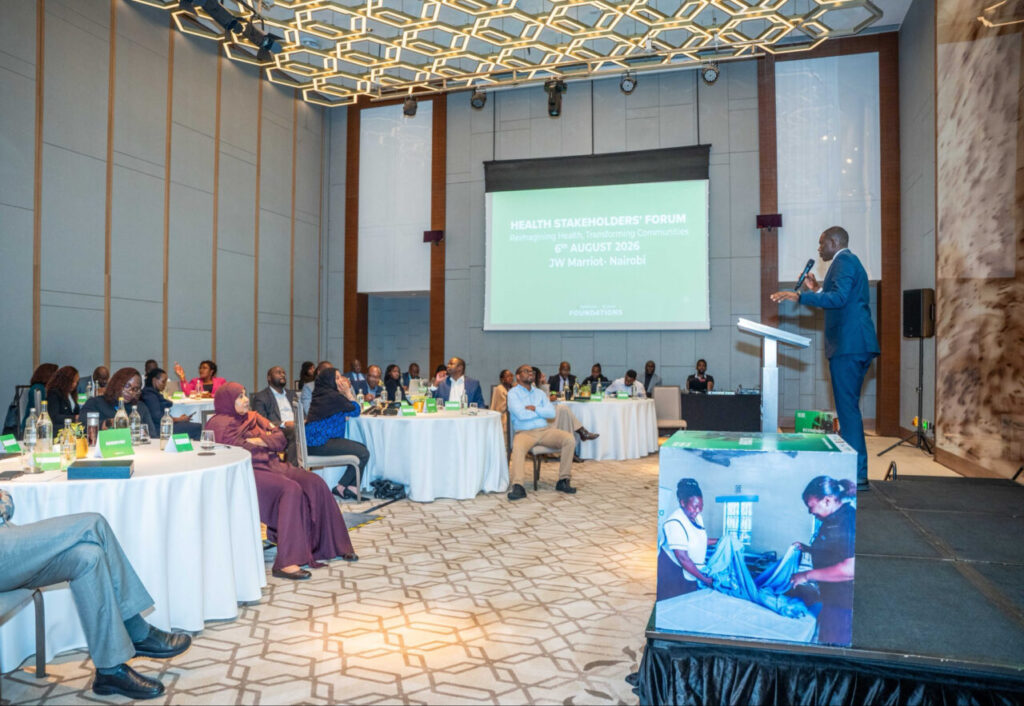
Speaking during a high-level stakeholder engagement convened by the Safaricom Foundation and M-PESA Foundation at the JW Marriott Hotel in Nairobi, Dr. Oluga said philanthropic investments should align with the government’s ongoing health reforms and focus on long-term, county-owned solutions that can be replicated across the country.
The forum brought together representatives from government, development partners, academia, civil society and the private sector to shape the Foundations’ health investment priorities over the next decade.
Dr. Oluga identified maternal and newborn health, as well as the growing burden of non-communicable diseases (NCDs), as critical areas requiring increased investment.
He called for enhanced support for health infrastructure, diagnostics, medical equipment, oxygen systems, blood services, emergency referral networks and the healthcare workforce.
The PS also proposed an integrated demonstration programme that would combine fully equipped maternal and newborn centres, centres of excellence for non-communicable diseases, digital connectivity, efficient referral systems, equipment maintenance, commodity security and county co-financing.
He noted that digital health will play a central role in transforming healthcare delivery by enabling real-time referrals, telemedicine consultations, ambulance coordination, equipment monitoring and improved clinical decision-making.
Dr. Oluga urged development partners and philanthropies to move beyond constructing health facilities and instead invest in complete health systems that integrate healthcare workers, medicines, diagnostics, digital platforms, supply chains, maintenance and monitoring mechanisms.
He invited the Safaricom Foundation and M-PESA Foundation to partner with the Ministry of Health over the next three to five years in supporting the Every Woman Every Newborn Everywhere (EWENE) initiative, integrated maternal and newborn health centres, non-communicable disease centres of excellence, digital health transformation and county health system strengthening.
The Principal Secretary also acknowledged the two Foundations for their continued investment in maternal and newborn healthcare, obstetric fistula treatment, community health programmes and broader health system strengthening initiatives.