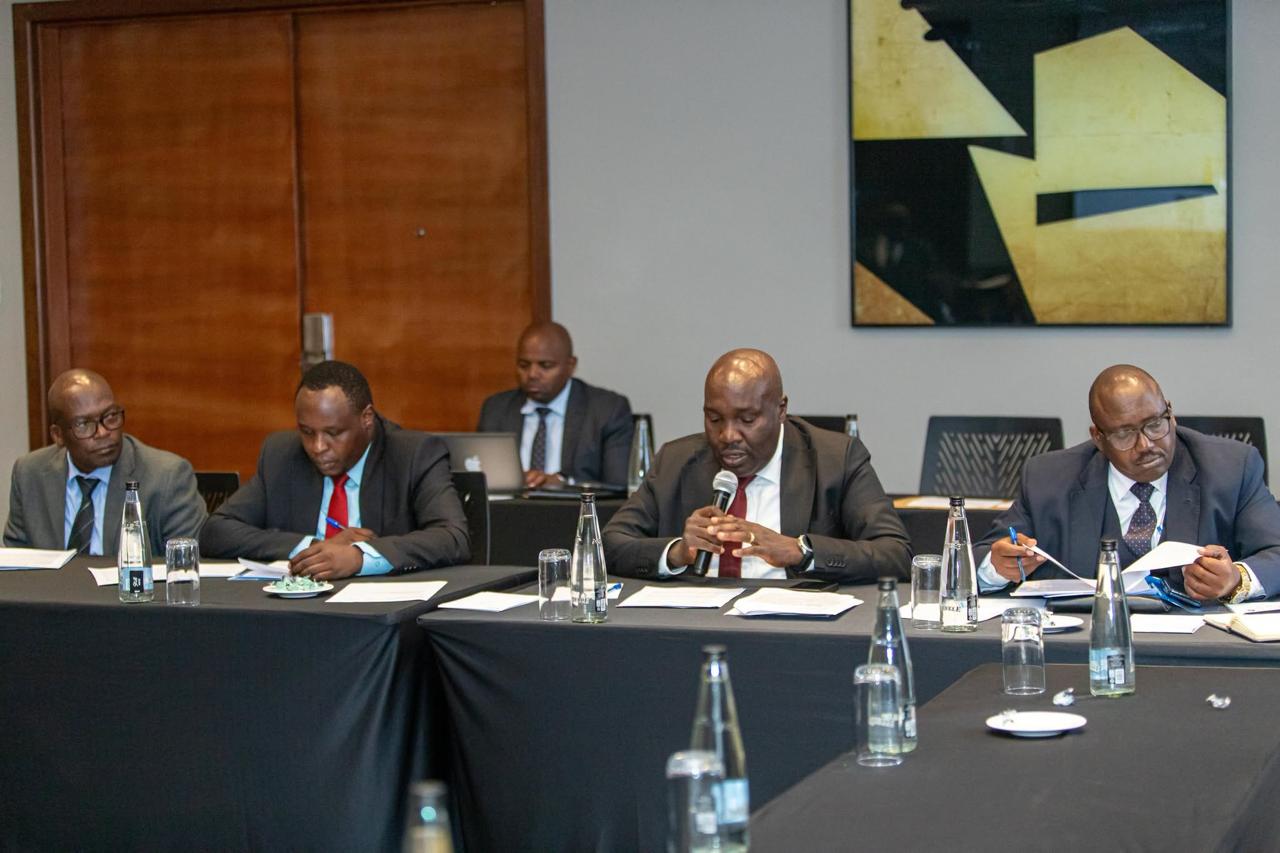
Principal Secretary for Water and Sanitation Julius Korir has appeared before a National Assembly committee to explain the rising water levels in Kenya’s lakes and the effects on communities, livelihoods and infrastructure.
Korir appeared before the Departmental Committee on Environment, Forestry and Mining on Tuesday, September 1, chaired by Mwala MP Vincent Musyoka, where he briefed lawmakers on the situation affecting several lakes in the country
The meeting focused on the possible reasons behind the rising lake levels, with the government looking at climatic, environmental, geological and human factors.
One of the major concerns raised was the possibility of Lake Bogoria and Lake Baringo eventually merging.
The two lakes are different in nature, with Lake Bogoria being alkaline while Lake Baringo is a freshwater lake. Their possible connection could affect the ecosystems and wildlife supported by the two water bodies, as well as communities whose livelihoods depend on them.
The State Department said it is already working with other government agencies and stakeholders to respond to the situation.
Government Steps Up Response
Among the measures being undertaken are the construction of check dams and dykes through the National Water Harvesting and Storage Authority.
The government is also carrying out water quality monitoring, geotechnical investigations and hydrological modelling to better understand what is happening in the affected areas.
Environmental and social impact assessments are also being conducted to establish how the rising water levels are affecting communities and the surrounding environment.
In the long term, the Water Resources Authority is expected to carry out more detailed scientific studies on the Rift Valley lakes.
These will include surveys to determine the depth of the lakes and establish their normal water levels, as well as hydrogeological and geophysical investigations.
The government also plans to develop models to track both surface and underground water movement and study changes in the overall water balance of the lakes.
Focus on Communities and Infrastructure
The State Department said the studies will help the government better understand the changing conditions of the Rift Valley lake system and improve planning and early warning measures.
The information will also be used in managing risks facing communities, infrastructure and the environment.
Korir reaffirmed the government’s commitment to working with Parliament, county governments, local communities, researchers and other agencies in finding long-term solutions to the rising lake levels.
The government said the focus will be on protecting lives and livelihoods while also conserving Kenya’s water resources and the fragile ecosystems around the affected lakes.