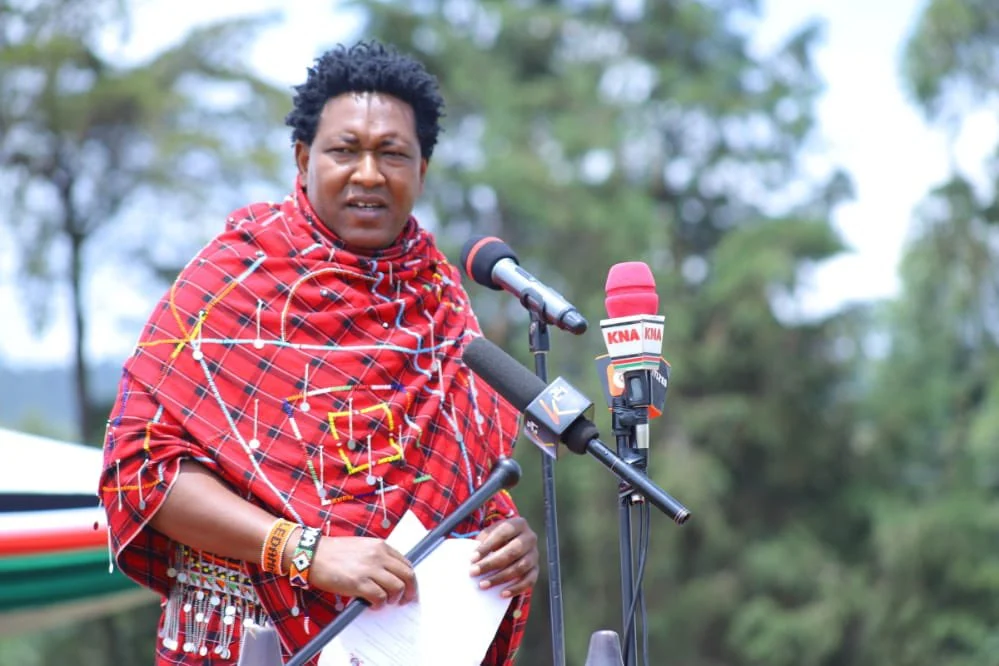
Ledama Ole Kina has come out strongly in defense of President William Ruto amid renewed public outrage over rising fuel prices, challenging critics to back their claims with evidence instead of what he termed as political rhetoric.
In a strongly worded post on X, the Narok Senator admitted that he had initially joined public frustration over fuel prices but changed his position after reviewing what he described as the facts behind the pricing structure.
Ole Kina took direct aim at opposition voices including former Chief Justice David Maraga and former Deputy President Rigathi Gachagua, who have recently accused the government of benefiting from high fuel costs.
He dismissed the allegations, questioning what exactly the president is said to be profiting from, and pointed out that fuel prices in Kenya are largely influenced by global factors such as Platts pricing and international shipping costs, which are beyond direct presidential control.
“Then Maraga and Riggy G jump in, shouting that the president is “profiting.” Profiting from what exactly? WilliamsRuto doesn’t set Platts prices. He doesn’t control global shipping costs outside the G2G framework. So what are we dealing with here FACTS or fiction? If there’s profit, show the receipts. If not, stop recycling cheap political slogans. And spare us the selective amnesia,” he said.
The senator argued that if there is any evidence of wrongdoing, it should be made public instead of relying on what he described as recycled political slogans.
At the same time, Ole Kina defended the controversial tax component in fuel pricing, saying the same revenues are being used to fund infrastructure projects across the country. He told critics that Kenyans cannot demand better roads and services while opposing the taxes that fund them.
His remarks come at a time when fuel prices remain a sensitive issue across the country, with concerns over the cost of living and transport fares continuing to dominate public discourse.
The government has previously maintained that global market dynamics, exchange rates and existing tax structures are the key drivers of pump prices, even as pressure mounts from both the public and political leaders.
Ole Kina’s comments now add a new twist to the debate, positioning him among leaders openly defending the administration’s approach while calling for a more fact based conversation around fuel pricing.