Members of Parliament serving on the Education and Health Committees have called for sweeping reforms in the country’s medical training standards, following a damning report by the Kenya Health Professionals Oversight Authority (KHPOA).
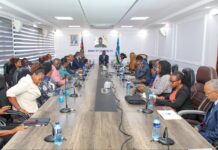
The MPs’ remarks came on Tuesday, November 25, after KHPOA revealed major gaps in some health training institutions that could compromise professionalism and patient safety in Kenya’s health sector.
According to the report, about 8 per cent of the 152 medical training institutions surveyed during the 2024/2025 and 2025/2026 financial years were operating without proper registration or licensing, yet continued to admit students and offer medical courses.
The authority also noted that some colleges lacked sufficient faculty and failed to provide clinical attachments for students a situation that poses serious risks to both public health and the practical training of future healthcare professionals.
“Entry requirements for similar courses vary widely, with certificate programs lasting 6–12 months and diploma courses spanning 24–36 months. Some colleges offered no clinical exposure at all, while others provided only 0–24 months of practical training,” said Jackson Kioko, CEO of KHPOA.
“Our assessment revealed that some institutions train without adequate faculty, without clinical attachments, and in some cases, without even being registered. This is a risk to patient safety and the credibility of our health workforce,” he added.
The committees further highlighted a petition by the Association of Medical Training Institutions of Kenya (AMTI–K), which urged Parliament to ensure fair regulation of private medical colleges. AMTI-K raised concerns about discriminatory practices, arbitrary fees, and conflicting mandates among healthcare training regulators.
Responding to these concerns, MPs emphasized that harmonizing regulation across both public and private institutions is key to improving the quality of medical training.
“It has become clear that there are far too many bodies regulating health training, yet the quality of graduates remains uncertain. Fees at private institutions are often prohibitive and inconsistent. We must harmonize training standards,” said Seme MP James Nyikal.
Tinderet MP Julius Melly added, “The mandates of each regulator must be clearly defined in law. The Principal Acts need updating to ensure health training aligns with national needs.”
Oversight bodies warn that the rise of unregulated institutions is partly driven by the global demand for healthcare workers, a trend that threatens quality assurance and the integrity of Kenya’s health workforce.