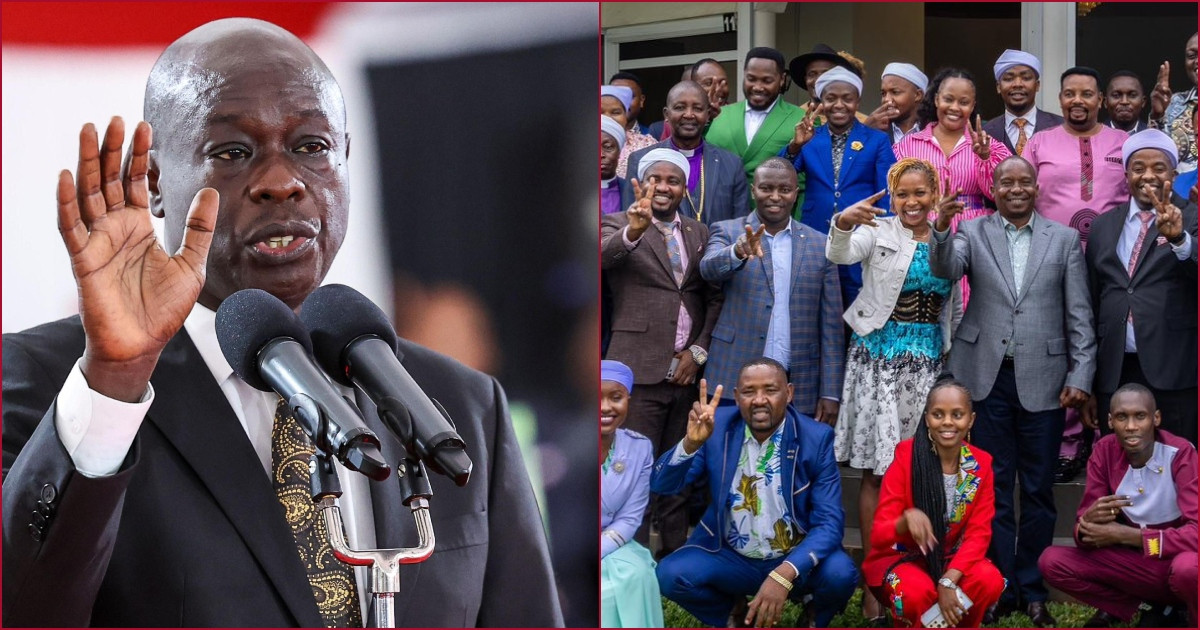
A group of Kikuyu musicians has found itself at the center of a heated political storm after paying a visit to Deputy President Kithure Kindiki at his official residence in Karen — a move that has sparked outrage among some fans and community members who view the meeting as a betrayal of the Mt. Kenya region.
The backlash follows the controversial impeachment of former Deputy President Rigathi Gachagua in October 2024, an event that fractured the political unity of the region and deepened mistrust toward the current administration.
Critics argue that the musicians’ visit to Kindiki signals an endorsement of a government that, in their eyes, has marginalized Mt. Kenya’s interests and silenced one of its most vocal defenders.
“This is a slap in the face of the people who stood with Gachagua,” said one social media user, echoing the sentiments of many online. “These artists are selling out for political favors.”
In response to the criticism, Deputy President Kindiki defended the musicians and their right to engage with leaders without fear or intimidation.
“Politics of blackmail, bullying, and intimidation have no place in a free and democratic society,” he said. “We shall not allow political bullies to run roughshod over citizens, artists, and stakeholders in various sectors who are expressing themselves freely and seeking solutions to challenges affecting their businesses and sources of livelihood.”
Kindiki, who took over the deputy presidency following Gachagua’s ouster, has maintained that his interactions with leaders and stakeholders in Mt. Kenya are geared toward fostering development, not political supremacy.
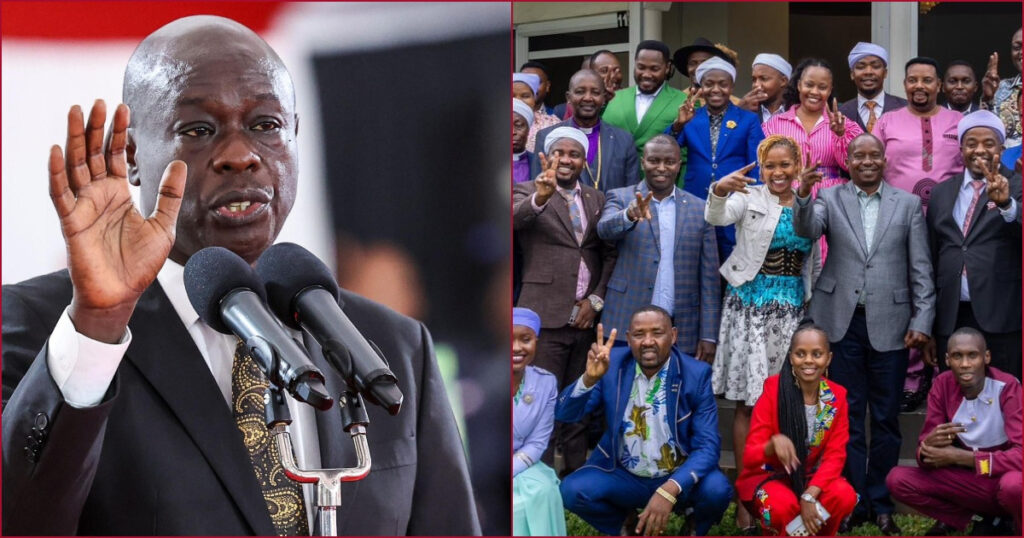
He also dismissed claims that the meeting with artists was a political stunt, saying it was part of a broader effort to involve creatives in nation-building and economic empowerment.
“Are you God?” Kindiki posed, in a sharp response to critics — a remark widely interpreted as directed at Gachagua and his allies.
Gachagua’s impeachment — which was based on allegations of ethnic discrimination, abuse of office, and breach of the constitution — has left the Mt. Kenya region politically unsettled. Many of his supporters see his removal as unjust and a broader attempt to weaken the region’s bargaining power in national politics.
Kindiki, however, has urged residents to move past political divisions and focus on development.
“I am not here to play kingpin politics,” he said recently. “My duty is to deliver on the promises made to the people of Mt. Kenya and ensure that no region is left behind.”
The controversy highlights the delicate intersection between music and politics in Kenya. Artists have historically played significant roles in shaping political narratives — from Joseph Kamaru’s protest songs to modern-day musicians who double as social commentators.