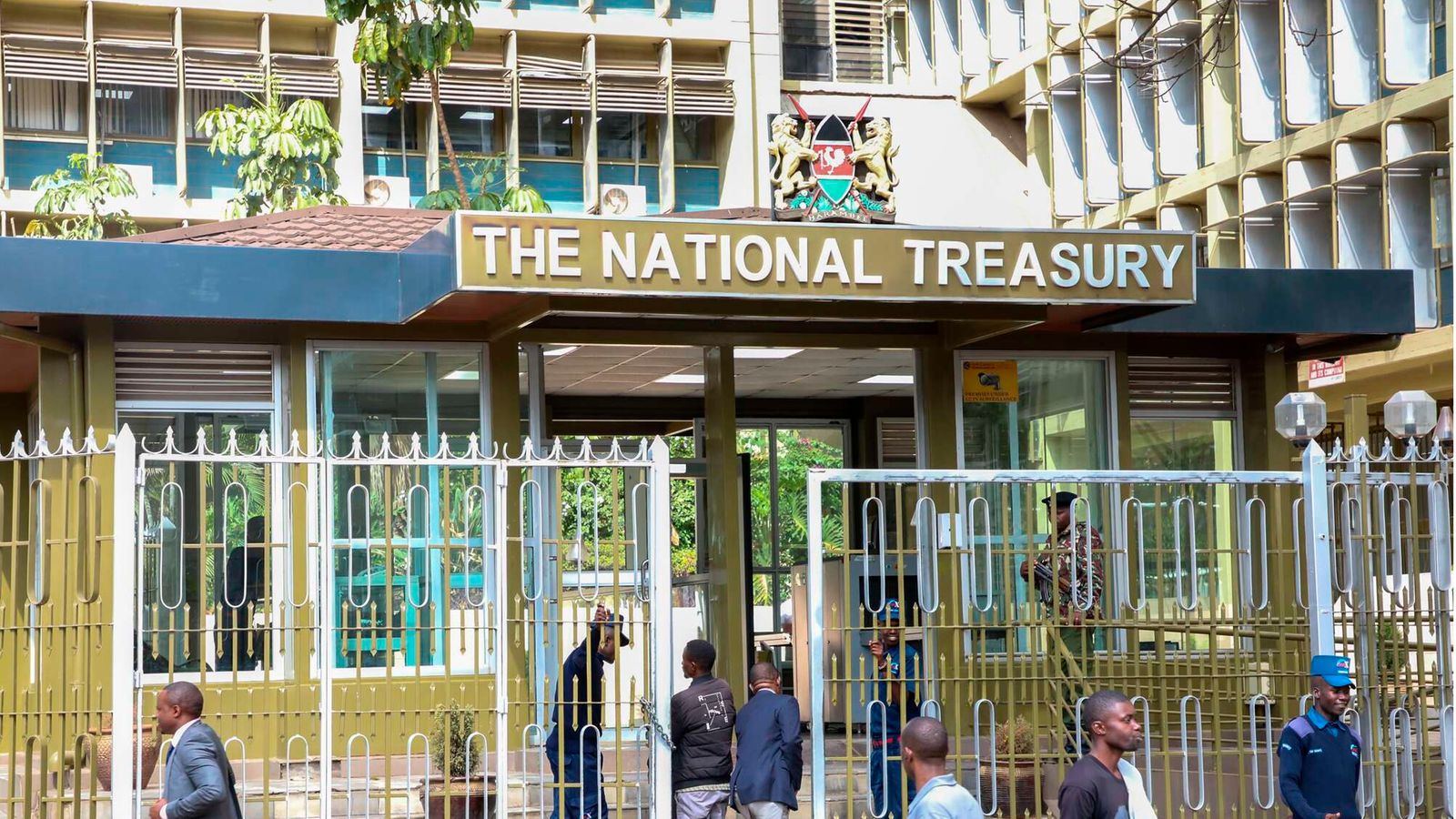
Kenya’s public debt has surged by Sh303.2 billion over the past year, pushing the total debt to Sh10.58 trillion by June 2024, according to new data from the National Treasury.
Despite the government’s efforts to manage its debt load, the country’s external and domestic borrowing continues to rise, raising concerns about debt sustainability.
Of the Sh10.58 trillion debt, Sh5.17 trillion (48.9%) is owed to external lenders, while Sh5.41 trillion (51.1%) comes from domestic borrowing.
While the overall debt has increased, the Treasury noted improvements in Kenya’s debt burden indicators, thanks to stronger fiscal measures. Public and publicly guaranteed debt stood at Sh10.3 trillion, or 67% of GDP, by the end of March 2024.
"However, debt servicing costs have risen significantly, with total public debt service reaching Sh1.56 trillion in FY 2023/2024, an increase of Sh363.9 billion from the previous year,"This sharp rise is mainly due to external debt service, which soared by 87.9%, largely attributed to the depreciation of the Kenya shilling and the maturity of a USD 2 billion Eurobond. Domestic debt service grew by just 0.5%, remaining relatively stable.
As a share of government revenue, total debt service accounted for 68.3%, up from 58.8% in FY 2022/2023. Despite this increase, the debt-to-GDP ratio has declined from 72.0% to 65.7%, driven by the appreciation of the Kenya shilling against major currencies during the fiscal year.
The Treasury acknowledged the challenges posed by the rising debt but maintained that Kenya’s debt remains sustainable, though at a high risk of distress. The recent downgrade by credit rating agencies has further underscored the vulnerabilities, prompting the government to intensify efforts to strengthen fiscal management and improve its credit rating.
Key initiatives to address these challenges include diversifying borrowing sources, conducting liability management operations, and reforming the domestic debt market.
The World Bank has now overtaken China and the International Monetary Fund (IMF) as Kenya’s largest lender, reflecting a shift in the country’s financing strategies.
Looking ahead, the government projects a reduction in the debt-to-GDP ratio to 54.8% by 2028, although the total nominal debt is expected to rise to Sh13.49 trillion.
The government has committed to a comprehensive strategy to manage the debt burden more effectively, including reforms in public financial management and enhanced revenue administration.