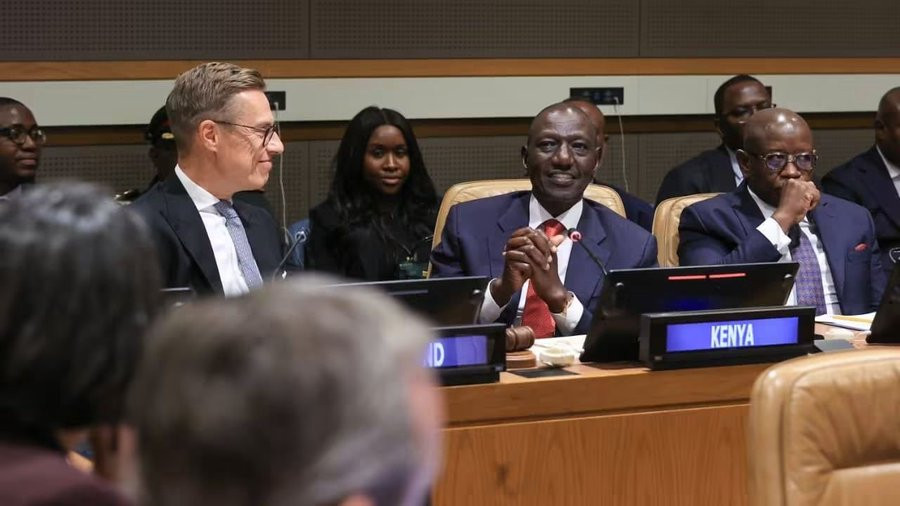
President William Ruto and Finnish President Alexander Stubb have called for greater cooperation among middle and lower-income countries to build capacity and reduce dependence in the rapidly evolving artificial intelligence sector.
The two leaders co-chaired a high-level roundtable, “AI Middle Powers: Shared Sovereignty in the AI Era,” on the sidelines of the 81st United Nations General Assembly in New York. Sierra Leone President Julius Maada Bio also attended the meeting.
The discussions built on conversations held during Ruto’s State Visit to Finland in June, with the leaders examining how countries can work together in areas where they lack the capacity to independently control the entire AI value chain.
Ruto has argued that technological dependence could undermine political sovereignty if countries rely heavily on computing infrastructure, advanced chips, data systems, AI models and standards they do not control.
According to Cabinet Secretary for ICT and the Digital Economy William Kabogo, Kenya’s main gaps in the AI value chain include access to computing power at scale and the development of advanced AI models.
Kabogo said Kenya nevertheless has several assets that could support its participation in the AI economy, including renewable energy, eight submarine cable landings, the Konza National Data Centre, a young technical workforce and African-language data.
“Kenya brings firm renewable power, eight submarine cable landings, the Konza National Data Centre, a young technical workforce, African language data, and institutions that work, including a data protection law we enforce and digital public services used by millions of Kenyans every month,”Kabogo said in a ststement.
He also pointed to Kenya’s data protection framework and digital public services as part of the country’s growing digital infrastructure.
The Kenyan delegation proposed that middle and lower-income countries cooperate in areas where they are unlikely to compete effectively on their own, including negotiating common terms with suppliers of AI models and computing power.
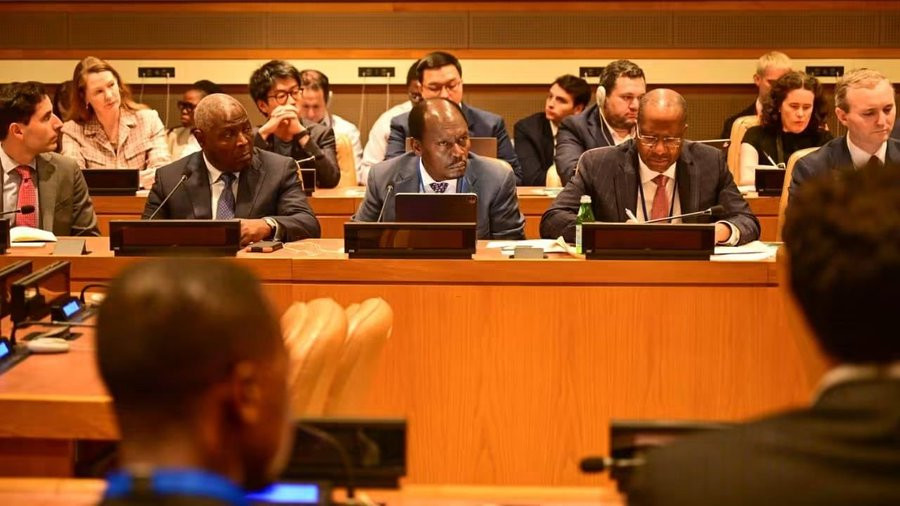
The proposal also includes joint testing and assurance of AI systems and developing datasets in African and other local languages, with ownership retained by institutions in the respective countries.
Ruto has similarly called for a model of “shared sovereignty”, where countries pool capabilities in areas requiring scale while retaining national control where accountability is essential.
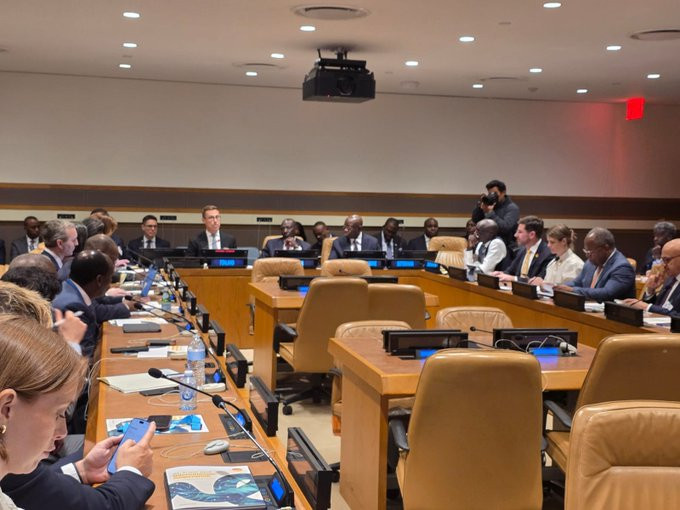
The President said such cooperation should enable countries to build AI infrastructure, skills, research capacity and governance systems without surrendering their ability to determine how the technology is used.